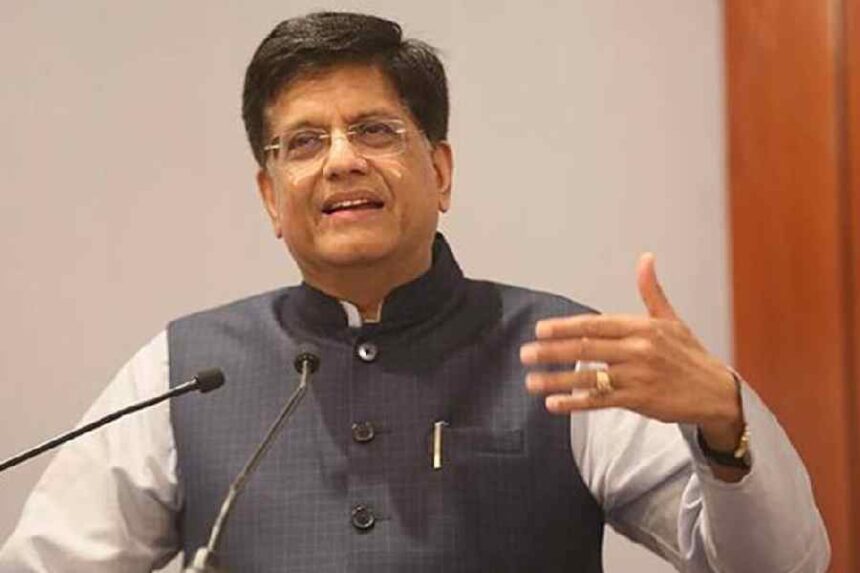
Amid growing global trade tensions and a stalled bilateral trade deal, India’s Commerce and Industry Minister Piyush Goyal has indicated that negotiations with the United States are likely to resume by November 2025. Speaking to Network18 Group Editor-in-Chief Rahul Joshi, Piyush Goyal emphasized that the India-US relationship remains robust, multidimensional, and fundamentally anchored in strategic partnership, despite intermittent friction over tariffs and divergent economic interests. While trade negotiations have faced setbacks, particularly over India’s reluctance to open its agricultural and dairy sectors, the Commerce Minister reassured that any future deal will respect national priorities, safeguard farmers’ and MSME interests, and avoid compromising issues of religious or economic sensitivity. According to Piyush Goyal, the two countries remain committed to dialogue, diplomacy, and long-term engagement, signaling optimism for a structured resolution of outstanding trade disagreements and deeper collaboration in global economic arenas.
Resumption of Trade Talks and Multidimensional Relations
India and the United States have long maintained a strategic relationship encompassing trade, investment, defense, and technological collaboration. Over the past year, however, differences over tariffs and market access have strained trade relations, with bilateral tensions escalating over India’s protective stance on its agricultural and dairy markets. Speaking about the ongoing negotiations, Piyush Goyal reminded that Prime Minister Narendra Modi and former President Donald Trump had, during their February meeting, tasked negotiation teams to conclude the first tranche of a bilateral trade agreement by the fall of 2025, with November set as a target. While the talks are currently on hold, Piyush Goyal expressed confidence that discussions would resume, reinforcing the notion that temporary disruptions should not dictate long-term objectives. He highlighted that the bilateral relationship is “allies and friends,” and occasional remarks or misunderstandings, such as statements by US aides calling the Ukraine conflict “Modi’s war” or India “the laundromat of the Kremlin,” should be understood as personal opinions rather than reflections of broader strategic alignment.
The Commerce Minister further clarified that India views the US partnership as one of significant consequence, affecting not just trade but broader geopolitical stability. He underlined that a few days or weeks of friction in negotiations do not diminish the historical depth or future potential of India-US collaboration. Even as both nations navigate disagreements over tariffs and market access, VGoyal emphasized that continuous engagement remains a priority, and efforts to find mutually acceptable solutions are ongoing. He stressed that India remains patient and committed to dialogue, prioritizing diplomacy over unilateral retaliation, unlike certain instances where other nations, such as China, have responded with retaliatory tariffs against US products. This measured approach reflects India’s long-term strategic vision and intent to maintain economic and political equilibrium in its global trade relationships.
Protecting National Interests: No-Go Zones in Trade Negotiations
A major point of contention in the stalled trade talks has been India’s reluctance to open its agriculture and dairy sectors to US exporters. Piyush Goyal reiterated that Prime Minister Modi’s administration will not compromise on issues affecting national interest, describing such matters as “red lines” or “no-go zones” during trade discussions. He underscored that any trade deal must safeguard the economic well-being of Indian farmers, fishermen, and micro, small, and medium enterprises (MSMEs). According to Piyush Goyal, sectors with potential religious sensitivities or significant social impact also fall within these protected zones, ensuring that no agreement undermines India’s domestic priorities.
The Commerce Minister’s comments reflect the government’s broader approach to balancing economic liberalization with the protection of key national sectors. While bilateral trade between India and the US is valued at over $190 billion, the negotiation framework emphasizes that trade liberalization must be measured, equitable, and aligned with India’s developmental objectives. Piyush Goyal stressed that the country will continue engaging constructively to achieve a fair agreement while maintaining sovereignty over critical domestic sectors. He also clarified that media reports regarding India’s alleged willingness to cut tariffs to zero are misleading, noting that negotiations are conducted behind closed doors and not in public forums. This discretion ensures that sensitive discussions remain strategic, without the influence of external speculation or media pressure, ultimately aiming to achieve a sustainable, mutually beneficial trade framework.
The minister highlighted that India’s approach to negotiations is anchored in evidence, deliberation, and procedural fairness. Each sector, particularly agriculture and dairy, represents not only economic value but also societal significance. Thus, safeguarding these areas ensures that trade agreements enhance growth without disproportionately affecting the livelihoods of millions of Indian citizens. Piyush Goyal’s insistence on protecting these interests underscores a principle-based approach to diplomacy, where economic engagement is harmonized with domestic stability, social welfare, and long-term strategic goals.
Piyush Goyal also addressed the broader context of trade diplomacy, noting that the goal is to strengthen India-US relations rather than exacerbate friction. Unlike other countries that have engaged in retaliatory tariff measures, India prefers negotiation and consensus-building, reflecting a preference for dialogue over confrontation. By maintaining this approach, India ensures that trade agreements are grounded in legal frameworks, transparent processes, and equitable terms, minimizing the risk of destabilizing bilateral relations or inviting political or public criticism.
The minister acknowledged that challenges in bilateral trade negotiations are inevitable due to differing national priorities, economic structures, and sectoral sensitivities. However, he emphasized that temporary setbacks do not diminish India’s commitment to the strategic partnership, nor do they impede efforts to finalize mutually beneficial trade agreements. Piyush Goyal reiterated that both nations recognize the value of ongoing engagement, and India is prepared to continue dialogues aimed at resolving differences while protecting its essential economic and social interests.
India’s “no-go zones” approach ensures that negotiations remain within parameters that prioritize domestic welfare. Agriculture, dairy, MSME industries, and religiously sensitive areas are central to India’s trade policy calculus. By clearly delineating these areas, the government signals both its resolve and its commitment to fairness in international trade. Piyush Goyal emphasized that any concessions made in other sectors will be carefully balanced against the imperative to protect core domestic interests, ensuring that trade agreements do not compromise the socio-economic fabric of the country.
While discussions continue, the Commerce Minister remains optimistic that negotiations will yield results by November 2025, provided both countries engage with flexibility, patience, and strategic foresight. He reiterated that India remains a “patient country” and that efforts to reach a deeper understanding within international trading laws are ongoing. The emphasis on dialogue, diplomacy, and measured negotiation reflects India’s long-standing commitment to stable and principled trade relations, signaling to both domestic and international audiences that strategic interests are paramount, and temporary differences are not definitive.
Furthermore, Piyush Goyal highlighted the broader significance of India-US trade relations, which extend beyond mere commerce. The partnership encompasses technological collaboration, investment flows, defense cooperation, and global geopolitical alignment. By reinforcing this multidimensional engagement, the government aims to ensure that trade negotiations do not occur in isolation but are part of a comprehensive strategy to strengthen bilateral relations and promote global economic stability. He emphasized that India’s patience, diplomacy, and strategic engagement provide a framework for constructive negotiation, fostering long-term trust and mutual benefit.
In summary, Piyush Goyal’s comments provide insight into India’s methodical and principle-based approach to trade negotiations with the United States. By emphasizing protection of farmers, MSMEs, and sensitive sectors, the minister clarified India’s “no-go zones” while signaling readiness for dialogue and resolution. His remarks underscore India’s strategic patience, commitment to diplomacy, and focus on safeguarding national interests, while also reinforcing optimism that a structured trade agreement with the United States could be achieved by November 2025. The minister’s emphasis on closed-door negotiations, procedural fairness, and respect for domestic priorities highlights a careful balancing act, ensuring that India’s trade engagement strengthens economic growth without compromising societal or strategic imperatives.
Overall, India-US trade relations continue to evolve in a complex global economic environment. With cautious optimism, measured engagement, and well-defined boundaries, both nations are positioned to finalize a trade agreement that balances market access, economic growth, and the protection of national interests. Piyush Goyal’s articulation of India’s priorities provides clarity to domestic stakeholders and international partners alike, offering a roadmap for principled negotiation, constructive engagement, and sustainable bilateral trade development.