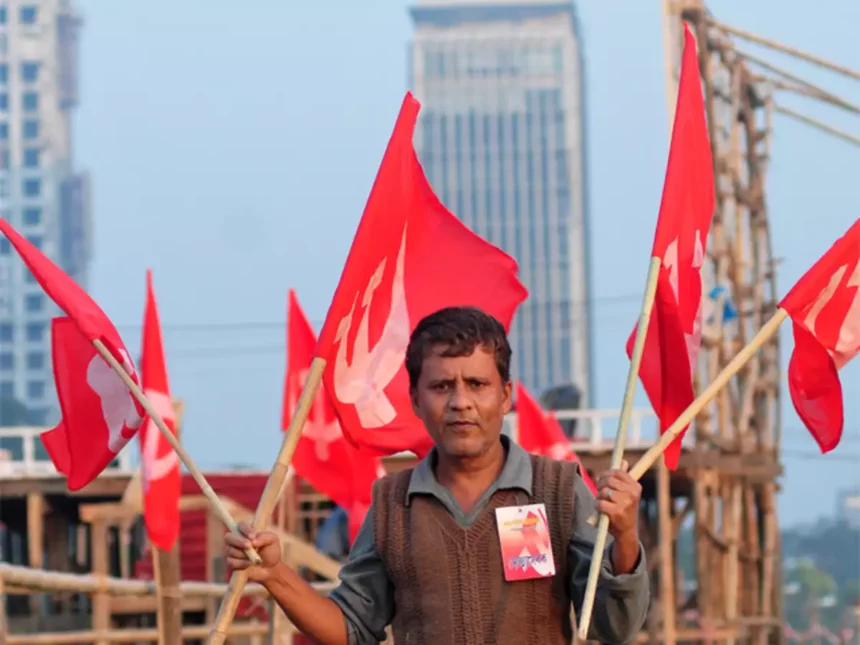
The Communist Party of India (Marxist), once the dominant political force in West Bengal for over three decades, is preparing to mount a serious challenge in the 2026 Assembly elections with a renewed approach. Faced with diminishing electoral fortunes in the state, the party is implementing a series of strategic initiatives aimed at reviving its presence and reconnecting with voters, particularly the youth. The recent four-day state conference of the CPI(M) witnessed crucial deliberations on the party’s roadmap for the upcoming elections, with state secretary Mohammad Salim outlining key initiatives to bolster the party’s organizational strength and public outreach.
A significant aspect of the CPI(M)’s revamped strategy involves the deployment of data mining teams and specialized task forces. These units will be tasked with gathering critical information from the ground to shape the party’s narrative effectively. Recognizing the evolving nature of political campaigns, the CPI(M) is embracing a more research-driven and professional approach, ensuring that its messaging aligns with the aspirations and concerns of the people. The party is also looking to analyze voter behavior, socio-economic trends, and policy impacts to formulate a more targeted election strategy.
Another cornerstone of the CPI(M)’s plan is its renewed emphasis on engaging the youth. With West Bengal’s political landscape increasingly shaped by young voters, the party is making concerted efforts to attract this demographic through grassroots mobilization, digital outreach, and policy-driven discussions. The leadership acknowledges that to remain relevant in the state’s dynamic political arena, it must break away from outdated methods and connect with the younger generation on contemporary issues such as employment, education, and economic development.
During the state conference, Mohammad Salim announced five key initiatives that will drive the CPI(M)’s resurgence efforts. These initiatives, sources revealed, will be named after the party’s stalwarts, including Sitaram Yechury, Saroj Mukherjee, Pramod Dasgupta, Buddhadeb Bhattacharya, and Anil Biswas. The decision to associate these programs with legendary party figures underscores the CPI(M)’s commitment to its ideological roots while adapting to new political realities. These initiatives will focus on strengthening the party’s presence at the grassroots level, improving cadre training, and enhancing communication strategies to counter the narratives set by rival parties.
The CPI(M) leadership is also revisiting its electoral strategies from past decades, analyzing both its successes and failures to devise a more effective approach for 2026. Unlike previous elections where the party struggled to make significant electoral gains, this time, it aims to reposition itself as a credible alternative to both the ruling Trinamool Congress and the rising BJP. The party is expected to sharpen its attacks on the policies of the Mamata Banerjee government while also presenting a distinct political vision that resonates with the people of Bengal.
Apart from organizational restructuring, the CPI(M) is focusing on improving its media outreach, recognizing the role of social media and digital platforms in modern-day electioneering. Efforts are being made to amplify the party’s voice across various communication channels, ensuring that its message reaches a wider audience. The party also plans to highlight issues of public concern, such as unemployment, price hikes, and governance failures, as part of its campaign strategy.
As the 2026 Assembly elections draw closer, the CPI(M)’s renewed approach signals a determined effort to reclaim lost ground in West Bengal. Whether these strategic changes will translate into electoral success remains to be seen, but the party’s proactive steps indicate a shift in its traditional methods. With a combination of data-driven campaigning, youth engagement, and ideological reinforcement, the CPI(M) is gearing up for a high-stakes political battle, aiming to reestablish itself as a formidable force in Bengal’s evolving political landscape.