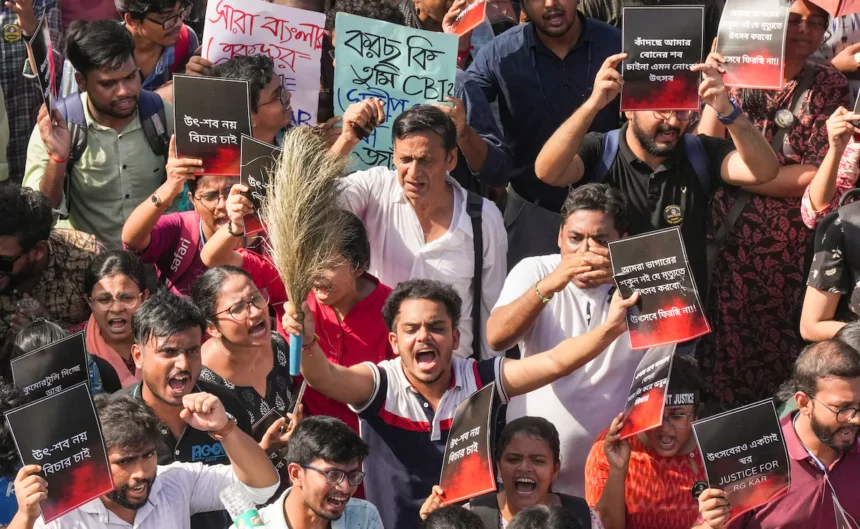
The local court is set to deliver its long-awaited verdict today in the highly publicized rape and murder case of a trainee doctor at Kolkata’s RG Kar Medical College and Hospital. The case, which has garnered widespread media attention, shocked the nation and sparked a series of protests, particularly from the medical community and civil society. The main accused in this heinous crime is Sanjay Roy, a civic volunteer, who stands accused of both raping and murdering the young doctor.
The investigation into this case has been fraught with controversy, especially with allegations of evidence tampering during the initial phase, when the Kolkata Police were in charge. This has led to widespread public mistrust and calls for a more thorough investigation. The case was subsequently transferred to the Central Bureau of Investigation (CBI) by the Calcutta High Court, which raised concerns over the fairness of the initial inquiry. Upon taking over the investigation, the CBI filed a chargesheet, identifying Sanjay Roy as the “sole prime accused” in the case, and revealing troubling details about the incident.
Roy was arrested shortly after the victim’s body was found in a seminar hall at the college and hospital in August 2024. The discovery of the body marked the beginning of a series of shocking revelations about the crime, which has had a profound impact on both the local community and the country as a whole. During the investigation, the CBI also arrested two other individuals—Sandip Ghosh, the former principal of RG Kar Medical College, and Abhijit Mondal, a former officer at the local police station—on charges of tampering with evidence. Both were granted “default bail” by the special court after the CBI failed to file a supplementary chargesheet against them within 90 days of their arrest.
The special court proceeded with the process of framing charges against Sanjay Roy, completing this task on November 4, 2024, and officially beginning the trial on November 11, 2024. Unlike many other high-profile cases, the trial has been held behind closed doors, with all proceedings conducted in-camera. This decision was made to protect the identities of the witnesses and the victim’s family. Throughout the course of the trial, the statements of 50 witnesses were recorded, including those from the victim’s parents, forensic experts, doctors who worked with the victim, and officials from both the CBI and the Kolkata Police who were involved in the investigation.
The case has not only shocked the medical community but has also brought together a large number of people from different walks of life who have united in a call for justice. Following the discovery of the victim’s body, protests broke out across West Bengal, with members of the medical profession, civil society, and ordinary citizens taking to the streets to demand accountability. The victim, who has since been dubbed “Abhaya” (meaning fearless), has become a symbol of courage in the fight for justice. The protests quickly spread beyond the borders of India, with non-resident Indian associations in other countries also voicing their support for the cause.
The allegations of evidence tampering surfaced after a mob vandalized the emergency department of RG Kar Hospital on August 14, 2024, in response to the perceived mishandling of the case. Thousands of people took to the streets of West Bengal to voice their anger and demand justice, bringing even more attention to the case and highlighting the larger issues of transparency and accountability in the legal and police systems.
As the court prepares to announce its verdict today, the nation waits with bated breath, hoping for a fair and just resolution to this horrific crime. The outcome of the trial will have significant implications not only for the victim’s family but also for the broader fight against sexual violence and corruption in India’s institutions. The case has served as a reminder of the need for swift and transparent justice, and its impact will likely resonate for years to come.
The verdict is expected to bring closure to a case that has captured the hearts of many and has raised serious questions about the safety and security of women in the country. It also underscores the importance of rigorous investigations and the need for accountability within the law enforcement agencies, particularly when it comes to sensitive and high-profile cases such as this one. As India continues to grapple with the issue of gender-based violence, the outcome of this trial may prove to be a crucial moment in the ongoing struggle for justice and equality.