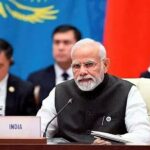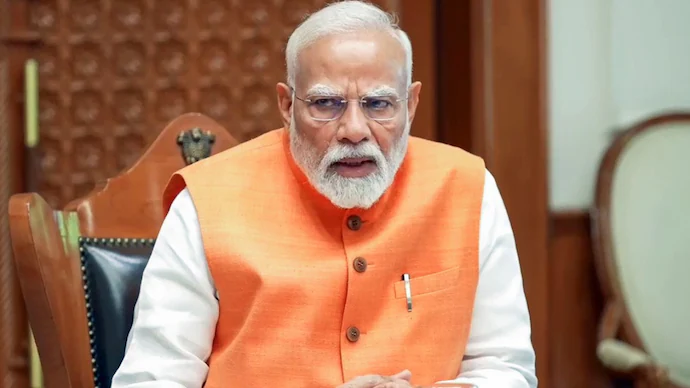
At the 25th Shanghai Cooperation Organisation (SCO) Summit in Tianjin, Prime Minister Narendra Modi delivered a pointed address that underscored India’s strategic perspective on regional connectivity, development, and security. While maintaining diplomatic decorum, PM Modi subtly critiqued China’s Belt and Road Initiative (BRI), stressing that infrastructure and connectivity projects must respect national sovereignty to foster trust and credibility among nations. Highlighting India’s own initiatives, such as the Chabahar Port and the International North-South Transport Corridor, he articulated a comprehensive vision for the SCO that revolves around three pillars: security, connectivity, and opportunity. PM Modi’s address reflected India’s nuanced approach to Eurasian geopolitics, emphasizing the importance of principled partnerships, sustainable development, and people-to-people engagement in a rapidly transforming global order.
Respecting Sovereignty in Global Connectivity Initiatives
In his speech, Prime Minister Modi pointedly addressed the challenges posed by unilateral infrastructure projects that bypass the consent of affected nations. While refraining from directly naming China, he highlighted the risks associated with connectivity initiatives that ignore sovereignty, asserting that such projects lose both trust and meaning. The Belt and Road Initiative, led by China, aims to enhance trade and connectivity across Asia, Africa, and Europe through extensive corridors, including the China-Pakistan Economic Corridor (CPEC), which passes through Pakistan-occupied Kashmir. India has consistently opposed the project, citing concerns over territorial sovereignty, strategic security, and long-term regional influence.
PM Modi emphasized that true connectivity must not compromise a nation’s autonomy. He noted that India’s own approach prioritizes mutual consent, collaboration, and sustainable development, citing examples such as the Chabahar Port in Iran, which facilitates trade with Afghanistan and Central Asia, and the International North-South Transport Corridor, a multi-modal network enhancing regional connectivity. By advocating for development initiatives that respect sovereignty, PM Modi positioned India as a proponent of trust-based partnerships and principled multilateralism. He reminded the SCO audience that connectivity, while essential for economic growth, cannot be a substitute for respect and adherence to international norms.
The Prime Minister elaborated on the role of the SCO in bridging the Eurasian region, noting that over the past 24 years, the organisation has played a critical role in fostering regional dialogue, security cooperation, and trade connectivity. India’s active participation in the SCO has strengthened these efforts, providing both leadership and constructive engagement in regional affairs. PM Modi emphasized that India’s policy within the SCO is anchored on three central pillars: security, connectivity, and opportunity. These pillars, he explained, not only address regional strategic imperatives but also create a framework for inclusive growth, innovation, and multilateral collaboration.
Security, Connectivity, and Opportunity: Pillars of India’s SCO Policy
PM Modi elaborated extensively on the first pillar, security, noting that peace, stability, and counter-terrorism cooperation are critical to the development and prosperity of nations. He highlighted India’s proactive measures in combating terrorism, including leadership in Joint Information Operations targeting Al-Qaeda and affiliated organizations, and initiatives to enhance coordination against radicalization and terror financing. PM Modi recalled India’s experiences with terrorism over the last four decades, referencing tragic incidents such as the Pahalgam attack, and expressed gratitude to countries that have supported India in its fight against extremism. The Prime Minister underscored that security challenges are not limited to national borders but are shared threats requiring collective action through multilateral forums like the SCO.
The second pillar, connectivity, received particular attention as PM Modi highlighted the importance of infrastructure and trade networks that respect sovereignty while fostering regional integration. Connectivity projects, he explained, should enable trade, economic growth, and mutual trust rather than imposing unilateral control over territory or resources. PM Modi drew attention to India’s efforts in expanding transport corridors, trade hubs, and development initiatives that link the country with Central Asia, Afghanistan, and other neighboring regions. By emphasizing India’s model of principled connectivity, PM Modi implicitly contrasted it with projects that risk undermining sovereignty or creating friction between states.
The third pillar, opportunity, reflected India’s broader vision of inclusive development and multilateral cooperation. During its SCO chairmanship in 2023, India introduced initiatives aimed at promoting innovation, start-ups, traditional medicine, youth empowerment, digital inclusion, and shared cultural heritage, including Buddhist history. PM Modi proposed the creation of a Civilisational Dialogue Forum under the SCO to facilitate exchange of art, literature, traditions, and values across member nations. This initiative aimed to strengthen people-to-people ties and ensure that the SCO’s influence extends beyond government-to-government engagement, fostering a deeper sense of regional community and collaboration.
PM Modi also noted the SCO’s ongoing evolution to address contemporary challenges. He highlighted the establishment of four new centres to tackle organized crime, drug trafficking, and cybersecurity threats, reflecting a forward-looking, reform-oriented mindset. He stressed that SCO members can further enhance cooperation in reforming global institutions, collectively advocating for updates to frameworks such as the United Nations to ensure that the aspirations of the Global South are not constrained by outdated structures. India, PM Modi asserted, continues to follow a mantra of Reform, Perform, and Transform, inviting other member nations to join in shaping a more inclusive, equitable, and stable regional and global order.
Throughout his address, PM Modi balanced criticism with constructive proposals, presenting India as a responsible actor committed to fostering stability, economic growth, and collaboration in Eurasia. By stressing that connectivity must respect sovereignty, he reinforced the principle that development initiatives cannot be imposed but must be built on trust, consent, and shared benefit. India’s model, he suggested, offers an alternative vision where trade, infrastructure, and cooperation strengthen regional bonds while safeguarding national interests and security.
PM Modi’s address at the SCO Summit thus articulated a comprehensive vision for India’s role in Eurasia, combining strategic foresight with actionable policy frameworks. Through emphasis on security, connectivity, and opportunity, the Prime Minister outlined a roadmap for principled multilateral engagement that prioritizes respect for sovereignty, constructive collaboration, and inclusive development. India’s approach, he conveyed, integrates economic initiatives with cultural exchange and strategic partnerships, ensuring that connectivity and growth do not come at the expense of trust, stability, or regional harmony.
By highlighting India’s infrastructure initiatives alongside global norms, PM Modi not only critiqued unilateral projects but also positioned India as a model for sustainable, transparent, and collaborative development in the region. The address emphasized that long-term stability and prosperity require adherence to principles of mutual respect, sovereignty, and inclusive participation. Through a careful blend of strategic critique and constructive engagement, India showcased its commitment to shaping a regional and global order where development, security, and opportunity are mutually reinforcing, and where partnerships are grounded in fairness, transparency, and trust.
The SCO summit, through PM Modi’s articulation of India’s three pillars, thus became a platform to present an integrated vision that combines regional connectivity, counter-terrorism, economic cooperation, and cultural dialogue. By advocating for a framework where sovereignty is respected and partnerships are equitable, India’s approach offers a template for multilateral engagement in a complex and interconnected world. PM Modi’s address reinforced the idea that enduring growth and security require collaboration that is principled, inclusive, and aligned with shared aspirations of the Eurasian community and the Global South.
This comprehensive articulation of India’s SCO policy underlines the country’s commitment to balancing national interests with regional cooperation. Through the principles of security, connectivity, and opportunity, India seeks to foster a stable, prosperous, and interconnected Eurasia, demonstrating leadership in shaping a rules-based, inclusive, and forward-looking regional architecture. The Prime Minister’s address reflects India’s strategic vision of principled engagement, sustainable development, and multilateral cooperation, reinforcing its role as a responsible actor in both regional and global affairs.