In a significant diplomatic development, Chinese Foreign Minister Wang Yi has arrived in New Delhi for a two-day visit aimed at strengthening bilateral relations with India. This visit assumes particular importance against the backdrop of lingering tensions along the India-China border, ongoing geopolitical shifts, and India’s increasingly complex international relations, including rising economic pressure from the United States. Wang Yi is scheduled to hold a series of high-level meetings, including discussions with External Affairs Minister S. Jaishankar and National Security Advisor Ajit Doval, to address pressing issues ranging from border management to trade, connectivity, and confidence-building measures. The visit also precedes Prime Minister Narendra Modi’s upcoming trip to China for the Shanghai Cooperation Organisation (SCO) summit, making it a crucial milestone in the ongoing diplomatic dialogue between the two Asian powers. As both nations seek to rebuild trust and ensure stability along their contested frontiers, Wang Yi’s visit is expected to set the tone for upcoming engagements and reinforce mechanisms for sustained dialogue.
Reviving Dialogue Amid Border Tensions and Strategic Considerations
The China-India relationship has witnessed severe strains over the past five years, most notably following the deadly clashes in the Galwan Valley in June 2020. These confrontations left a lasting impact on bilateral ties, necessitating disengagement at key friction points along the Line of Actual Control (LAC) in eastern Ladakh. Despite troop withdrawals from immediate areas of confrontation, the frontline presence remains significant, with approximately 50,000 to 60,000 soldiers deployed on each side. Wang Yi’s visit, therefore, is not merely symbolic but reflects both nations’ recognition of the need to address unresolved security and strategic concerns through structured dialogue.
During his stay in Delhi, Wang Yi is set to engage in a fresh round of Special Representatives (SR) talks with National Security Advisor Ajit Doval. These discussions form a critical component of the ongoing boundary talks, aimed at identifying mechanisms for sustainable peace and confidence-building along contested areas. Since the military standoff began in May 2020, these dialogue mechanisms have become central to restoring trust and preventing future escalations. The resumption of SR talks is part of a broader diplomatic framework agreed upon during a meeting between Prime Minister Narendra Modi and Chinese President Xi Jinping in Kazan, Russia, in October 2024, where both leaders resolved to revive various channels of communication and engagement.
The timing of Wang Yi’s visit is also significant in the context of broader geopolitical developments. Relations between India and the United States have seen increased strain following heightened tariffs on Indian goods, compounded by sanctions related to Russia. This backdrop places additional emphasis on India’s engagement with China, balancing regional and global economic interests while managing security imperatives along the northern borders. In this sense, Wang Yi’s engagement is not only about bilateral issues but also reflects the strategic calculus of maintaining equilibrium in the larger Asian geopolitical landscape.
Key Discussions: Trade, Connectivity, and Confidence-Building Measures
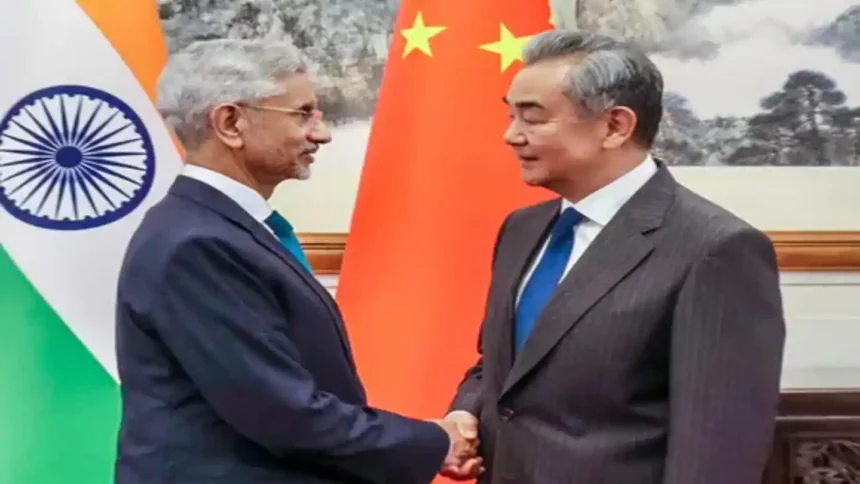
During the first day of his visit, Wang Yi met External Affairs Minister S. Jaishankar to deliberate on a wide range of bilateral issues. The discussions are expected to cover trade resumption, infrastructure connectivity, and the modalities for restarting direct flight services between the two nations. Flight operations, which were suspended following the Covid-19 pandemic in 2020 and further delayed due to border tensions, remain a critical area for improving people-to-people ties and fostering commercial exchange. The resumption of flights would not only facilitate tourism and business travel but also symbolize incremental progress in normalizing relations.
Another focal point of the dialogue is the restoration of trust and confidence along the LAC. Both sides have reportedly considered new confidence-building measures to ensure de-escalation and prevent inadvertent confrontations. While troop withdrawals have occurred at several friction points, the continued presence of significant numbers of soldiers indicates the complexity of achieving complete demilitarization. The bilateral talks will likely explore operational protocols, transparency measures, and joint mechanisms for monitoring and communication to reduce the risk of clashes.
Trade is another critical aspect of Wang Yi’s agenda. India-China economic ties, though robust, have experienced volatility due to political tensions and tariff changes. Both sides are keen to explore pathways to stabilize and enhance bilateral trade while addressing concerns regarding market access, regulatory practices, and investment flows. Strategic dialogues are also expected to encompass discussions on energy cooperation, particularly in light of India’s diversification of energy imports and the United States’ imposition of penalties related to Russian oil purchases.
In addition to formal meetings with EAM Jaishankar, Wang Yi is scheduled to meet Prime Minister Narendra Modi at his residence on 7 Lok Kalyan Marg. This engagement underscores the high-level attention accorded to the visit and signifies India’s commitment to advancing constructive dialogue. The meetings are anticipated to touch upon SCO-related issues as well, as PM Modi prepares to attend the annual summit in Tianjin, China, later this month. Coordination on regional security, multilateral cooperation, and infrastructure projects under the SCO framework is expected to complement discussions on bilateral matters.
The visit also builds on prior diplomatic engagements. National Security Advisor Ajit Doval had travelled to China in December last year to hold the previous round of SR talks with Wang Yi. That meeting laid the groundwork for the current visit, following the decision by PM Modi and Xi Jinping to reinvigorate dialogue mechanisms. The Chinese Foreign Minister’s engagement thus represents a continuation of a carefully orchestrated diplomatic effort to re-establish channels of communication, prevent escalation, and explore avenues for cooperation in areas of mutual interest.
In parallel, several confidence-building initiatives have been implemented to stabilize relations. Both nations have facilitated the resumption of the Kailash Mansarovar Yatra, restarted the issuance of tourist visas, and undertaken preliminary discussions on resuming other forms of people-to-people exchanges. These measures, while incremental, serve as indicators of intent and a desire to move beyond the impasse created by the border conflict. Wang Yi’s visit is expected to provide an opportunity to review progress and outline further steps to deepen bilateral engagement.
The military context remains a critical consideration. Despite disengagements at friction points, the large troop presence in eastern Ladakh reflects the continued strategic sensitivity of the region. Both countries maintain extensive forward deployments, signaling the need for ongoing monitoring, dialogue, and coordinated de-escalation mechanisms. The discussions between Wang Yi, Doval, and Jaishankar are expected to emphasize practical measures for reducing friction while exploring long-term confidence-building solutions.
Trade, connectivity, and border management discussions will also be intertwined with broader geopolitical considerations. India’s ongoing engagement with other global partners, including the United States and Japan, requires careful balancing. The upcoming SCO summit in Tianjin provides a platform for multilateral coordination, and Wang Yi’s visit serves as a precursor to these larger interactions. India aims to maintain a stable bilateral relationship with China while asserting its strategic autonomy and safeguarding regional security interests.
As the two sides deliberate on the agenda, key themes are likely to include the resumption of transport and trade connectivity, operational protocols along the LAC, joint initiatives for disaster management and climate-related challenges, and mechanisms for early warning and rapid communication. The comprehensive nature of the talks highlights the complexity of the relationship, where strategic, economic, and security considerations intersect with historical grievances and contemporary geopolitical pressures.
In summary, Wang Yi’s visit to New Delhi reflects a multidimensional diplomatic effort to rebuild trust, stabilize the border situation, and explore avenues for enhanced bilateral cooperation. Against the backdrop of past confrontations and ongoing regional challenges, the discussions with S. Jaishankar and Ajit Doval, as well as the forthcoming engagement with Prime Minister Modi, are expected to chart a cautious yet constructive path forward. By addressing issues ranging from border management and troop deployments to trade, connectivity, and multilateral cooperation, the visit underscores both nations’ recognition of the need for dialogue and measured engagement. The outcomes of this visit will likely influence the tenor of India-China relations in the coming months, particularly in the context of the SCO summit and broader regional dynamics.
This is the foundation for a renewed bilateral relationship, where dialogue mechanisms, confidence-building measures, and strategic cooperation converge to ensure stability, economic development, and peaceful coexistence along one of the world’s most sensitive borders.