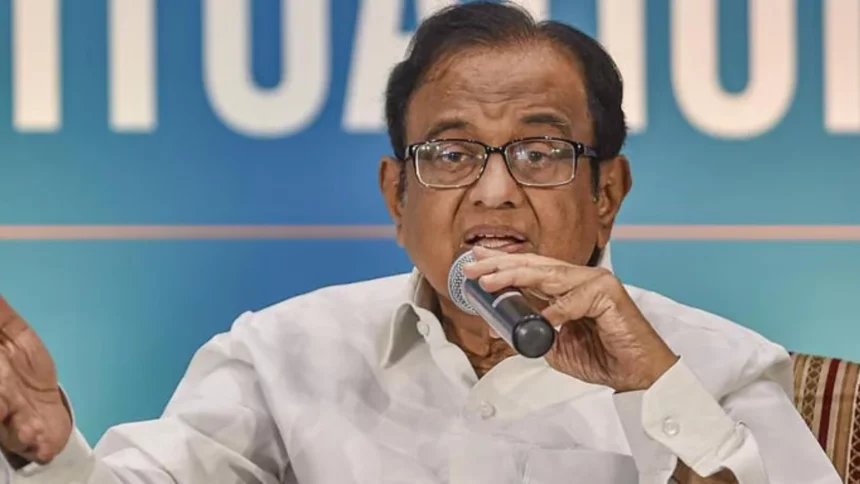
Former Union home minister P. Chidambaram has stirred a political storm by admitting that the UPA government refrained from military retaliation against Pakistan in the aftermath of the 26/11 Mumbai terror attacks due to pressure from the United States and advice from the Ministry of External Affairs. In a candid interview, Chidambaram revealed that “retribution crossed my mind” but the government eventually decided against action. His remarks have prompted sharp criticism from the BJP, which accused the Congress of exposing India’s vulnerabilities at a time of crisis.
Chidambaram Recounts US Pressure After 26/11
Recalling the tense days after the November 2008 attacks that left 166 people dead, Chidambaram said, “The whole world descended upon Delhi to tell us ‘don’t start a war’.” He highlighted the visit of then US Secretary of State Condoleezza Rice, who flew to India just days after the attacks to urge restraint. “Please don’t react,” Rice reportedly told the Indian leadership.
Chidambaram admitted he contemplated retaliation and discussed it with Prime Minister Manmohan Singh and other top officials. However, the final call—heavily influenced by the Ministry of External Affairs and Indian Foreign Service officers—was to avoid a physical response. “It did cross my mind that we should do some act of retribution, but the conclusion was not to react militarily,” he said.
The Congress veteran also recounted how he was shifted from the finance ministry to take charge of home affairs after then home minister Shivraj Patil resigned. “I did not want to exit finance, having presented five Budgets with an election due in a year. But it was a collective decision by Sonia Gandhi and Manmohan Singh,” he recalled.
BJP Targets Congress Over ‘Weakness’
The admission has drawn strong reactions from the ruling BJP. Union minister Pralhad Joshi called Chidambaram’s remarks “too little, too late,” insisting that the nation had always known the 26/11 response was “mishandled due to foreign pressure.”
BJP spokesperson Shehzad Poonawala sharpened the attack, alleging that Chidambaram was reluctant to take charge of the home ministry and wanted military action, but “others prevailed.” The BJP said the revelations confirm its long-standing criticism of the UPA’s weak national security posture.
Contrasting Congress’s restraint with its own record, the BJP highlighted decisive actions taken under the NDA government, including the 2016 surgical strikes after the Uri terror attack, the 2019 Balakot air strikes following Pulwama, and the 2025 Operation Sindoor launched after the Pahalgam attack.
The remarks have reignited debate over how India should respond to cross-border terror. While the Congress defends its policy as one of restraint aimed at avoiding escalation, the BJP argues that a stronger response was both possible and necessary to deter future attacks.