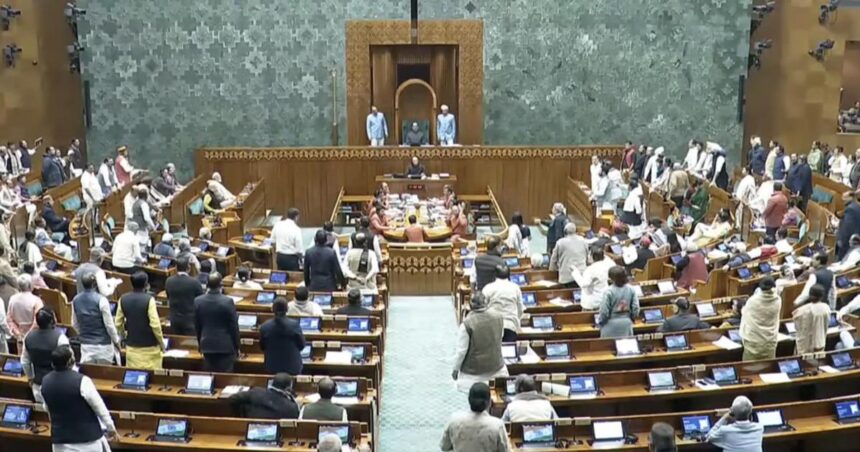
India is set for a major electoral restructuring as the Union government plans to significantly expand the strength of the Lok Sabha. The proposal, part of a broader constitutional amendment initiative, seeks to increase the number of seats from the current 543 to a maximum of 850. This move is closely tied to the long-pending delimitation exercise and the rollout of women’s reservation, making it one of the most consequential political reforms in recent years.
Constitutional Amendment and Seat Expansion Plan
The government has introduced a draft constitutional amendment bill to enable this expansion. Under the proposal, around 815 seats would be allocated to states and 35 to Union Territories, taking the total strength to 850 members.
The bill also seeks to amend provisions related to delimitation, particularly removing the requirement that the process must wait for the first Census after 2026. This would allow the government to conduct delimitation earlier using existing data, speeding up electoral reforms.
The planned expansion represents nearly a 50% increase in representation, which would significantly alter parliamentary dynamics, including raising the majority mark beyond 400 seats.
Link with Women’s Reservation Implementation
A key driver behind the proposal is the implementation of the 33% women’s reservation in Parliament. The existing legal framework ties this reservation to delimitation, meaning it cannot be enforced until constituencies are redrawn.
By increasing the number of seats, the government aims to ensure smoother implementation of the quota without reducing existing seats held by male representatives. The reform could result in more than 270 women MPs in the Lok Sabha once implemented.
The changes are expected to come into effect from the 2029 general elections, aligning with the timeline for the women’s reservation rollout.
Delimitation Process and Electoral Redistribution
Delimitation involves redrawing constituency boundaries and reallocating seats based on population changes. The current distribution is largely based on outdated census data, leading to disparities in representation across states.
The proposed reforms would empower a new Delimitation Commission to:
Reallocate seats among states and Union Territories
Redraw parliamentary and assembly constituencies
Adjust reserved seats for Scheduled Castes and Scheduled Tribes
This could significantly change the political map of India, with some states gaining more representation than others depending on population trends.
Political Concerns and Regional Debate
The proposal has triggered political debate, particularly among southern states. Critics argue that a population-based redistribution could reduce their representation, as these states have achieved better population control compared to others.
Leaders have called for wider consultation, warning that the move could disrupt the federal balance and create regional inequalities. Some have suggested alternative models that consider economic contribution alongside population.
On the other hand, supporters argue that delimitation based on population is essential for ensuring equal representation in a लोकतांत्रिक system.
Impact on India’s Political Landscape
If implemented, this reform will reshape India’s parliamentary structure, election strategies, and governance dynamics. A larger Lok Sabha could improve representation but also make coalition politics more complex.
The proposal also signals a shift toward long-delayed electoral reforms, addressing issues of representation imbalance and gender inclusion simultaneously.
However, its success will depend on political consensus, as constitutional amendments require broad parliamentary support.