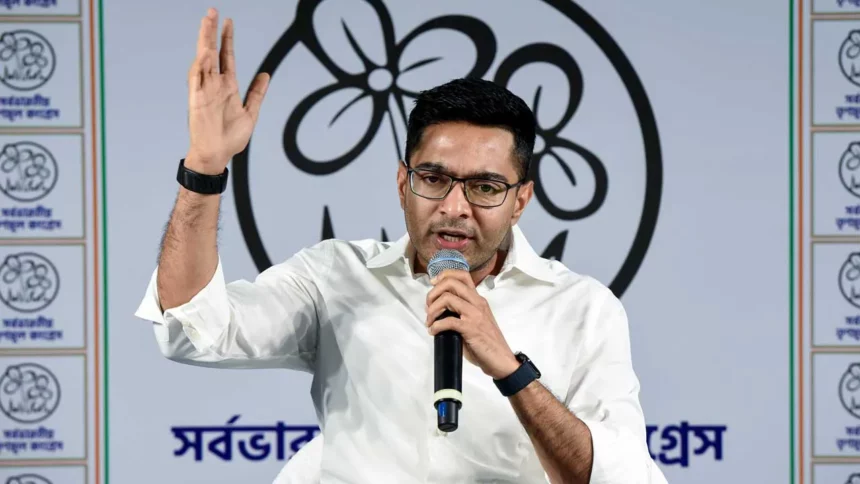
Political tensions in West Bengal have intensified as Abhishek Banerjee accused the BJP of manipulating electoral rolls and using divisive rhetoric. The remarks come in the backdrop of the ongoing Special Intensive Revision (SIR) exercise, which has led to the deletion of a significant number of voter names, raising concerns among opposition parties about electoral fairness.
Clash Over Voter Deletions and SIR Process
Abhishek Banerjee alleged that large-scale voter deletions under the SIR process were not administrative corrections but politically motivated actions aimed at influencing the upcoming elections. He claimed that a substantial number of genuine voters were being removed from electoral rolls, creating apprehension among citizens about their voting rights.
The SIR exercise, conducted by the Election Commission, has resulted in millions of deletions across states, including West Bengal, where lakhs of names have reportedly been removed during verification drives.
Banerjee argued that such measures could disproportionately affect marginalized communities and alter electoral outcomes, making the issue a central political flashpoint ahead of the polls.
Strong Reaction to ‘Bangladeshi’ Remark
The controversy was further fueled by remarks from BJP leaders linking voter deletions to alleged identification of “Bangladeshi infiltrators.” Reacting strongly, Banerjee criticized this narrative, stating that it stigmatizes sections of the population and undermines democratic principles.
He asserted that labeling citizens in such a manner was an attempt to polarize voters and divert attention from governance issues. The TMC leadership has consistently maintained that such rhetoric is harmful to social harmony and electoral integrity.
Political Accusations and Manifesto Criticism
Banerjee also targeted senior BJP leadership, including Amit Shah, accusing the party of making unrealistic promises in its manifesto. He described these promises as “jumla,” suggesting they lack substance and are aimed at gaining electoral advantage rather than delivering real change.
He further alleged that the BJP’s strategy revolves around creating divisions while failing to address key issues such as employment, development, and welfare in the state.
Electoral Context and Rising Political Tensions
The developments come as West Bengal prepares for the 2026 West Bengal Legislative Assembly election, where political rivalry between TMC and BJP has intensified.
The issue of voter deletions has become a major campaign theme, with opposition parties accusing the Election Commission of bias, while the BJP maintains that the exercise is necessary to remove ineligible voters and ensure electoral integrity.
Banerjee’s remarks reflect a broader political battle over narrative control, voter rights, and election transparency. With elections approaching, such controversies are expected to play a significant role in shaping voter sentiment and campaign strategies.
Broader Implications for Democracy
The ongoing debate highlights the delicate balance between maintaining accurate electoral rolls and ensuring that eligible voters are not disenfranchised.
As accusations and counter-accusations continue, the focus remains on how institutions manage the process and maintain public trust. The outcome of this political confrontation could influence not only the election results but also broader discussions on electoral reforms and democratic accountability in India.