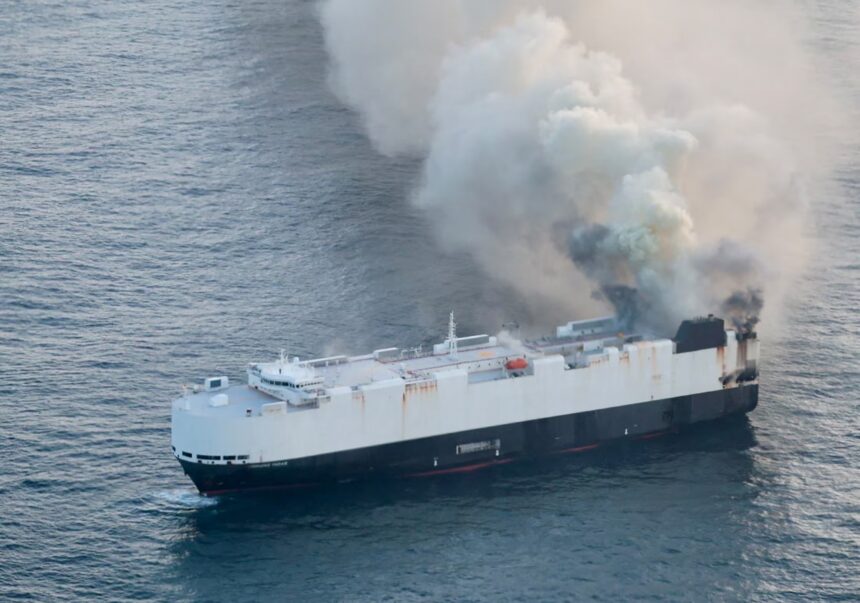
A cargo ship transporting thousands of vehicles, including hundreds of electric vehicles (EVs), has sunk in the North Pacific Ocean weeks after catching fire. The vessel, named Morning Midas, was en route from China to Mexico when the incident occurred. Though the fire broke out on June 3, the ship finally went down more than three weeks later, about 415 miles from land and 16,404 feet deep into the ocean. Fortunately, no human lives were lost in the disaster.
Ship Catches Fire Midway, Crew Safely Rescued
The fire started approximately 300 miles off the coast of Alaska, prompting the cargo ship to send out a distress signal. The US Coast Guard responded quickly, deploying aircrews and a cutter vessel to assist. All 22 crew members aboard Morning Midas were safely evacuated using lifeboats and rescued by a passing merchant marine ship. The crew was unharmed, but the vessel was left adrift and burning for weeks.
Morning Midas was a 600-foot, Liberian-flagged cargo ship built in 2006. It departed Yantai, China, on May 26 and was headed for the port of Lázaro Cárdenas in Mexico, carrying around 3,000 brand-new vehicles, including 800 electric cars.
Environmental Monitoring Underway After Sinking
The ship eventually sank in international waters near the Aleutian Islands, an area known for harsh sea conditions. According to Zodiac Maritime, the London-based management company for the ship, the combination of fire damage, worsening weather, and water ingress caused the vessel to sink.
After the incident, US Coast Guard officer Cameron Snell confirmed that there were no immediate signs of pollution at the site. However, precautionary measures have been taken. Specialized salvage tugs equipped with pollution control gear have been deployed near the area of the wreck. Zodiac Maritime has also committed to sending a pollution response vessel to support clean-up efforts and monitor the area for any signs of fuel leaks or hazardous material release.
The Coast Guard continues to keep vessels on standby in case further environmental threats emerge. Despite the absence of visible contamination, authorities remain vigilant given the ship’s cargo, which included lithium-ion batteries in electric vehicles that could pose environmental risks if compromised.
The Morning Midas disaster adds to a growing list of cargo ship incidents involving EVs, raising concerns about fire safety standards aboard maritime transport vessels. Investigations are expected to examine the cause of the blaze and assess whether specific safety regulations were breached or need to be strengthened for future EV shipments.