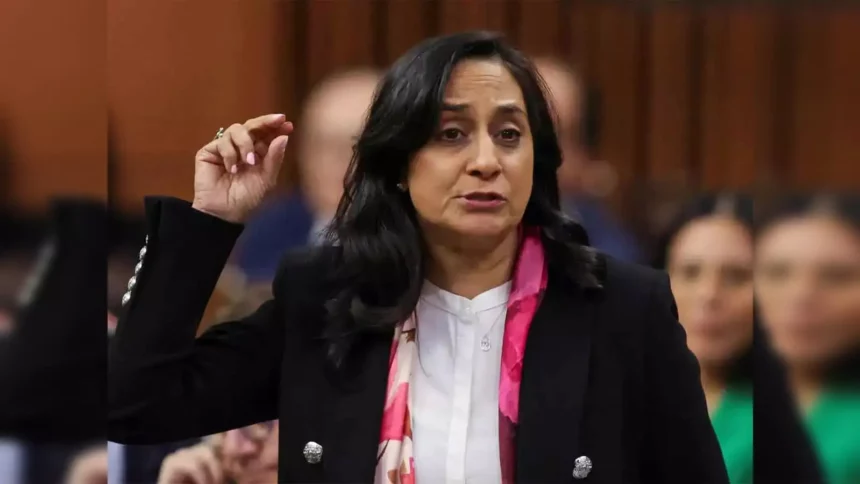
In a cautious yet optimistic shift, Canadian Foreign Minister Anita Anand has said her country is looking to mend its fractured relationship with India, following her recent phone call with Indian External Affairs Minister Dr S Jaishankar. While deep wounds remain from last year’s diplomatic fallout over the killing of Khalistani separatist Hardeep Singh Nijjar, Anand stressed that Ottawa is taking a “one step at a time” approach toward rebuilding trust with New Delhi.
The bilateral relationship took a sharp downturn in September 2023 after then Prime Minister Justin Trudeau accused India of involvement in Nijjar’s killing—a claim strongly denied by New Delhi. The accusations led to tit-for-tat diplomatic expulsions and the suspension of trade negotiations. Nearly two years on, both nations still lack ambassadors in each other’s capitals, underscoring the depth of the impasse.
Cautious Optimism Amid Unresolved Issues
Anand acknowledged that an investigation into Nijjar’s murder is still ongoing and emphasized that the “rule of law will never be compromised.” At the same time, she noted the Canadian government’s intent to restore a functional partnership with India. While she refrained from commenting on whether ambassadorial appointments would follow soon, she reiterated the step-by-step approach being taken by her administration.
Anand also framed the outreach as part of a broader foreign policy shift aimed at reducing Canada’s reliance on the United States by building diversified relationships globally. The Trudeau government has come under pressure domestically to manage its strategic ties more effectively, particularly with major Indo-Pacific economies like India.
Economic Imperatives Behind the Diplomatic Reset
The business community in Canada has echoed similar calls for pragmatism. Goldy Hyder, president of the Business Council of Canada, emphasized India’s role in any future Indo-Canadian strategy. He revealed plans to travel to India in July to help prepare for a larger business delegation that may visit later this year or early next year.
“You can’t have an Indo-Canadian strategy without the Indo,” Hyder remarked, pointing to the mutual economic benefits that can come from reengaging diplomatically. He also underlined the importance of democratic maturity in resolving complex disagreements between two sovereign nations.