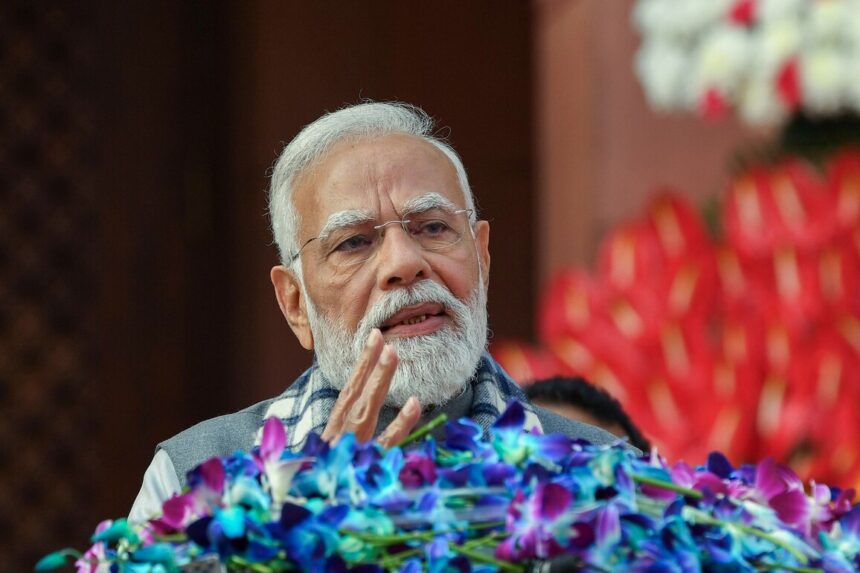
The Union Cabinet, under the leadership of Prime Minister Narendra Modi, has taken a decisive step towards strengthening India’s energy security and enhancing the efficiency and transparency of coal utilisation by approving the CoalSETU policy. This policy, formally known as the Auction of Coal Linkage for Seamless, Efficient, and Transparent Utilisation, is aimed at reducing India’s dependence on imported coal, increasing the availability of domestic coal for industrial purposes, and supporting the Ease of Doing Business initiative. Announced by the Prime Minister on Friday, the new policy framework introduces a dedicated CoalSETU window within the Non-Regulated Sector (NRS) Linkage Policy, allowing coal to be allocated for long-term industrial use and exports through a structured auction process. With India poised for rapid industrial growth and increasing energy demands, this policy is expected to provide a structured mechanism for industries to access coal efficiently while promoting the utilisation of domestic coal reserves and reducing logistical and procedural bottlenecks.
CoalSETU Policy and Its Implications for Energy Security
The CoalSETU policy is designed to bring a paradigm shift in the way coal linkages are managed and allocated in the Non-Regulated Sector. By creating a distinct window for coal allocation through auctions, the government aims to introduce transparency and predictability in the coal supply chain, ensuring that domestic industries have access to coal for their operational needs without cumbersome restrictions. The policy aligns with the broader vision of opening up the coal sector for commercial mining, where coal blocks can now be allocated without any end-use restrictions, enabling industries to plan their operations with greater certainty and efficiency. Under this policy, any domestic buyer requiring coal for industrial purposes or exports can participate in the auction process, thereby democratizing access and fostering competition. The CoalSETU window is expected to support various industrial sectors by ensuring long-term coal availability, which is crucial for continuous industrial production and economic growth. By reducing reliance on imported coal, the policy also aims to shield domestic industries from international price volatility and supply uncertainties, enhancing India’s energy security and contributing to overall economic resilience.
The creation of the CoalSETU window in the NRS Linkage Policy addresses several critical gaps that existed in the previous framework. Prior to this policy, coal allocation for non-regulated industrial users faced certain procedural and regulatory limitations that could hinder efficient utilisation and industrial planning. By removing end-use restrictions and allowing allocation on a long-term basis, the CoalSETU policy ensures that industries can utilise coal for multiple purposes, including own consumption, coal washing, and export, while also excluding resale within India. This flexibility is expected to encourage investment in coal-based infrastructure, including washeries and industrial units, while also promoting technological adoption and modernisation in coal handling and utilisation. Furthermore, the government’s decision to allow coal linkages to be exported up to fifty percent of the allocated quantity provides industries with an additional avenue for revenue generation and international trade, enhancing India’s position in the global coal market. Overall, the policy reflects a comprehensive approach to modernising coal management, improving domestic supply security, and strengthening industrial competitiveness.
Boosting Domestic Coal Availability and Reducing Imports
A key objective of the CoalSETU policy is to significantly reduce India’s dependence on imported coal, which has historically been a challenge due to fluctuating global coal prices and supply uncertainties. By providing a transparent mechanism for domestic coal allocation and facilitating the development of washeries, the policy is expected to increase the supply of high-quality washed coal within the country. Washed coal, being more efficient and environmentally compliant, is in increasing demand among industries, particularly in power generation and steel production. The government’s emphasis on facilitating washed coal availability through the CoalSETU policy ensures that domestic industries can meet their operational requirements while minimising the need for imports, ultimately leading to cost savings, improved energy efficiency, and enhanced sustainability. Additionally, the allocation for washeries under the CoalSETU window will also support exports, thereby strengthening India’s presence in the global coal market and promoting trade opportunities. This dual focus on domestic supply and export potential demonstrates the government’s commitment to ensuring optimal utilisation of coal resources while simultaneously contributing to economic growth and energy security.
The policy’s long-term perspective is also intended to address the evolving energy demands of the country in line with industrial expansion and infrastructural development. With India’s economy projected to grow rapidly over the coming decades, the demand for reliable and affordable coal is expected to rise significantly. By institutionalising a competitive auction-based framework for coal allocation, the CoalSETU policy provides a predictable and regulated environment for industries to secure their coal requirements, thereby enhancing industrial productivity and growth. The policy also strengthens the government’s broader energy strategy, which focuses on reducing import dependence, optimising domestic resource utilisation, and promoting energy efficiency. Moreover, the introduction of the CoalSETU window within the existing NRS Linkage Policy ensures that the allocation process is streamlined, transparent, and subject to clear regulatory oversight, mitigating risks of arbitrary allocation and promoting fairness in access to resources.
The Cabinet’s approval of the CoalSETU policy further complements India’s ongoing energy sector reforms, including the liberalisation of coal mining, the promotion of private sector participation, and the modernisation of coal supply chains. By aligning policy with industry needs, facilitating long-term linkages, and enabling both domestic consumption and export of coal, the government is creating a sustainable framework that balances economic growth with resource efficiency and strategic energy planning. The emphasis on industrial use and export potential also signals India’s readiness to integrate more actively into the global energy market, leveraging domestic coal production to enhance energy security and international trade capabilities. The policy is therefore a critical component of India’s broader vision for a resilient and self-reliant energy sector, capable of supporting industrial expansion, reducing foreign dependency, and accelerating overall economic development.
In conclusion, the CoalSETU policy represents a major step forward in India’s approach to coal management and energy security. By introducing a dedicated auction-based window for coal allocation, the policy ensures that domestic industries have reliable access to coal for industrial use and exports while promoting efficient, transparent, and flexible utilisation of domestic coal reserves. Through this initiative, the government aims to reduce import dependency, support Ease of Doing Business, strengthen energy security, and enhance industrial competitiveness. As India continues to witness rapid economic growth and rising energy demand, the CoalSETU policy provides a robust mechanism to secure coal resources, promote investment in washeries and industrial infrastructure, and enable sustainable, long-term planning for industrial and energy requirements. This policy underscores the government’s commitment to modernising India’s coal sector, optimising domestic resource utilisation, and integrating energy security into the broader framework of economic development and national growth.