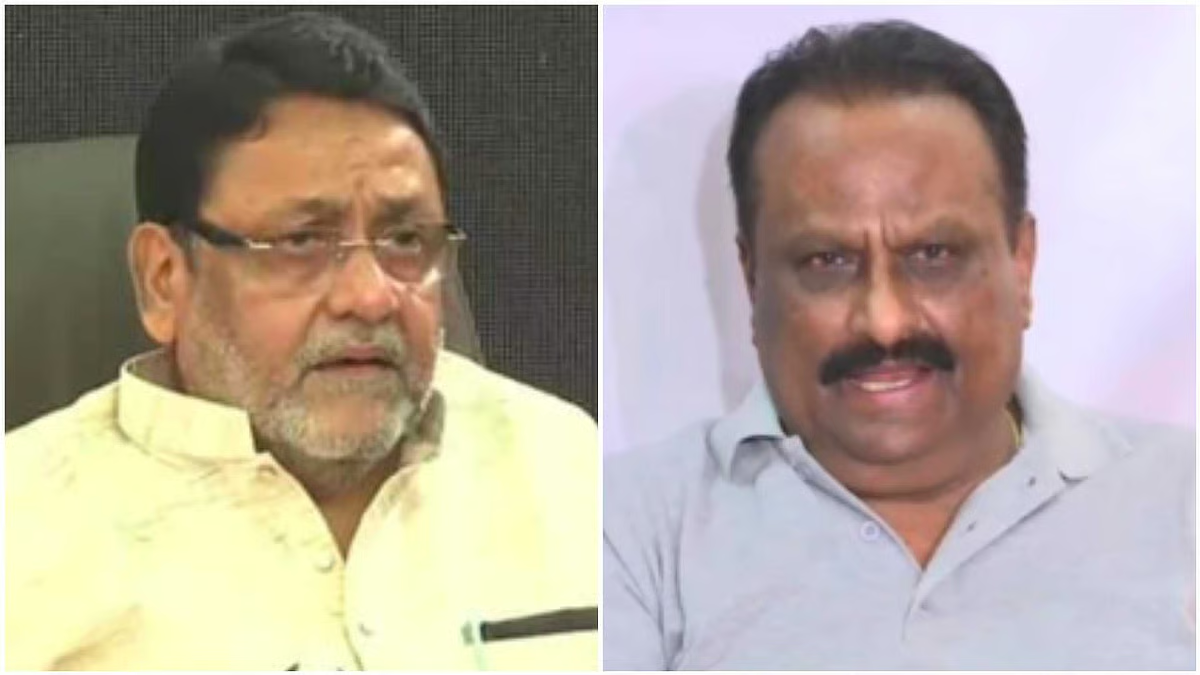
In a case reflecting the complex intersections of defamation, politics, and procedural law, the Bombay High Court has dismissed a contempt petition filed by Dhyandev Wankhede, father of IRS officer Sameer Wankhede, against NCP (Ajit Pawar faction) MLA and former Maharashtra minister Nawab Malik. The case, which stemmed from allegations that Malik continued to make defamatory remarks against Sameer Wankhede despite previous court orders, highlights the challenges of enforcing undertakings in high-profile public disputes.
Background of the Defamation Dispute
Dhyandev Wankhede approached the Bombay High Court alleging that Nawab Malik had violated previous directions by the court, which had barred Malik from making defamatory statements against the Wankhede family. The orders, issued on November 29 and December 7 and 10, 2021, had explicitly restrained Malik from speaking publicly against the family.
In December 2021, Malik had tendered an unconditional apology to the court, assuring that he would not comment on the Wankhede family even if approached by the media. Despite this, Dhyandev Wankhede claimed that Malik made fresh defamatory statements about Sameer Wankhede in a recent interview, thereby breaching the court’s prior directions and the undertaking given during the earlier hearings.
Advocate Sana Raees Khan, representing Dhyandev Wankhede, presented these alleged violations before a bench of Justices MS Sonak and Jitendra Jain, arguing that the remarks constituted a clear breach warranting contempt action against Malik.
Court’s Reasoning and Future Course
However, the legal position took a different turn during the hearing as Malik’s counsel pointed out a procedural gap: the earlier civil defamation suit related to this matter had been disposed of due to the non-removal of office objections. These were procedural irregularities flagged by the court registry, leading to the dismissal of the civil suit that formed the basis of the contempt petition.
The bench accepted the arguments of Malik’s counsel, noting that since the primary suit had been disposed of, the contempt plea could not sustain independently in its current form. Supporting documentation provided by Malik’s legal team helped solidify this argument before the court.
Following these submissions, the Bombay High Court dismissed the contempt petition filed by Dhyandev Wankhede against Nawab Malik, effectively closing the current chapter in the legal dispute between the parties.
Advocate Sana Raees Khan, representing the Wankhede family, stated after the court’s decision that she intends to seek restoration of the disposed civil defamation suit. She also indicated that, if necessary, a fresh contempt petition could be filed based on the alleged breaches highlighted during the current proceedings, signalling that the legal battle may continue as the family seeks to protect its reputation.
The case underscores the complexities of balancing court orders, procedural compliance, and public statements in defamation disputes, particularly when involving high-profile individuals and political figures, and highlights the importance of procedural rigour in pursuing contempt actions in court.