In the latest escalation amid the violent protests in Ladakh demanding statehood, the Bharatiya Janata Party leveled serious accusations against a Congress councillor, claiming he incited mob violence in Leh. The protests resulted in at least four deaths and dozens injured, with the BJP alleging that Congress is manipulating youth unrest for political gain. Meanwhile, activist Sonam Wangchuk rejected these claims, asserting that Congress lacks the organizational reach to mobilize thousands and that his own ideological role has been misrepresented.
BJP’s Accusations Against Congress Leadership
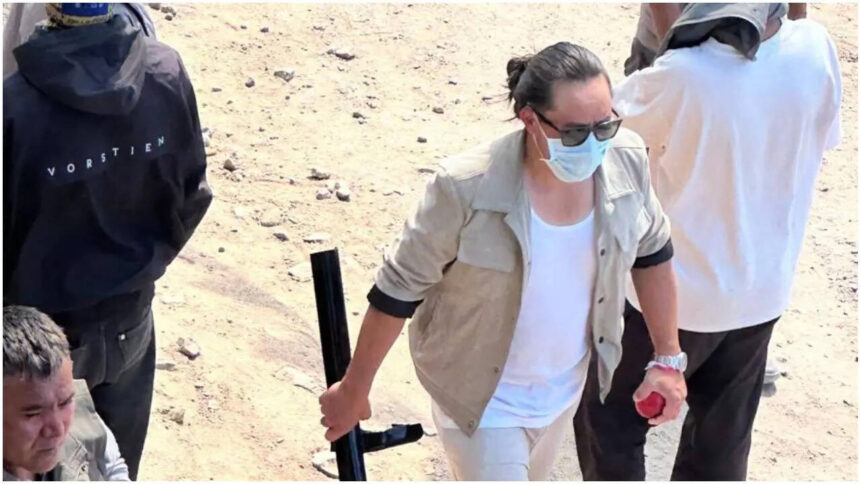
At a press conference in New Delhi, BJP MP Sambit Patra held forth, alleging that the protests were not spontaneous youth-led uprisings but orchestrated events catalyzed by Congress operative Phuntsog Stanzin Tsepag. Patra contended that multiple photos and videos had surfaced showing the councillor marching toward the BJP office carrying a weapon, inciting the mob, and encouraging the arson and attacks. According to Patra, investigations revealed that Tsepag had been closely aligned with senior Congress leadership, even being photographed alongside Rahul Gandhi, implicating the party at large in the unrest.
Patra castigated Congress, accusing its leadership of fomenting division, claiming that slogans like “Bharat tere tukde honge” (India will be broken up) reflect the party’s larger design. He accused Rahul Gandhi of colluding with global actors like George Soros to destabilize India’s unity, and asserted that the violence in Ladakh was in line with similar unrest engineered in Nepal and Bangladesh. Echoing his attacks, BJP IT Cell head Amit Malviya shared videos and images of Tsepag in leadership roles within the protest, questioning whether Rahul Gandhi desired such violence in Ladakh.
In addition to direct targeting of Congress, BJP figures attempted to frame the protests as an extension of a broader “conspiracy.” They sought to tie the disturbances to national-level political agendas, suggesting that the unrest was not about Ladakh’s autonomy or demands for constitutional safeguards, but rather a plot to undermine central authority.
Sonam Wangchuk and the Narrative Pushback
In response to the BJP’s claims, Sonam Wangchuk took the stage to assert his disappointment and deny any role by Congress in the unrest. He voiced skepticism that Congress could mobilize 5,000 youth on the streets of Leh, saying, “It’s unimaginable that the party has that kind of pull in Ladakh.” He acknowledged that the councillor in question may have expressed anger, especially since two injured persons hospitalized belonged to his village, but rejected the idea that a political party orchestrated mass violence there.
Wangchuk described the violence as unplanned and organic—fuelled by pent-up frustration among political youth at promises unfulfilled, environmental degradation, and a sense of marginalization. He said that the bloodshed had lowered the tone of the protests and prematurely ended his 15-day hunger strike, which had been the core symbolic protest for statehood and constitutional safeguards. He appealed to the youth to abandon violent tactics, warning that further casualties would only harm Ladakh’s cause.
Authorities also entered the fray. The Union government later issued a statement blaming Wangchuk for the violence, claiming that provocative speeches and continued fasting had guided mob action. They argued that police responded in self-defense after security personnel were attacked, and accused him of misleading popular sentiment. This framing by the Centre served to complicate the narrative, pitting protest legitimacy against accusations of incitement.
On the ground, the scenario was chaotic. Protesters torched the BJP office and vehicles, security forces used tear gas and live rounds, and curfews were imposed. The violence followed the hospitalization of two hunger strikers—a turning point that energized public anger and pushed the movement past civil disobedience into confrontation. The Leh Apex Body and Kargil Democratic Alliance, central to Ladakh’s long-running demands for Sixth Schedule protections and full statehood, now face the task of salvaging momentum amid a deeply fractured political environment.
The conflation of protest aspirations with national political intrigue has made resolution more complex. As Ladakh sits on edge, the tussle of narratives between the BJP, Congress, and Wangchuk highlights deeper fault lines—over autonomy, identity, governance, and who gets to speak for Ladakh’s future.