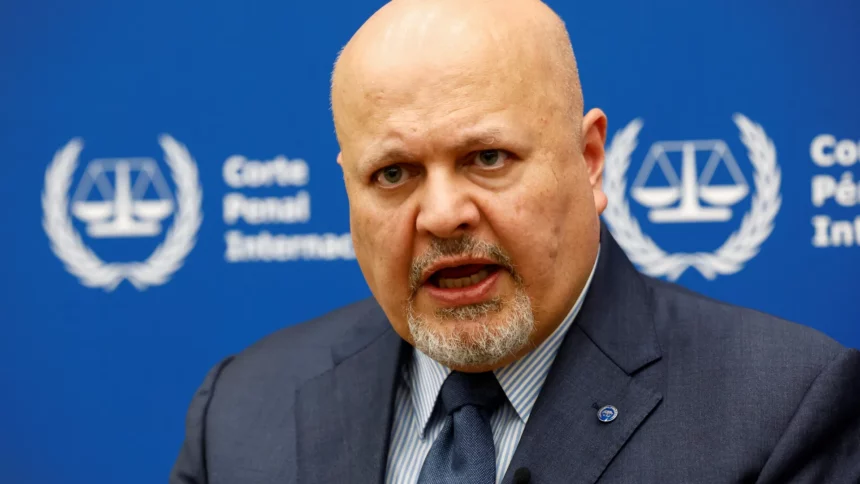
The controversy surrounding International Criminal Court (ICC) Chief Prosecutor Karim Khan has intensified after Israeli Prime Minister Benjamin Netanyahu made public statements suggesting multiple sexual misconduct allegations against Khan. These claims, which have never previously appeared in the public domain, have prompted Khan and his office to question whether Israel is attempting to interfere in and manipulate an ongoing United Nations investigation into the matter. The timing and nature of Benjamin Netanyahu’s remarks, coupled with existing media coverage, have fueled a broader debate on international political influence, the independence of judicial authorities, and the integrity of investigations into sensitive allegations. Khan, who has consistently denied any wrongdoing, faces mounting external pressures while pursuing cases against senior Israeli officials for alleged violations during the Gaza conflict, highlighting a complex intersection of justice, politics, and personal attacks.
Allegations, Responses, and the ICC Investigation
Karim Khan has faced scrutiny from the UN’s Office of Internal Oversight Services (OIOS) since late 2024, following allegations of sexual misconduct made by a female ICC staff member. These allegations, which Khan has categorically denied, remain under confidential investigation. In a surprising turn, Benjamin Netanyahu publicly claimed that four additional women had come forward with accusations against Khan, a claim the ICC chief’s spokesperson described as entirely unfamiliar. According to Khan’s office, no such allegations had been communicated to him, and the spokesperson stressed that Benjamin Netanyahu’s comments raise “profound questions” regarding potential state interference and efforts to discredit both Khan and the ICC.
Khan’s spokesperson highlighted the extraordinary nature of the Israeli Prime Minister’s remarks, noting that a serving head of government, openly critical of the ICC and UN, purported to possess knowledge of confidential allegations that had not been presented to the prosecutor or investigators. The comments coincided with The Guardian’s publication of an exclusive story referencing a second individual, clarifying that this person was understood to be a witness rather than a complainant in the UN investigation. Khan’s team emphasized that these events, occurring alongside prior media leaks and political scrutiny, suggest attempts to manipulate public perception and compromise the impartiality of the ongoing investigation.
The allegations and ensuing media coverage have been framed within a wider context of pressure on Khan arising from his efforts to seek arrest warrants for Israeli leaders, including Benjamin Netanyahu and former Defense Minister Yoav Gallant, for alleged war crimes committed during the Gaza conflict and illegal settlement expansions in the West Bank. Sources within the ICC confirmed that media leaks and external political interventions have created a climate of tension and distraction, complicating Khan’s prosecutorial work.
Political Pressures, Media Narratives, and International Implications
Benjamin Netanyahu’s comments, made during an interview with Breitbart News, suggested that Khan’s actions in pursuing arrest warrants were influenced by attempts to deflect attention from alleged sexual misconduct claims. The Prime Minister asserted that Khan had faced accusations from a female staff member and implied that subsequent decisions were politically motivated to gain support from progressive factions critical of Israel. The ICC prosecutor’s office categorically rejected any linkage between the timing of the arrest warrant applications and ongoing investigations into allegations of sexual misconduct, describing Benjamin Netanyahu’s statements as “demonstrably false.”
The political dimension is further underscored by past reports of external pressures from influential figures, including former British Foreign Secretary David Cameron and US Senator Lindsey Graham, alongside internal efforts by colleagues and associates to discredit Khan. These pressures, combined with media narratives and targeted leaks, have created an environment that ICC officials and observers describe as unprecedented in scale and intensity. Khan’s spokesperson emphasized that these interventions have included attempts to solicit false allegations and discredit Khan personally, including spreading malicious claims regarding his adopted daughter.
The timing of Benjamin Netanyahu’s remarks, immediately preceding media publications, has raised suspicions regarding potential coordination and intent to influence public perception. Khan’s office warned that the involvement of state actors in suggesting knowledge of confidential allegations represents a serious challenge to the independence of judicial investigations and the principles of fairness and confidentiality expected in international legal proceedings. This context highlights the vulnerabilities faced by international prosecutors operating in politically charged environments while pursuing cases against powerful state actors.
Further complicating the matter, multiple sources within the ICC reported that applications for arrest warrants against additional Israeli ministers were expected to face quiet shelving due to external political pressure, particularly from Israel and the United States. Khan’s decision to proceed with the warrants, despite intense scrutiny and threats, reflects his commitment to impartial justice, yet also underscores the personal and professional risks inherent in such high-profile cases.
The historical record within the ICC shows that the decision to pursue arrest warrants for Benjamin Netanyahu and Yoav Gallant preceded the emergence of allegations against Khan. Documentation confirms that as early as March 2024, Khan’s team had prepared the legal framework and pre-informed relevant authorities regarding the intended applications, which were formally submitted in late April 2024. The sexual misconduct allegations emerged after these procedural decisions, further challenging claims suggesting a causal relationship between the two events. Khan’s spokesperson emphasized that the temporal sequence makes Benjamin Netanyahu’s claims not only misleading but factually incorrect.
The broader narrative reflects ongoing tensions between prosecutorial independence and political influence, with Khan’s office asserting that attempts to fabricate or amplify allegations serve to undermine the credibility of the ICC and weaken the rule of international law. Interviews with former ICC judges reinforced concerns that Khan’s professional integrity and independence have been targeted due to his willingness to pursue cases without yielding to external pressures. Cuno Tarfusser, who served at the ICC from 2009 to 2020, described the situation as “deeply disturbing,” noting that Khan’s impartiality and commitment to justice appear to have provoked coordinated efforts to discredit him.
The developments have also highlighted operational and security concerns, as Mossad’s presence in The Hague, where the ICC is headquartered, has reportedly contributed to fears for Khan’s safety. These pressures coincide with ongoing administrative scrutiny, media leaks, and internal disagreements within the ICC regarding prosecutorial priorities and strategies, creating a multi-layered environment of stress and accountability.
Khan’s office has repeatedly stressed that all allegations of sexual misconduct against him are categorically denied and that no complaints, questions, or investigations beyond the initially reported OIOS inquiry have been made known to him. Furthermore, attempts to suggest linkage between his prosecutorial actions against Israeli officials and allegations of sexual misconduct are explicitly rejected, highlighting the politicized framing of these issues by certain actors. The ICC spokesperson clarified that Khan’s focus remains on conducting his duties with integrity, pursuing justice for international crimes, and maintaining the impartiality of the court’s operations.
The political implications extend beyond the immediate allegations, reflecting broader concerns regarding the role of state actors in attempting to influence international judicial processes. Benjamin Netanyahu’s public statements, the timing of media leaks, and coordinated efforts to discredit Khan illuminate the complex interplay between national politics, media coverage, and international law. Observers note that these dynamics pose significant challenges for the ICC, particularly in maintaining its independence and credibility while operating under intense geopolitical scrutiny.
Amid these pressures, Khan’s team continues to navigate an exceptionally challenging professional landscape, balancing the pursuit of international justice with the management of reputational and political risks. The repeated attempts to fabricate or exaggerate allegations, coupled with public statements from national leaders, reflect the stakes involved in prosecuting cases against powerful state figures. ICC officials emphasize that maintaining confidentiality, impartiality, and procedural integrity remains critical to safeguarding both the institution and the individuals it seeks to hold accountable.
The controversy surrounding Benjamin Netanyahu’s claims against Karim Khan illustrates the intersection of politics, international law, and personal allegations, underscoring the challenges faced by high-profile prosecutors operating in politically sensitive environments. The sequence of events, documentation of prior decisions, and ongoing statements from Khan’s office collectively challenge narratives that seek to link independent judicial actions with unverified allegations, highlighting the importance of protecting the independence and credibility of international legal institutions. The ongoing situation raises significant questions about state interference, media influence, and the broader implications for justice, governance, and the protection of international legal norms.