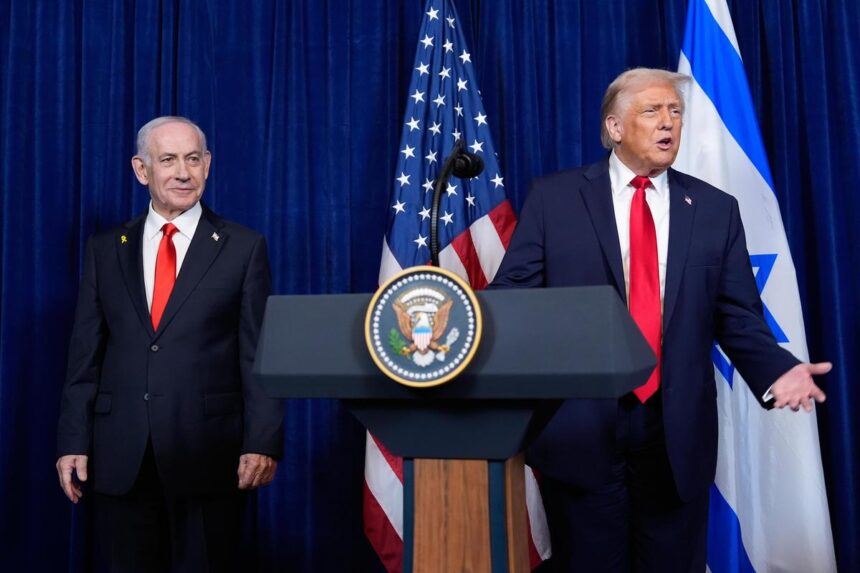
Israeli Prime Minister Benjamin Netanyahu will meet U.S. President Donald Trump in Washington on February 11, 2026. The meeting will focus on Iran’s ballistic missile program and security threats in the Middle East. This will be the sixth joint meeting between Netanyahu and Trump, taking place at a time when the United States and Iran have resumed talks in Oman. Netanyahu’s objective is to ensure that any agreement with Iran addresses not only its nuclear program but also concerns related to its missile capabilities and regional influence. Following last year’s historic conflicts and Iranian missile attacks, this issue has become particularly critical for Israel.
Israel’s Strategic Concerns and Netanyahu’s Negotiation Objectives
Netanyahu’s primary objective is to align the United States with Israel’s concerns regarding the dangers posed by Iran’s military programs. Israeli officials believe that Iran’s ballistic missile program represents a separate and immediate threat, distinct from its nuclear ambitions. During the 12-day war in June 2025, Iran launched multiple missiles into Israeli territory, targeting both civilian areas and military installations. These attacks caused extensive material damage and civilian casualties. Israeli officials argue that the speed, accuracy, and radar-evading capabilities of these missiles pose a serious threat to national security.
Netanyahu’s office emphasizes that discussions with Trump will not be limited to nuclear agreements alone but will also include the need to curb Iran’s missile stockpile and its support for regional proxies. For Israel, missile control is a “red line” that both the United States and Israel must recognize. In addition, Netanyahu seeks to ensure that any agreement places restrictions on Iran’s regional activities and the militant groups it supports.
Experts note that Netanyahu remains cautious about potential agreements with Iran. He is concerned that U.S.-led negotiations may lack sufficient provisions to fully address the Iranian threat. The Israeli prime minister’s approach is maximalist: either regime change in Iran or the complete dismantling of its nuclear and missile programs. This stance reflects the seriousness of his demands going into the meeting.
Historical Context of Iran–Israel Conflicts and U.S. Involvement
The upcoming Netanyahu–Trump meeting is shaped by the military confrontations, targeted strikes, and retaliatory actions between Israel and Iran over the past two years. In April 2024, during the Gaza war, Iran launched drone and missile attacks on Israel for the first time, in retaliation for an attack on its consulate in Damascus. In October 2024, Iran fired nearly 200 missiles following the killings of Hamas and Hezbollah leaders.
The 12-day war in June 2025 marked an unprecedented escalation between Israel and Iran. During this conflict, Israel targeted Iranian military and nuclear facilities as well as civilian areas. Subsequently, the United States carried out airstrikes on Iranian nuclear sites, and a ceasefire was implemented through mediation by President Trump. The conflict resulted in 30 deaths and caused widespread damage to public infrastructure, hospitals, and property.
Netanyahu believes that Iran’s missile capabilities represent a more immediate danger than its nuclear threat. The high speed and short warning time of missile attacks have placed Israel’s civilian security at serious risk. For this reason, his negotiations focus not only on nuclear agreements but also on Iran’s missile program and its regional allies.
Iran has consistently opposed expanding the scope of talks with the United States beyond nuclear issues. However, Washington seeks to address Iran’s ballistic missile program and its support for regional groups as well. Netanyahu’s strategy includes convincing Trump that missile control is as critical as nuclear control.
Israel’s strategic concerns also include growing international attention on land purchases and settlement policies in the West Bank. While it remains unclear whether these issues will be discussed, Netanyahu aims to secure strong U.S. security guarantees and balance increasing regional diplomatic pressure.
History shows that missile attacks pose an immediate threat to Israel. The damage caused by missile and projectile attacks in June 2025 underscored the severity of this risk. Experts argue that while the nuclear program represents a long-term threat, missile capabilities constitute an immediate and tangible challenge. Netanyahu’s strategy is to ensure that any agreement with Iran includes restrictions on missile development and regional proxies.
Netanyahu also seeks to align U.S. policies with Israel’s security priorities. He wants the United States to actively participate in missile control efforts and ensure that no agreement undermines Israel’s security. Trump’s Middle East approach and past experience will also shape the framework of the talks.
Iran’s Foreign Ministry criticized Netanyahu’s visit, calling it “destructive” and warning that it could harm regional stability. This response has heightened the sensitivity and complexity of the negotiations. Netanyahu aims to counter this challenge by securing U.S. confirmation on missile control and security guarantees.
Bilateral Diplomatic Coordination and Security Priorities
The Netanyahu–Trump talks emphasize bilateral coordination and regional security strategies. By identifying Iran’s missile program as an immediate threat, Netanyahu seeks to ensure that U.S. diplomacy remains responsive to these realities. Such coordination is essential, as regional conflicts, missile escalation, and nuclear negotiations are deeply interconnected.
Netanyahu’s approach reflects his intent to incorporate missile control and regional influence into the U.S. diplomatic agenda. According to him, controlling missiles and restricting proxy groups are necessary for both immediate security and long-term strategy.
Iran’s support for allied groups, combined with its ballistic missile capabilities, continues to fuel regional instability. Netanyahu’s strategy ensures that Israel’s security priorities remain central to any negotiation or agreement.
Missile control, restrictions on regional proxies, and defense preparedness form the core of Netanyahu’s strategic priorities. This underscores Israel’s determination to place its security at the center of international negotiations.
The significance of the meeting also lies in balancing missile threats and regional influence. Nuclear issues are long-term, while missile threats are immediate. Netanyahu wants these urgent risks reflected in negotiations through U.S. involvement.
The talks will indicate how the United States and Israel plan to shape a joint security framework regarding Iran. Without missile control and restrictions on proxy groups, no agreement would be considered sufficient from Israel’s perspective.
Netanyahu’s strategy also emphasizes ensuring close coordination with the United States so that Israel’s security priorities are respected in any negotiations. This meeting represents a convergence of bilateral coordination, diplomacy, and strategic vision.
With Israel’s security in focus, Netanyahu has made missile control a central point of discussion. This ensures that any future agreement addresses not only nuclear issues but also ballistic and regional security threats.
The meeting will clarify how far the United States and Israel can balance security and diplomacy. Netanyahu’s focus on missile control and regional proxies reflects their importance for both immediate and long-term security.
The outcome of the talks will influence not only Israel’s defense strategy but also the United States’ role in the Middle East and the future direction of negotiations with Iran. This meeting marks a critical moment in the security and diplomatic partnership between the two countries.
Netanyahu’s U.S. visit highlights the importance Israel places on America’s role in balancing immediate security threats and long-term diplomatic goals. Missile control and restrictions on proxies remain key objectives of these talks.
The meeting’s focus on ballistic missiles, regional influence, and defense preparedness ensures that the United States and Israel work together to confront Middle Eastern security challenges.
Netanyahu’s approach demonstrates the necessity of including Israel’s security priorities in any international agreement. Missile control and restrictions on proxies will be central to the negotiations.
The meeting will show how effectively the United States and Israel can combine security and diplomacy to promote regional stability. According to Netanyahu, no agreement will be considered complete without missile control and restrictions on regional proxies.
In this way, the Netanyahu–Trump meeting represents an important phase in Middle Eastern security, diplomacy, and strategic balance. It will shape not only Israel’s defense strategy but also the United States’ regional outlook.
Netanyahu’s strategic priorities—missile control, restrictions on regional proxies, and defense preparedness—ensure that Israel’s security remains paramount in any negotiations.
The meeting also illustrates how Israel seeks to address its immediate threats through its partnership with the United States. Emphasis on ballistic missiles and regional influence highlights the coordination between security and diplomacy.
The Netanyahu–Trump meeting exemplifies how strategic vision, historical experience, and immediate security concerns combine to shape Middle Eastern diplomacy.
This meeting is a significant effort to integrate Israel’s security priorities into U.S. diplomacy. Through missile control and restrictions on proxies, Israel aims to secure its national security objectives.
Netanyahu’s meeting further demonstrates how crucial U.S.–Israel cooperation is for both immediate and long-term security. Missile control and regional proxies are central issues in the talks.
The discussions will signal whether Israel’s security concerns will be incorporated into U.S.-led negotiations. Missile control and restrictions on proxies will remain key points in this process.
Netanyahu’s strategy ensures that negotiations address not only nuclear issues but also missile and regional security concerns. This reflects Israel’s security priorities and strategic planning.
Through this meeting, Israel will seek to integrate its immediate security threats into U.S. diplomacy. Emphasis on ballistic missiles and regional proxies will ensure that Israel’s defense remains a top priority.
The Netanyahu–Trump meeting represents a convergence of security, diplomacy, and strategic thinking in the Middle East. The focus on missile control and regional influence will clarify the shared security priorities of both countries.
Through strategic alignment with the United States, Netanyahu aims to secure Israel’s security goals. Control of ballistic missiles and regional proxies remains the central issue of the talks.
The meeting will determine how the United States and Israel jointly confront the Iranian threat and promote regional stability. Netanyahu’s priorities are clear: missile control, restrictions on proxies, and defense preparedness.
The Netanyahu–Trump meeting symbolizes Israel’s serious effort to integrate its immediate and long-term security priorities into U.S. diplomacy. Control of ballistic missiles and regional proxies is at the core of this engagement.