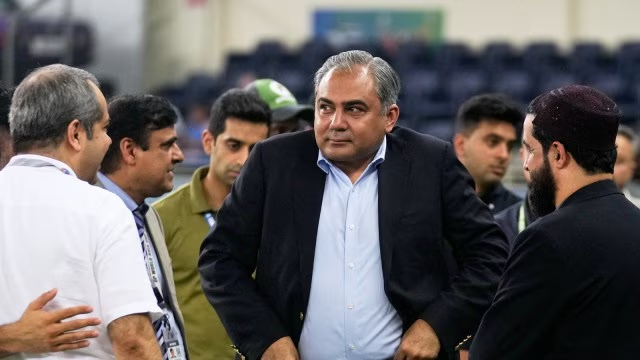
The Board of Control for Cricket in India (BCCI) created a stir in the Asian Cricket Council (ACC) by walking out of an online meeting in protest, after failing to receive clear responses regarding the delivery of the Asia Cup trophy and players’ medals following India’s victory against Pakistan in the final. The walkout, led by BCCI ex-officio Ashish Shelar, reflects growing frustration over procedural lapses, lack of formal acknowledgment, and unresolved logistical issues surrounding one of Asia’s premier cricketing tournaments. The tension between the Indian board and the ACC, headed by Pakistan Cricket Board chief Mohsin Naqvi, underscores deeper challenges in governance, protocol adherence, and inter-board relations within the Asian cricketing landscape, highlighting the complexities of organizing international events with political and sporting sensitivities.
Protest Over Trophy Delivery and Medal Allocation
During the ACC meeting on Wednesday, Ashish Shelar and other Indian officials sought clarity from ACC President Mohsin Naqvi regarding the delivery of the Asia Cup trophy and individual player medals. The Indian board had requested that the trophy and medals be sent to the ACC office in Dubai, from where the BCCI could collect them. Despite repeated queries, Naqvi did not provide a clear response, leaving the Indian representatives dissatisfied. The lack of concrete answers prompted Shelar and fellow board member Shukla to exit the meeting midway, signaling a formal protest.
This confrontation was preceded by written communication from the BCCI secretary, Devajit Sakia, to the ACC, which had reportedly gone unanswered. The failure of the ACC to respond to the Indian board’s written requests, coupled with ambiguous verbal replies during the online session, highlighted procedural inefficiencies and strained diplomatic engagement between the two cricket boards. The Indian officials’ walkout was not merely symbolic but represented a firm stance on accountability, transparency, and adherence to agreed-upon tournament protocols. The BCCI’s insistence on receiving the trophy and medals reflects a broader concern about proper recognition of achievements and the preservation of the integrity of international cricket awards.
Moreover, the BCCI officials were reportedly aggrieved that Mohsin Naqvi, in his opening address, did not extend congratulations to India for winning the Asia Cup title. This omission was interpreted as a breach of convention and sportsmanship, which is expected during such high-profile tournaments. Indian representatives viewed the lack of acknowledgment as not only discourteous but also reflective of a lack of respect for established protocols. The series of events, culminating in Shelar’s protest, illustrates the tensions that can arise when formalities and diplomatic courtesies are neglected in international sporting governance.
Background of Controversy During the Asia Cup Final
The recent Asia Cup final held in Dubai witnessed a series of contentious events that have now spilled over into board-level discussions. During the toss, Indian captain Suryakumar Yadav refused to shake hands with his Pakistani counterpart Salman Agha, a gesture that drew attention for its unusual deviation from standard cricketing etiquette. The tension between the teams reflected the high stakes of the match and the broader political undertones often present in India-Pakistan sporting encounters.
Following India’s victory, the post-match presentation ceremony became another flashpoint. The Indian team collectively refused to receive the trophy directly from Mohsin Naqvi, citing dissatisfaction with procedural inconsistencies. According to sources, the Indian players waited outside the dressing room for nearly an hour, anticipating an organized and transparent handover of the trophy and medals. Suryakumar Yadav, in an interview, described how the team remained standing outside the dressing room instead of closing the doors, emphasizing that they did not delay the presentation ceremony themselves. Yadav also highlighted that the trophy had been taken away without a formal procedure, describing it as “Trophy leke bhaag gaye woh” (They ran away with the trophy), further illustrating the team’s frustration over the handling of the award.
The discord over trophy handling, medal distribution, and ceremonial protocols during the final has amplified scrutiny over the ACC’s administrative efficiency and decision-making processes. The lack of adherence to convention and clear communication has raised questions about governance standards and inter-board coordination. Analysts have noted that such incidents not only impact the immediate stakeholders but also influence perceptions of fairness, professionalism, and transparency within Asian cricket administration. The controversy has created a precedent, highlighting the importance of clearly defined operational procedures and mutual respect between member boards in international tournaments.
The BCCI’s protest is rooted in the principle of preserving the dignity of its players’ achievements and ensuring accountability from the governing bodies overseeing the tournament. The walkout at the ACC meeting sends a strong message about India’s insistence on protocol adherence and proper recognition. By refusing to accept ambiguous explanations, Shelar and his team reinforced the need for transparent governance mechanisms and equitable treatment of all participating boards. This action also underscores the increasing role of boards in asserting authority and advocating for their teams beyond the playing field, reflecting a shift toward a more active administrative approach in international cricket management.
Beyond the immediate dispute over trophy and medal logistics, the episode reflects broader challenges in managing cross-border cricket relations. Political tensions, historical rivalries, and national pride often intersect with sporting events, necessitating sensitive handling by administrative bodies. The ACC, as the governing council for cricket in Asia, is expected to maintain impartiality, enforce consistent protocols, and foster collaboration among its members. Failure to meet these expectations can erode trust, diminish the perceived credibility of the organization, and generate public criticism, as seen in the Indian media coverage of the event.
The incident has also sparked discussions regarding the responsibilities of ACC leadership. Mohsin Naqvi, as ACC president and PCB chief, faces scrutiny for both procedural lapses and diplomatic insensitivity. Observers note that extending congratulations to the winning team is a minimal yet significant gesture of sportsmanship. Omitting such courtesies not only aggravates tensions but also sets a negative tone for inter-board interactions. The BCCI’s actions reflect a broader expectation that leadership in international cricket governance must balance authority with respect, transparency, and adherence to traditions that uphold the spirit of the game.
Analysts emphasize that the Indian team’s professional conduct, including standing outside the dressing room and adhering to disciplined protocols, demonstrates maturity in handling contentious situations. This professionalism contrasts with administrative lapses, highlighting the need for better governance frameworks within international cricket councils. By taking a stand at the ACC meeting, the BCCI exemplifies proactive engagement in ensuring that players’ achievements are honored appropriately and that procedural discrepancies are addressed at the board level.
Furthermore, the dispute underscores the significance of clear communication channels between member boards and governing councils. Written communications, such as letters from BCCI secretary Devajit Sakia, are an essential component of formal diplomacy. Ignoring or failing to respond adequately to these communications can lead to misunderstandings, grievances, and formal protests, as demonstrated in this case. Establishing structured feedback mechanisms and timelines for responses is crucial to prevent similar conflicts in future tournaments.
The BCCI’s walkout has drawn attention to the broader theme of accountability in cricket administration. Boards are expected to ensure that tournament protocols are uniformly enforced, awards are distributed fairly, and ceremonial functions are conducted with professionalism. Any deviation from these expectations can lead to disputes, dissatisfaction, and negative media coverage. By protesting publicly, the Indian board has set a precedent that procedural integrity and player recognition are non-negotiable elements in international cricket governance.
The episode also sheds light on the increasing assertiveness of cricket boards in representing their teams’ interests. Beyond coaching, selection, and on-field strategy, administrative engagement has become critical in safeguarding players’ rights, ensuring fair treatment, and advocating for recognition at tournaments. The BCCI’s actions reflect a growing trend where boards actively participate in governance discussions, challenge ambiguous practices, and demand accountability from councils like the ACC.
In addition to logistical concerns, the controversy highlights the delicate interplay of sportsmanship, diplomacy, and protocol in high-profile tournaments. India’s refusal to accept the trophy directly from Naqvi, coupled with the walkout at the ACC meeting, sends a clear message about the importance of procedural correctness and formal recognition. Such actions reinforce the principle that sporting achievements should be celebrated within a framework of fairness, transparency, and mutual respect among member nations.
The dispute also raises questions about future interactions between BCCI and ACC, particularly in the context of planning and executing tournaments. Boards must negotiate complex logistical and ceremonial arrangements, often across politically sensitive borders. Ensuring clarity on responsibilities, timelines, and communication protocols is essential to prevent similar incidents. Analysts suggest that this controversy could serve as a learning opportunity for the ACC to improve governance standards, reinforce conventional courtesies, and establish clear procedures for future events.
BCCI’s insistence on proper delivery of the Asia Cup trophy and medals exemplifies the board’s commitment to protecting its players’ achievements and maintaining institutional credibility. The walkout, while a dramatic gesture, is rooted in practical concerns about accountability, transparency, and the enforcement of established norms. It demonstrates that administrative oversight is as crucial as on-field performance in the modern cricketing landscape.
Observers note that the incident may have longer-term implications for inter-board diplomacy, tournament organization, and governance within Asian cricket. The BCCI’s stance highlights the necessity of proactive engagement, adherence to protocol, and respect for achievements to maintain harmony among member boards. By drawing attention to procedural gaps, the Indian board has underscored the importance of organizational competence and the responsibility of leadership to uphold sporting values.
The controversy surrounding the Asia Cup trophy and medals serves as a reminder of the broader challenges inherent in international cricket administration. Political dynamics, historical rivalries, and expectations of sportsmanship intersect to create complex scenarios that require careful navigation. The BCCI’s protest demonstrates a commitment to addressing these challenges through formal channels and principled action.
By emphasizing accountability, clear communication, and adherence to protocol, the BCCI is reinforcing a culture of transparency and professionalism in international cricket. The events surrounding the Asia Cup final and the subsequent ACC meeting highlight the evolving role of cricket boards, which now extend beyond on-field management to include administrative vigilance, procedural advocacy, and defense of players’ interests.
Ultimately, the walkout at the ACC meeting underscores the Indian board’s determination to ensure that players’ achievements are appropriately recognized, ceremonial protocols are respected, and governance standards are upheld. The incident serves as both a cautionary tale and a benchmark for future tournament management, emphasizing that clarity, communication, and procedural adherence are critical to maintaining credibility, fairness, and sportsmanship within international cricket.
The Asia Cup controversy, including the trophy dispute and medal allocation issues, represents a significant moment in the relationship between the BCCI and ACC. It highlights the ongoing need for transparency, structured communication, and strict adherence to protocol to prevent conflicts. By taking decisive action, the BCCI has reinforced its commitment to player recognition, governance integrity, and the importance of following established norms within Asian cricket.
The episode also demonstrates the increasing significance of administrative oversight in modern cricket. Beyond match strategy and performance, boards are now tasked with ensuring that procedural integrity is maintained, achievements are honored, and member boards cooperate in a professional and respectful manner. The BCCI’s walkout illustrates how assertive administrative action can serve as a mechanism to resolve disputes and enforce accountability within international sports organizations.
As tensions surrounding the Asia Cup trophy and medals continue to be discussed in media and cricketing circles, the focus remains on the importance of maintaining procedural standards, respecting achievements, and fostering positive inter-board relations. The BCCI’s intervention exemplifies a proactive approach to governance and highlights the evolving role of cricket boards in ensuring fairness, transparency, and the integrity of international cricket.
Through this incident, it is evident that the administration of cricket extends far beyond the playing field. Ensuring proper recognition, honoring achievements, and maintaining structured communication between boards are essential for the credibility of tournaments. The BCCI’s assertive stance at the ACC meeting serves as a reminder that governance, protocol, and respect for players’ accomplishments are integral to the sport’s integrity and reputation.
The Asia Cup trophy controversy underscores the interplay of sport, diplomacy, and administration in contemporary cricket. By advocating for accountability and clarity, the BCCI has reinforced its role as a vigilant and responsible governing body, committed to ensuring that its players receive due recognition and that governance standards are upheld at all levels.