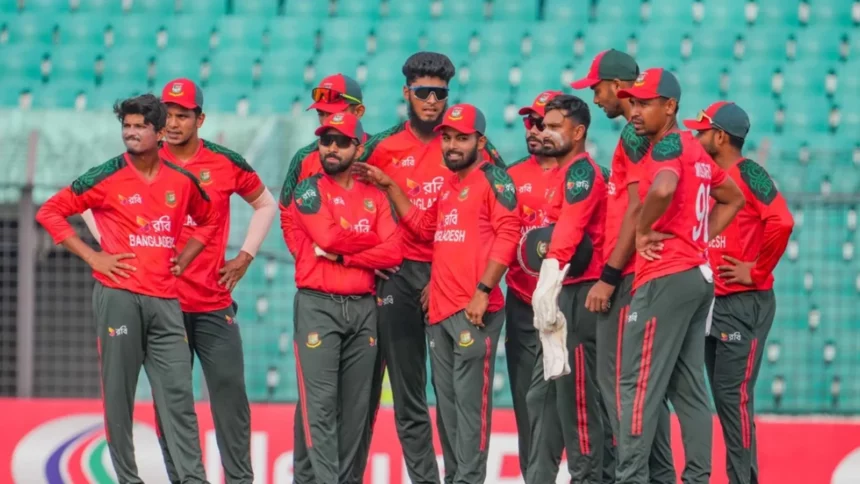
Bangladesh’s refusal to travel to india exposes how political tensions are increasingly reshaping international cricket governance.
Bangladesh cricket has been thrust into the centre of an international controversy after the Bangladesh Cricket Board formally requested the International Cricket Council to relocate all of bangladesh’s matches in the 2026 t20 world cup outside india. Citing safety and security concerns, the board announced that the national team would not travel to india under the current circumstances, a decision that highlights how geopolitical strains between neighbouring countries are spilling over into global sporting events. With india already co-hosting the tournament with sri lanka following pakistan’s refusal to play on indian soil, the latest development threatens to further complicate the organisation of one of cricket’s biggest events.
security concerns, government pressure, and the icc reques
In an official statement, the bangladesh cricket board said its directors had unanimously resolved that the national team would not travel to india after assessing “developments over the last 24 hours” and acting on advice from the bangladesh government. The board stressed that concerns about the safety of players and support staff made participation in india untenable under present conditions. Consequently, it has asked the icc, as the event authority, to shift all of bangladesh’s matches to venues outside india.
Bangladesh have been placed in group c of the tournament alongside england, italy, nepal, and the west indies. Under the existing schedule, their first three group-stage matches are to be played in kolkata, with the final group match slated for mumbai. The bcb’s request, if accepted, would require a significant reshuffle of venues and logistics, posing a fresh challenge for tournament planners already dealing with the complexities of a split-host arrangement.
The decision has been strongly backed by Asif Nazrul, advisor for youth and sports in the Interim Government of Bangladesh led by Mohammad Yunus. Nazrul said he had instructed the bcb to raise the issue with the icc and clearly state that the team “won’t feel safe” playing in india. In a post on social media, he argued that if a contracted bangladeshi cricketer could not safely play in the indian premier league, it would be unreasonable to expect the entire national team to feel secure during a world cup.
Nazrul went further, saying he had asked bangladesh’s information and broadcasting authorities to stop airing ipl matches in the country. His remarks, including the declaration that “the days of slavery are over,” signalled a hardening political stance and framed the dispute as one of national dignity as much as sporting logistics. Such statements underline how deeply the issue has resonated beyond cricket administration and into the political sphere.
ipl controversy, bcci stance, and strain on bilateral cricket ties
The immediate trigger for the crisis can be traced to developments surrounding bangladesh fast bowler Mustafizur Rahman and his association with Kolkata Knight Riders. Rahman had been signed by the franchise ahead of the 2026 ipl season, but was subsequently released following instructions from the Board of Control for Cricket in India. The move came amid political pressure and public controversy in india, with several leaders criticising the inclusion of a bangladeshi player at a time of heightened bilateral tensions.
The fallout was swift. India soon put a scheduled tour of bangladesh later in the year on hold, adding another layer of uncertainty to bilateral cricketing relations. The bcci has maintained that, as far as the t20 world cup is concerned, bangladesh are expected to play their scheduled matches in india, pointing out that any change would require approvals at multiple levels, including from the indian government.
A senior bcci official was quoted as saying that india itself did not travel to bangladesh last year despite an international calendar being issued, citing the need for government clearance. This underscores the reality that cricketing decisions between the two countries are increasingly subject to political approval, reducing the autonomy traditionally enjoyed by boards in arranging tours and tournaments.
The situation has also sparked a broader political storm. Several indian political and religious figures publicly criticised the kolkata knight riders and their co-owner Shah Rukh Khan over rahman’s signing, with some alleging anti-national motives. Such rhetoric intensified the pressure on cricketing authorities and contributed to the perception in bangladesh that its players were being unfairly targeted.
For the icc, the dispute presents a delicate test of governance. The global body must balance security concerns raised by a member board against the logistical and commercial realities of hosting a world cup in multiple countries. Accepting bangladesh’s request could set a precedent for other teams to seek venue changes based on political or security considerations, while rejecting it risks deepening the rift and raising questions about player welfare.
The episode also highlights a growing pattern in international cricket, where political tensions increasingly influence scheduling, hosting rights, and participation. Pakistan’s refusal to play in india, india’s reluctance to tour certain countries without government approval, and now bangladesh’s demand for neutral venues all point to a sport struggling to insulate itself from geopolitics.
For bangladesh, the decision to stand firm is being framed domestically as a matter of principle and safety. For india, the insistence on sticking to the original schedule reflects confidence in its ability to host secure global events and a reluctance to yield to political pressure. Caught between these positions, the icc faces a complex negotiation that could shape the immediate future of the 2026 t20 world cup and set the tone for how international cricket navigates political crises in the years ahead.