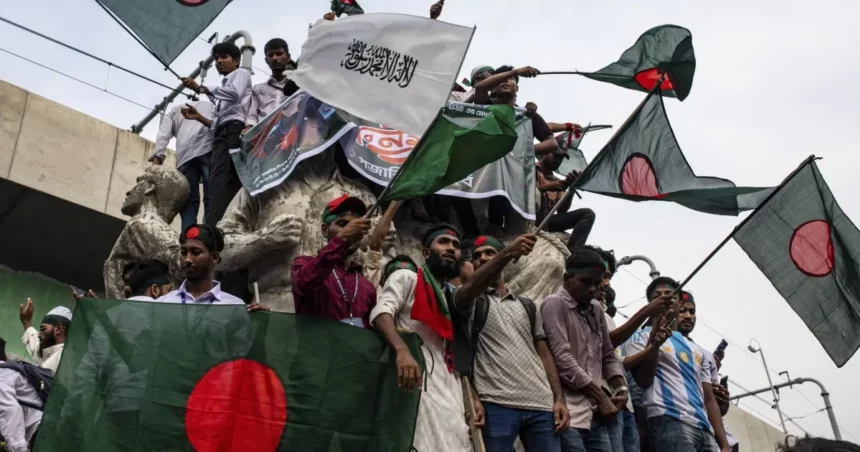
Bangladesh has officially kicked off its election campaigns for the upcoming general elections, marking a historic moment in the country’s political landscape as it prepares for the first parliamentary polls since the dramatic overthrow of Sheikh Hasina’s long-standing autocratic rule in 2024. Scheduled for February 12, the elections will determine the composition of the 350-member Jatiya Sangsad, signaling a potential new era of governance in the nation of 170 million people. The buildup to the polls is characterized by a mixture of excitement, uncertainty, and heightened security concerns, reflecting the challenges of a country transitioning from prolonged political unrest to a renewed democratic process. Analysts and observers note that these elections are not only pivotal for Bangladesh’s internal political stability but will also have implications for regional geopolitics, particularly given the strategic position of Bangladesh in South Asia and its historical influence in matters involving neighboring India, Myanmar, and the wider Bay of Bengal region.
Campaign Launches Amid Heightened Security and Political Uncertainty
The official campaign period began on Thursday, with political parties across Bangladesh mobilizing to engage voters in one of the most anticipated elections in recent history. This election cycle is particularly significant as it follows the historic popular uprising that ended Sheikh Hasina’s decades-long rule, reshaping the political landscape and creating opportunities for new leadership to emerge. Security concerns have been at the forefront, with recent incidents, including the murder of a student leader associated with anti-Hasina protests last month, raising alarms about the safety of candidates, campaign workers, and voters alike. Authorities have implemented extensive security measures to prevent further violence, including deployment of additional law enforcement personnel in key cities, particularly in urban areas and regions prone to political tensions.
The political environment is further complicated by the widespread dissemination of online disinformation, with analysts warning of a potential “flood” of misleading content aimed at influencing voter perceptions and inciting unrest. Social media platforms and local media outlets have been under scrutiny for the role they play in shaping narratives, with the Election Commission urging citizens to verify information and avoid spreading unverified claims. European Union election observers have described the upcoming vote as the “biggest democratic process of 2026,” highlighting its significance not only for Bangladesh but also as a test of democratic resilience in the region. The campaign launch has already seen large gatherings, with thousands of supporters attending rallies despite ongoing health and safety precautions, reflecting the high level of public engagement and the intensity of political competition.
Frontrunners and Electoral Strategies
Among the main contenders, the Bangladesh Nationalist Party (BNP) and the Islamist party Jamaat-e-Islami have emerged as the most visible and organized forces, formally initiating their campaigns with ambitious strategies to secure voter support across the nation. Tarique Rahman, 60, who returned to Bangladesh in December after a 17-year exile, has become a central figure in the BNP’s campaign efforts. Following the passing of his mother, former Prime Minister Khaleda Zia, in December, Rahman formally assumed leadership of the party and is widely regarded as the BNP’s prime ministerial candidate. His campaign strategy includes a series of mass rallies, beginning in the northeastern city of Sylhet, designed to energize party supporters and consolidate his base across key constituencies.
The BNP’s messaging emphasizes a break from the past administration, advocating for reforms in governance, transparency, and economic policy, while promising to address the grievances that fueled the uprising against Sheikh Hasina. Party strategists have carefully targeted regions with strong anti-Hasina sentiment, aiming to translate the political momentum from the 2024 protests into electoral gains. Meanwhile, Jamaat-e-Islami, leveraging its historical influence and religious networks, is positioning itself as a significant challenger, appealing to voters through a platform that blends conservative religious values with promises of governance reforms. Both parties are expected to field candidates in virtually all constituencies, intensifying competition and setting the stage for an election that will test the organizational capacity and mobilization abilities of each political entity.
The campaign period is also witnessing significant engagement with Bangladesh’s diverse social landscape. With one of the world’s largest Muslim-majority populations, the country has a substantial Sufi following and other cultural-religious groups whose support remains pivotal in key regions. Political parties are increasingly tailoring their outreach to address the specific needs and concerns of these communities, including youth, women, and marginalized groups, highlighting social welfare programs and local development initiatives. Analysts note that voter sentiment will likely hinge not only on party affiliation but also on perceived credibility, leadership qualities, and responsiveness to public concerns, creating a complex electoral dynamic that could influence outcomes in unpredictable ways.
As political parties intensify their efforts, media coverage and public discourse are expected to play an increasingly significant role in shaping voter perceptions. Campaign messages, televised debates, social media interactions, and grassroots mobilization are all integral components of the electoral strategy, reflecting a blend of traditional and modern approaches aimed at reaching Bangladesh’s diverse electorate. Observers have highlighted that the combination of high public interest, historical significance of the elections, and the backdrop of recent political upheaval is likely to result in an unprecedented level of voter engagement, further underscoring the importance of security, fair conduct, and transparency throughout the campaign period.
The elections are also notable for their implications on governance and policymaking post-Hasina, as the new leadership will be tasked with addressing a range of domestic and international challenges. Economic growth, infrastructure development, social welfare, and foreign relations are all expected to feature prominently in campaign promises and subsequent policy agendas. Given Bangladesh’s strategic location and its role in regional trade, climate initiatives, and diplomatic relations, the results of this election are likely to reverberate beyond national borders, influencing regional stability and cooperation in South Asia.
Amid the intense political activity, citizens have expressed a mixture of hope and caution. Many see the elections as an opportunity for meaningful change and democratic consolidation, while others remain wary of potential political instability, violence, or administrative challenges during the transition period. The Election Commission has stressed the importance of voter awareness, urging citizens to participate actively, verify information, and exercise their franchise responsibly. Civic education initiatives, outreach programs, and voter registration drives have been emphasized to ensure maximum participation and minimize irregularities, reflecting a commitment to uphold the integrity of the electoral process.
The weeks leading up to February 12 are expected to witness a surge in rallies, public meetings, and political outreach across urban and rural areas. Security, voter education, and logistical preparations will remain key concerns for authorities, particularly in regions that have historically witnessed high voter turnout and political activism. International observers and regional analysts are closely monitoring developments, recognizing the significance of these elections not only for Bangladesh but also for democratic practices in South Asia.
The unfolding campaign period in Bangladesh illustrates the delicate interplay between political strategy, leadership dynamics, public engagement, and institutional oversight in shaping the country’s democratic trajectory. As parties navigate the challenges of campaigning in a politically charged and security-conscious environment, the outcomes of the elections are likely to reflect the complex aspirations and anxieties of a nation emerging from an era of autocratic rule. The significance of February 12, 2026, extends beyond the immediate results, serving as a potential turning point for Bangladesh’s governance, social cohesion, and position in regional geopolitics.
The historic post-Hasina election campaign is therefore being watched with intense interest both domestically and internationally. Analysts note that the election’s success, in terms of participation, fairness, and transparency, will be a critical indicator of Bangladesh’s capacity to sustain democratic norms and to manage political transitions peacefully. The combination of mass rallies, extensive media coverage, security measures, and voter mobilization underscores the scale and complexity of the process, highlighting the high stakes involved for political parties, candidates, and the electorate alike.
Bangladesh’s general elections, set against the backdrop of recent political upheaval, ongoing security challenges, and heightened expectations from citizens, represent a critical moment in the country’s modern political history. The first post-Hasina vote is expected to shape the future direction of governance, redefine political alliances, and potentially usher in a new chapter of democratic practice in a nation that has experienced significant political volatility. Citizens, parties, and observers are preparing for a period of intense political activity, mindful of both the opportunities and challenges inherent in such a transformative electoral process.
The elections, campaigns, and political maneuvering in Bangladesh provide a comprehensive view of the evolving nature of democratic engagement, highlighting the role of leadership, strategy, civic participation, and institutional integrity in navigating complex political landscapes. February 12, 2026, stands as a landmark date, marking the culmination of months of preparation, anticipation, and political contestation, while offering the possibility of a meaningful transition in leadership and policy direction for Bangladesh.
The political campaign period in Bangladesh is expected to continue at an intense pace, with parties vying for influence, mobilizing supporters, and presenting their visions for the future. Public interest remains high, with citizens actively engaging in rallies, debates, and community discussions, reflecting the broader societal stakes involved in the outcome of the elections. As the country moves closer to the polling date, the interplay of political messaging, voter sentiment, security management, and institutional oversight will be critical in determining not only the immediate electoral results but also the longer-term trajectory of governance and democratic consolidation in Bangladesh.
The unfolding situation in Bangladesh serves as a reminder of the complexity and significance of democratic transitions in South Asia. The first general elections post-Hasina represent both a challenge and an opportunity for all stakeholders to engage responsibly, ensuring that the process strengthens democratic institutions, reflects popular will, and lays the foundation for stable governance in a nation that has recently experienced considerable political upheaval.