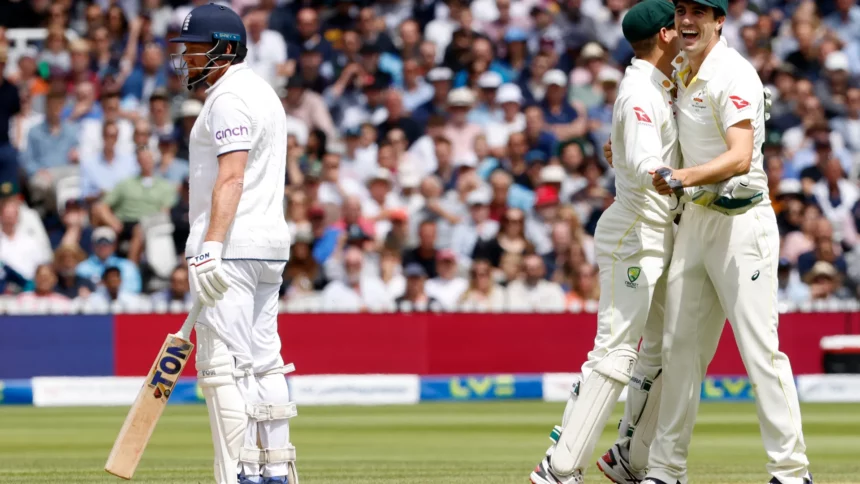
Australia tightened their grip on the second Ashes Test at The Gabba with a commanding batting display on Day Two, following England’s first-innings total of 334. The hosts, buoyed by disciplined bowling and an aggressive start with the bat, showcased both composure and dominance in the pink-ball contest. Jake Weatherald’s brisk maiden Test fifty, crafted in just 45 balls, became the focal point of the day as Australia positioned themselves strongly heading into the evening session. The unfolding contest now reflects a growing shift in momentum, with Australia’s combination of early breakthroughs and assertive batting creating pressure for the visitors.
England’s innings earlier in the day had set a competitive yet imperfect platform, with Joe Root’s exceptional century standing out as a testament to his class and resilience on Australian soil. But despite Root’s brilliance and solid contributions from Zak Crawley and Jofra Archer, England’s failure to build partnerships deep into the lower order allowed Australia to regain control. Pacer Mitchell Starc emerged as the chief architect of England’s collapse, delivering another sharp and destructive spell reminiscent of his finest performances. The narrative of the day shifted markedly once Australia walked in to bat, with Weatherald and his fellow opener Travis Head signaling attacking intent from the outset and seizing the rhythm of the match.
Australia’s Opening Stand Sets Dominant Tone as Weatherald Reaches Landmark Innings
Australia’s reply to England’s 334 began with immediate purpose as Jake Weatherald stepped onto the Test stage with remarkable composure. Playing only his second match, Weatherald displayed a blend of natural fluency and controlled aggression that defied his newcomer status. Reaching his maiden Test half-century in just 45 balls, he impressed with decisive footwork, a keen eye for gaps and a willingness to take on England’s seamers under lights. His strokeplay featured elegant cover drives, sharp pulls and a willingness to exploit width—qualities that allowed Australia to push the scoring rate at a pace that unsettled the opposition.
While Weatherald defined Australia’s momentum, his partner Travis Head played a contrasting yet complementary role. Head, known for his powerful hitting, began aggressively but was dismissed for 33 after being earlier dropped on 3 by wicketkeeper Jamie Smith—an opportunity England would come to regret. His dismissal, taken against the run of play, gave England their only breakthrough before tea, where Australia stood comfortably at 130/1. Despite losing Head, Australia remained in firm control due to Weatherald’s unwavering rhythm and a pitch that appeared increasingly favorable to batsmen.
England’s bowlers attempted to recover their footing with variations in length and movement, particularly under pink-ball conditions known for late swing. However, inconsistent lines and missed opportunities hampered their effort. Even as the ball occasionally nipped and swerved, Weatherald’s calculated approach prevented extended pressure. The England attack, anchored by Archer, Woakes and Wood, struggled to find sustained breakthroughs. While Woakes created some challenges with his controlled seam movement, the momentum squarely favored Australia as session by session their scoring maintained fluency.
Weatherald’s milestone also carried symbolic significance. A maiden fifty in an Ashes Test is always memorable, but doing so with rapid scoring under lights at The Gabba added another layer of achievement. His innings contributed not just to Australia’s strong reply but also to the evolving narrative that the younger generation of Australian talent is increasingly ready to shape the Ashes rivalry. As the crowd responded with growing enthusiasm, Weatherald continued to anchor Australia’s innings with maturity beyond his experience.
*England’s First Innings: Root’s Masterful Century Anchors Effort but Starc’s Dominance Prevails*
Earlier in the day, England concluded their first innings at 334, a total shaped heavily by Joe Root’s commanding century. Root’s 138 marked his first hundred on Australian soil, ending a long wait and reinforcing his status as one of the modern era’s most technically gifted batsmen. His innings balanced elegance and resilience, featuring patient accumulation alongside sharp, well-timed strokes that pierced the infield. Root weathered Australian pace spells with confidence, handling Starc, Cummins and Hazlewood with maturity while ensuring England maintained a steady scoring rhythm.
Zak Crawley provided essential top-order support with a fluent 76, playing with a sense of assurance that allowed England to settle after early pressure. His front-foot drives and increasingly confident strokeplay helped England achieve stability during the middle phase of the innings. A surprise contribution came from number 11 Jofra Archer, whose spirited 38 frustrated Australia and added valuable runs to England’s total. Archer combined aggression with tactical awareness, lifting the team from a precarious moment and providing momentum before the innings ultimately folded.
Despite these contributions, Mitchell Starc remained the defining force for Australia. Claiming six wickets, he reaffirmed his status as one of the most dangerous bowlers under pink-ball conditions. His ability to swing the ball at high pace repeatedly troubled England’s batters, particularly during transition phases where partnerships looked set to flourish. Starc’s dismissals included important breakthroughs at crucial intervals, effectively preventing England from establishing a dominant position.
The contrast between England’s structured yet incomplete innings and Australia’s assertive start highlighted the shift in control across sessions. Root’s century had given England signs of stability, but their inability to build sizeable partnerships in the latter half of their innings allowed Australia to seize the initiative. By the time Australia began batting, confidence had visibly shifted, and as Weatherald’s attacking fifty took shape, England struggled to regain their footing.
Australia’s early march toward a potentially substantial first-innings reply has already intensified pressure on England. With the match progressing under pink-ball dynamics and momentum leaning decisively toward the hosts, the day marked a crucial turning point in the second Ashes Test. The storyline now centers on whether Australia can convert their promising foundation into a commanding lead and how England’s bowlers can respond to an increasingly confident Australian batting lineup.