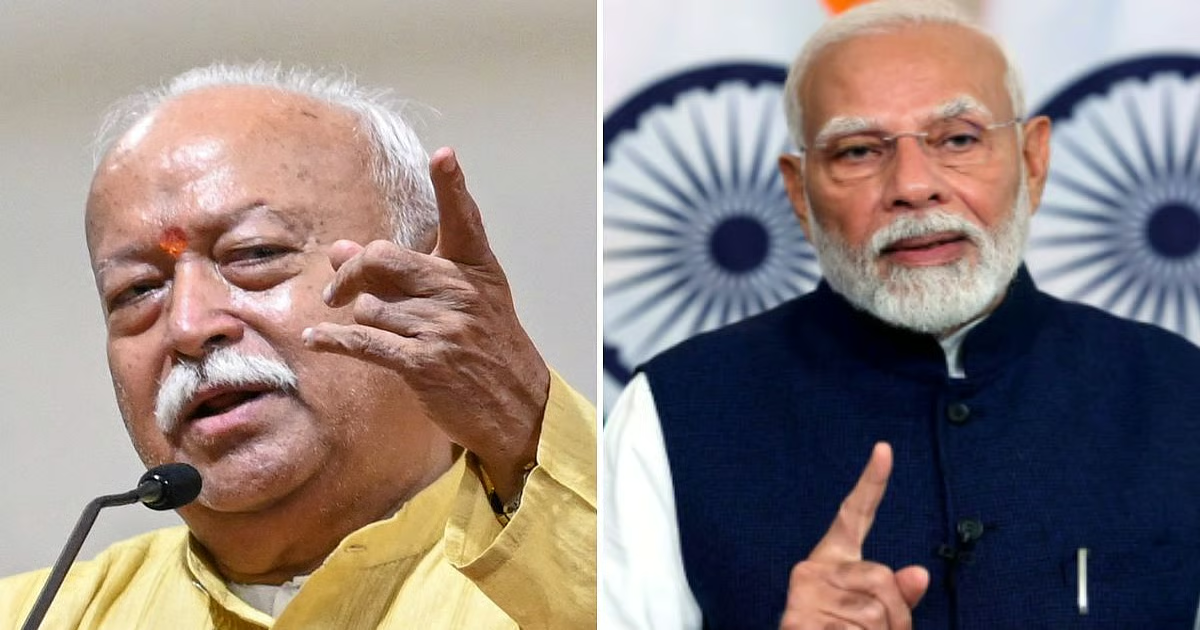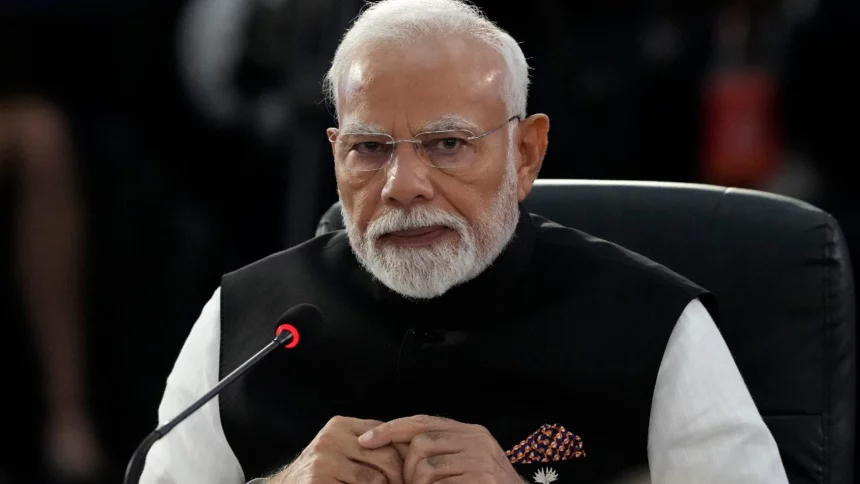
Prime Minister Narendra Modi is set to visit Uttarakhand on Thursday to review the extensive damage caused by the relentless monsoon that has wreaked havoc across the state. With cloudbursts, landslides, and flash floods impacting nearly every district, the state has faced unprecedented destruction in recent months. The visit underscores the central government’s commitment to closely monitor relief and rehabilitation efforts, provide timely assistance to affected communities, and coordinate with state authorities to ensure the safety and recovery of citizens. This visit follows Modi’s prior inspections of disaster-hit regions in Punjab and Himachal Pradesh, highlighting the Prime Minister’s proactive approach to managing natural calamities.
Aerial Survey and High-Level Review of Flood-Affected Regions
The Prime Minister is scheduled to arrive in Dehradun on Thursday evening, with plans for an aerial survey of the flood-hit regions around 4:15 p.m. This survey aims to provide a comprehensive understanding of the damage to infrastructure, including roads, schools, power lines, and critical public utilities that have been severely affected by torrential rains. Government officials have confirmed that the survey will guide the formulation of targeted relief measures, ensuring that resources reach the most severely impacted areas efficiently.
Following the aerial inspection, PM Modi will convene a high-level review meeting at 5 p.m., bringing together key officials from both the state and central governments. The meeting will focus on evaluating ongoing relief efforts, assessing the rehabilitation of affected populations, and reviewing the allocation of resources for rebuilding critical infrastructure. Elaborate security arrangements have been made to ensure the Prime Minister’s safety and the smooth conduct of operations during his visit.
The monsoon this year has unleashed severe destruction across Uttarakhand, with cloudbursts, landslides, and flash floods leading to extensive human and economic losses. Official estimates indicate that the damage incurred during August and September exceeds Rs 5,000 crore, with numerous districts reporting disrupted transport networks, damaged educational institutions, and power outages. By early September, over 80 people had lost their lives, and nearly 100 remained unaccounted for, underscoring the urgent need for coordinated relief and rescue operations.
Central government teams had previously visited Uttarakhand to evaluate the scale of the disaster and assist in planning emergency response measures. PM Modi’s current visit will allow him to directly observe the extent of devastation, engage with state authorities, and oversee the implementation of effective recovery strategies. The visit also demonstrates the government’s commitment to ensuring that no affected citizen is left without assistance and that all relief measures are executed in a timely and transparent manner.
Coordination with International Engagements and Broader Government Agenda
The Prime Minister’s visit to Uttarakhand is scheduled immediately after a high-level bilateral meeting in Varanasi with Mauritian Prime Minister Navinchandra Ramgoolam. At around 11:30 a.m., PM Modi hosted his Mauritian counterpart, who is on a state visit to India from September 9 to 16. Varanasi, the ancient city known for its spiritual and civilisational significance, was specially prepared for the meeting, featuring extensive arrangements and ceremonial decorations.
During the discussions, the leaders reviewed the full spectrum of bilateral cooperation, with special focus on development partnership, capacity building, healthcare, education, science and technology, energy, and infrastructure. Both nations explored opportunities in renewable energy, digital public infrastructure, and the blue economy, aiming to strengthen long-term collaboration. This meeting built upon the momentum of PM Modi’s visit to Mauritius in March, which elevated India-Mauritius ties to an ‘Enhanced Strategic Partnership.’
Balancing domestic disaster management with international engagement, PM Modi’s itinerary highlights the importance of addressing national challenges while fostering strong diplomatic and developmental relationships abroad. The coordination between domestic relief operations and international commitments reflects the Prime Minister’s holistic approach to governance, ensuring that India’s citizens and strategic partnerships both receive due attention.
In Uttarakhand, the focus will remain squarely on addressing the aftermath of the monsoon. Cloudbursts in the upper Himalayan regions, landslides along critical highways, and flash floods in riverine areas have caused widespread disruption. Roads connecting remote villages have been washed away, schools and hospitals have suffered structural damage, and electrical infrastructure has been severely impacted, leaving many areas without power. The aerial survey will help identify priority regions for immediate intervention, enabling state and central agencies to deploy manpower, machinery, and resources where they are most needed.
The Prime Minister’s engagement with state authorities will also include discussions on long-term resilience planning. By reviewing infrastructure development, disaster preparedness measures, and community-based mitigation strategies, PM Modi aims to ensure that Uttarakhand is better equipped to handle future monsoon-related calamities. Central and state governments will examine the effectiveness of early warning systems, emergency communication networks, and evacuation protocols to reduce human and economic losses in subsequent years.
In addition to assessing infrastructure and logistical requirements, the high-level meeting will consider the welfare of displaced citizens, provision of temporary shelters, medical aid, and psychological support for affected communities. PM Modi’s direct involvement is expected to expedite decision-making processes and ensure that relief efforts are aligned with both immediate needs and long-term recovery goals.
The Prime Minister’s prior visits to disaster-hit areas in Punjab and Himachal Pradesh demonstrated the government’s proactive approach in monitoring flood and landslide situations. In these states, Modi personally oversaw rescue operations, coordinated with local administration, and directed resources for the rehabilitation of affected populations. This consistent approach highlights the central government’s strategy of direct engagement to accelerate recovery, enhance accountability, and reinforce public confidence during times of crisis.
PM Modi’s dual focus on domestic relief operations in Uttarakhand and international engagements in Varanasi exemplifies the balancing act required of national leadership. While disaster management requires immediate attention, fostering international cooperation, especially in strategic partnerships such as that with Mauritius, remains crucial for India’s global standing. The Prime Minister’s agenda reflects an integrated approach where domestic and international priorities are managed in a complementary manner.
The upcoming aerial survey and review meeting will provide valuable insights into the extent of devastation, helping authorities to prioritize funding, manpower deployment, and restoration projects. Roads, bridges, educational institutions, and power lines will receive focused attention, and recovery teams will coordinate closely with local administrations to reach remote and heavily affected areas. The Prime Minister’s presence is expected to boost morale among affected citizens, volunteers, and government officials engaged in relief operations.
In summary, PM Modi’s visit to Uttarakhand is a significant initiative aimed at assessing flood-related damages, ensuring coordinated relief measures, and accelerating the rehabilitation of affected communities. His engagement demonstrates the government’s commitment to disaster preparedness, resilient infrastructure, and timely humanitarian assistance. Alongside domestic responsibilities, the Prime Minister also integrates diplomatic engagements to foster bilateral partnerships, highlighting a comprehensive and strategic governance model.
Through this visit, the central government emphasizes its dedication to both immediate recovery and long-term resilience, ensuring that Uttarakhand can effectively cope with future monsoon challenges while restoring normalcy for its residents. The Prime Minister’s direct oversight of relief measures, combined with strategic planning for infrastructure reconstruction, reflects an approach that balances humanitarian concerns, governance efficiency, and forward-looking disaster mitigation.