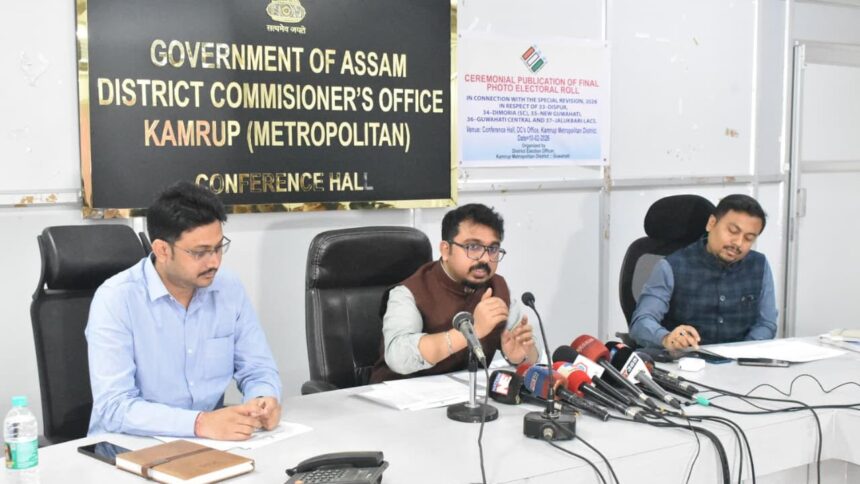
The final publication of Assam’s electoral rolls following the special revision for 2026 has revealed a reduction in voter numbers, highlighting significant changes in the state’s electorate. After a meticulous review process involving thousands of booth-level officers and extensive verification of claims and objections, the total number of registered voters in Assam now stands at 2.49 crore. This represents a decrease of 2.43 lakh electors, or 0.97 percent, compared to the integrated draft voter list released in late December 2025. The revision underscores the continuous efforts of the state election authorities to ensure accuracy, remove duplications, and update voter information in alignment with recent demographic changes and electoral requirements. Analysts and political observers consider the special revision crucial for maintaining electoral integrity, as the final voter list directly impacts electoral participation, constituency planning, and the overall functioning of the democratic process in Assam.
Details of the Special Revision and Booth-Level Engagement
The special revision of Assam’s electoral rolls for 2026 was conducted in a structured and comprehensive manner, ensuring extensive outreach and verification across all districts of the state. A total of 29,646 booth-level officers were mobilized to oversee the process, which differed from the simultaneous special intensive revision conducted in twelve other States and Union Territories. The revision period was marked by careful scrutiny of claims, objections, and demographic updates, allowing eligible voters to be added while identifying and removing entries that were no longer valid. According to election officials, the final list saw 7.87 lakh additions, including newly eligible voters who had reached the age of 18, and 10.26 lakh deletions. These deletions included 4.79 lakh electors who were deceased, 5.24 lakh who had shifted residence, and 53,619 cases of multiple entries. The final voter roll, published on February 10, 2026, now accounts for 1,24,82,213 male voters, 1,24,75,583 female voters, and 343 third-gender voters, reflecting both the diversity and demographic composition of Assam’s electorate.
The revision process not only addressed accuracy but also enhanced transparency by providing citizens with avenues to raise grievances. Electors and applicants who believed that their names were wrongly omitted or included were given the opportunity to appeal. A first appeal could be filed with the District Magistrate within 15 days of the final roll’s publication, while a second appeal could be made to the Chief Electoral Officer within 30 days. This dual appeal mechanism ensured that grievances could be addressed systematically, reinforcing public confidence in the electoral process. Election authorities emphasized that the revision period following the draft roll, from December 27, 2025, to January 22, 2026, was crucial for registering claims, objections, and demographic updates, creating a framework for a more accurate and representative final roll.
Implications for Assam’s Electoral Landscape and Future Polling
The reduction in Assam’s voter count carries multiple implications for both electoral strategy and administrative planning in the state. A decrease of 2.43 lakh voters, though representing less than one percent of the total electorate, indicates the significance of continuous monitoring and updating of electoral rolls. Political analysts note that accurate voter lists are critical not only for the logistical management of elections but also for ensuring fairness in constituency-level planning, voter outreach, and representative governance. The revisions affect all 126 Assembly constituencies in Assam, influencing how parties plan campaigns, mobilize voters, and allocate resources in preparation for future elections.
Chief Minister Himanta Biswa Sarma highlighted that a comprehensive special intensive revision (SIR) of Assam’s electoral rolls is expected to take place after the upcoming Assembly elections, likely around April 2026. This post-election exercise aims to further refine voter data, remove discrepancies, and include newly eligible electors, thereby sustaining the integrity and reliability of the electoral process. Experts believe that the combination of special revision and the forthcoming SIR ensures that Assam’s electoral database remains current, facilitating smooth conduct of elections while minimizing the risk of errors, duplications, and fraudulent entries. The iterative nature of these revisions reflects a broader commitment to electoral reforms and technological improvements in voter registration and verification processes.
Beyond administrative implications, the changes in voter numbers also carry political significance. Parties and candidates often rely on accurate data to understand voter demographics, regional population shifts, and trends in voter behavior. The deletions of 10.26 lakh entries, including those due to migration and mortality, may impact constituency compositions and influence strategies for outreach and engagement. Meanwhile, the addition of 7.87 lakh voters, particularly young first-time voters, introduces a dynamic component into electoral calculations, potentially altering voter preferences and patterns. Political analysts note that such demographic adjustments may play a subtle yet meaningful role in shaping election outcomes, as newly registered voters bring fresh perspectives, expectations, and voting priorities.
The special revision process also highlights the role of booth-level officers and election machinery in maintaining electoral integrity. The engagement of nearly 30,000 officers ensured that claims and objections were meticulously addressed, verification procedures were conducted at a granular level, and voter lists accurately reflected population realities. By facilitating citizen participation and grievance redressal, the authorities reinforced transparency and accountability in the electoral system. Moreover, the revision underscored the importance of integrating technology, robust record-keeping, and coordinated administrative oversight in the management of voter rolls. Analysts argue that such measures not only improve the accuracy of electoral rolls but also strengthen public confidence in democratic institutions and processes.
In addition to administrative and political consequences, the special revision has implications for social inclusion and representation. The final voter list, including male, female, and third-gender electors, reflects efforts to ensure that marginalized and underrepresented groups are acknowledged in the democratic process. Accurate enumeration of all eligible citizens contributes to equitable participation, allowing diverse voices to influence governance outcomes. The detailed attention to deletions and additions demonstrates the balancing act between removing ineligible entries and including every legitimate voter, a critical factor for ensuring representative democracy in Assam.
As Assam approaches its Assembly elections and prepares for the post-election special intensive revision, the voter data collected and refined during the special revision provides a foundation for informed decision-making. Political parties, candidates, and civil society actors can analyze trends in registration, demographic shifts, and constituency compositions to develop strategies for outreach, policy communication, and voter engagement. Furthermore, the ongoing refinement of voter rolls reflects broader national trends in electoral management, where accuracy, transparency, and inclusivity are increasingly emphasized as central pillars of democratic governance.
The state’s electoral authorities have emphasized that the revisions carried out during the special revision period were essential for aligning the voter database with current demographic realities. The process addressed issues of duplication, deceased voters, shifted residences, and errors in the draft roll, resulting in a more precise and actionable final list. By ensuring that the electoral rolls accurately represent the eligible population, Assam sets the stage for elections that are both fair and reflective of the state’s socio-political landscape. Observers note that these updates are particularly significant in constituencies with high voter mobility, demographic transitions, or prior discrepancies, as they directly impact the legitimacy of the voting process and the credibility of electoral outcomes.
The comprehensive efforts undertaken during the special revision also highlight the evolving relationship between administrative efficiency and democratic participation. With the systematic verification of voter entries, engagement of thousands of booth-level officers, and structured grievance redressal mechanisms, the authorities have demonstrated a commitment to strengthening institutional integrity. These measures not only ensure accuracy but also build public trust, encouraging higher voter participation and reinforcing the value of civic engagement. In essence, the special revision serves as both an administrative necessity and a democratic exercise, bridging the gap between procedural correctness and citizen empowerment.
Furthermore, the special revision serves as a benchmark for future electoral exercises in Assam and other States. By setting standards for verification, grievance redressal, and demographic accuracy, the process provides a model for continuous improvement in electoral administration. Analysts highlight that lessons learned from the special revision, including the management of large-scale booth-level operations, handling of appeals, and integration of demographic data, will inform subsequent electoral processes, ensuring that voter lists remain reliable and inclusive. The state’s focus on accurate and comprehensive voter enumeration reflects a broader commitment to democratic accountability, transparency, and fairness.
Ultimately, the publication of Assam’s final voter list after the special revision represents a critical milestone in the state’s electoral calendar. The reduction of 2.43 lakh voters, the careful addition of new eligible voters, and the provision of grievance mechanisms collectively demonstrate the meticulous planning and execution of the electoral process. As Assam continues to refine its voter rolls, the combination of administrative diligence, political oversight, and citizen participation reinforces the foundations of representative democracy. The special revision not only updates the state’s electoral database but also strengthens confidence in the fairness, inclusivity, and transparency of elections, ensuring that every eligible citizen can exercise their franchise effectively.
This voter update exercise also emphasizes the interplay between administrative reforms and political engagement. As parties and candidates adapt to changes in constituency compositions, the availability of accurate voter data becomes crucial for campaign strategy, policy planning, and targeted outreach. Meanwhile, the electorate benefits from the clarity and accuracy of the final list, enabling informed participation and minimizing disputes. By maintaining rigor in voter registration and revision processes, Assam demonstrates a commitment to democratic principles and the integrity of its electoral system.
The final voter list also sets the stage for subsequent electoral planning, including the allocation of resources for polling, preparation of voting infrastructure, and coordination of election personnel. By aligning voter data with current demographic realities, authorities can ensure that elections are conducted efficiently, inclusively, and transparently. The meticulous enumeration and verification of electors exemplify the importance of data-driven electoral management, where accurate information underpins procedural fairness and representative legitimacy.
Overall, the special revision of Assam’s voter rolls in 2026 reflects a multifaceted approach to electoral management, combining administrative rigor, technological integration, political relevance, and democratic inclusivity. The adjustments in voter numbers, the engagement of thousands of booth-level officers, and the structured grievance mechanisms collectively enhance the credibility, accuracy, and transparency of the electoral process. By ensuring that the final list accurately captures the state’s eligible population, Assam sets an important precedent for maintaining electoral integrity, supporting informed citizen participation, and strengthening democratic governance.