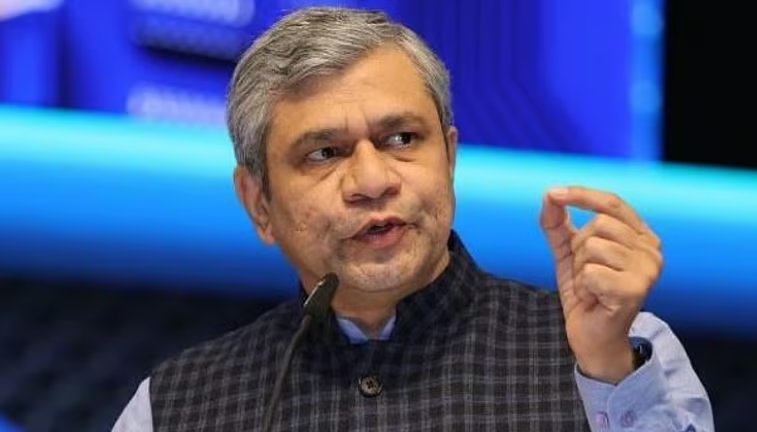
Union IT Minister Ashwini Vaishnaw reaffirmed the importance of freedom of speech, calling it one of the most fundamental rights. However, he stressed that its exercise must align with constitutional safeguards and societal harmony. His remarks come amid an ongoing controversy over comedian Kunal Kamra’s comments on Maharashtra Deputy Chief Minister Eknath Shinde, which sparked protests and demands for action against him.
Speaking at the Times Now Summit, Ashwini Vaishnaw highlighted that India’s Constitution clearly defines freedom of speech while also setting necessary limitations to maintain order in society. “We have to work as a society within the framework of our Constitution. The freedom of speech and expression is among the most important rights we have,” he stated. He emphasized that all branches of government respect this right, but the safeguards placed on it are equally crucial to ensure social harmony.
Ashwini Vaishnaw’s remarks gained significance amid the backlash against Kamra, who called Eknath Shinde a “traitor” during a show, leading to protests by Shiv Sena workers and demands for his arrest by several ruling MLAs in Maharashtra. Addressing this, the minister acknowledged that different cultures perceive free speech differently. “What is acceptable in Western societies may not always align with our cultural values. We must express ourselves in a way that maintains societal harmony,” he noted.
When asked whether police action against comedians for their jokes was extreme, Ashwini Vaishnaw responded that if legal provisions require action, then the law must be followed. He also highlighted the responsibility of users to be mindful of what they post online, reinforcing the need for accountability in digital spaces.
On a separate issue concerning potential US tariffs, Ashwini Vaishnaw reassured that India would navigate the challenge effectively. He mentioned that Commerce and Industry Minister Piyush Goyal was leading the discussions and expressed confidence in India’s ability to handle the situation strongly.
His statements reflect the ongoing debate in India over the boundaries of free speech, legal consequences, and cultural sensitivities in public discourse. With social media amplifying voices across the spectrum, the conversation around responsible expression and constitutional safeguards remains a key issue in the country’s evolving digital landscape.