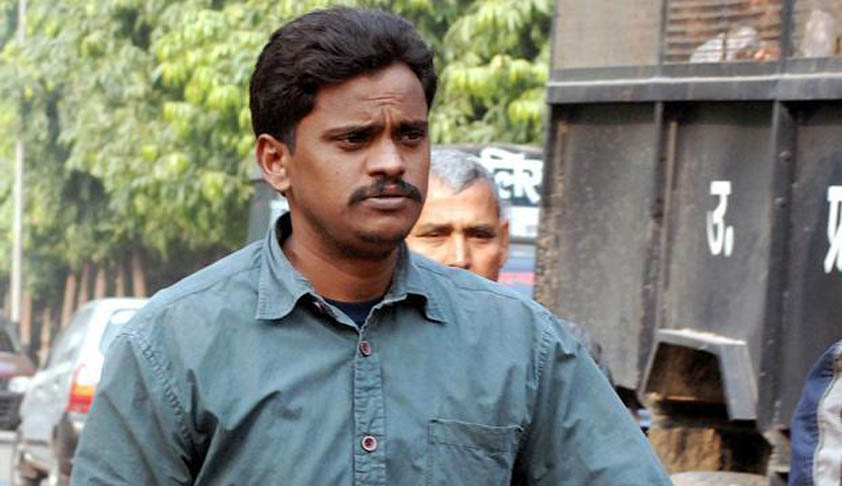
The Supreme Court’s decision to acquit Surendra Koli in the final pending case of the Nithari killings has closed a two-decade-long legal chapter, but it has simultaneously reopened an emotional one for Uttar Pradesh’s executioner Pawan Jallad. As the man once labelled one of India’s most feared serial killers steps out of prison a free man, the state’s official hangman finds himself carrying the silent burden of his late father’s final wish—an unfulfilled duty tied to one of India’s darkest criminal sagas and the legacy of a family that has served as executioners for generations.
A Hangman’s Legacy Entwined With the Nithari Case
For the Jallad family, the Nithari killings were never just another case. They represented horror, trauma, and a moral calling shaped through decades of an unusual hereditary profession. The family’s history is interwoven with some of the most defining moments of punishment in India: Pawan’s great-grandfather executed Bhagat Singh under colonial rule, his grandfather carried out the hanging of Indira Gandhi’s assassins, and his father, Mammu Jallad, served Uttar Pradesh as an executioner for nearly five decades.
Within this lineage, the Nithari case became personal long before the justice system reached its final verdict. In 2006, when skeletal remains of children and young women were discovered near Moninder Singh Pandher’s home in Noida’s Sector 31, the country was shocked into disbelief. Stories of disappearance, allegations of assault, mutilation, and suspected cannibalism formed a chilling narrative that dominated public memory. Pandher’s domestic aide, Surendra Koli, became the face of the horror, accused of murdering victims and disposing of their remains with horrifying precision. Multiple trial courts sentenced both Pandher and Koli to death in several companion cases.
For Mammu Jallad, the brutality struck a deep emotional chord. As Pawan recalls, his father followed every development closely and believed that those responsible deserved the ultimate punishment. Mammu repeatedly expressed that if justice demanded a hanging, he wanted to be the one to carry it out. But fate chose otherwise; he passed away in 2011, years before any execution could be scheduled.
When Pawan joined the Uttar Pradesh Prison Department in 2013, it was more than a job. It was a continuation of his family’s legacy and a personal journey toward fulfilling his father’s unaccomplished desire. The closest he came to carrying out that duty was in 2015, when he was shortlisted to hang Surendra Koli after the convict was transferred from Dasna Jail to Meerut Jail for execution. The date was set—12 September 2015—and preparations were underway.
Pawan remembers the days leading up to the scheduled execution with meticulous clarity. Hangmen train with discipline and precision: the testing of pulleys, the inspection of the trapdoor, the selection of a rope based on the convict’s weight, the lubrication to ensure smooth tightening, and repeated rehearsals using sandbags. Everything was ready as the final hours approached. But just three hours before the execution, a stay order arrived from the court, halting the process entirely. Pawan recalls the moment with a mixture of disappointment and resignation, realizing that once again, the fate of the case had slipped beyond his and his family’s grasp.
With that stay order, the Jallad family’s last connection to the Nithari case was severed. Years later, when the Allahabad High Court acquitted both Pandher and Koli in multiple cases in 2023—citing serious lapses in evidence-collection procedures and violations in maintaining the chain of custody—the legal framework shifted dramatically. The Supreme Court upheld those findings in 2025 and finally overturned Koli’s last remaining conviction on 11 November 2025, legally clearing him of all charges and ordering his release. For Pawan, it marked not just a procedural closure but the end of any remaining possibility of honoring his father’s wish.
The emotional weight of this moment is intensified by the realities of Pawan’s life. Despite belonging to a family of national significance—executioners called upon during moments of extreme public trauma—he lives with financial hardship. As the state’s official hangman, he receives a retainer of only ₹10,000 a month. He has repeatedly asked the Uttar Pradesh government for permanent employment and recognition, arguing that the country depends on executioners only in moments of crisis while forgetting them for the rest of the year. He supports a family of five daughters on this meagre income, balancing his duty with daily struggles that rarely receive public attention.
Even as he acknowledges the Supreme Court’s authority and respects the law, the emotional conflict remains. The verdict may have cleared Koli’s name in the eyes of the judiciary, but for Pawan, it also symbolizes the permanent unfulfillment of a promise tied to his father’s memory. His father, he says, “always believed that some crimes leave no room for mercy.”
The Unsettling Years of the Nithari Case and the Cracks That Redefined Its Fate
The Nithari killings are etched into India’s collective consciousness as one of the most disturbing criminal episodes in the country’s history. The discovery in December 2006 of skeletal remains and body parts in the drains behind Pandher’s residence sparked outrage and horror across the nation. With each new revelation—accounts of missing children, testimonies alleging sexual assault, and whispers of cannibalism—the case grew in complexity and emotional weight.
The investigative agencies filed multiple FIRs, leading to separate trials for each alleged victim. Trial courts handed death sentences to both Koli and Pandher in several cases. But even at the time, independent observers, legal experts, and human rights groups raised questions about inconsistencies and procedural lapses.
Years later, those concerns became central to the judicial reassessment. The Allahabad High Court, in a series of detailed judgments, pointed to serious flaws: irregularities in evidence collection, contamination of material exhibits, weak or unreliable chain of custody, and what it described as “brazen violation” of investigative norms. It emphasized that the foundation of the prosecution’s case was unstable, and the guilt of the accused could not be proved beyond reasonable doubt.
When the Supreme Court examined the remaining conviction in 2025, it applied principles of parity and constitutional fairness. The apex court ruled that maintaining a single conviction based on the same evidence that had already been dismissed in other cases violated Articles 14 and 21 of the Constitution, which guarantee equality before the law and the right to life and liberty. The court further noted that evidence cannot be selectively reliable; if the chain of custody was discredited in one case, it affected the integrity of all connected cases.
The judgment led to Koli’s release, closing the legal door on a case that had once appeared unshakeable. For families of victims, the ruling brought renewed pain and a sense of helplessness. For the investigative agencies, it raised deep questions about methods, oversight, and accountability. And for Pawan Jallad, it extinguished the last remaining strand of a duty he once believed he was destined to fulfil.
In the quiet aftermath of the judgment, as Koli stepped out of prison after nearly two decades, Pawan stood with the tools of his trade—unused ropes, harnesses, and meticulous records—symbols of a profession defined by precision and finality. His reflections speak not only to the emotional burden of an executioner but also to the strange intersection of law, fate, and legacy that has shaped his family’s identity for generations.
He lives today between the weight of history and the uncertainty of his future, navigating a life that blends inherited responsibility with economic struggle. Though the chapters of the Nithari case have been legally closed, the hangman of Uttar Pradesh continues to carry the remnants of a story that forever altered his family’s journey and left his father’s last wish suspended in time.