Apple reported a challenging December quarter on Thursday, revealing an 11.1% decline in sales from China, marking the steepest drop in the region since the same period last year. The decline also represents the sixth consecutive quarter of reduced sales in Apple’s third-largest market by revenue. Analysts had anticipated a weak performance in China due to indications of declining demand and shifting preferences toward locally made devices, particularly from brands like Huawei and Xiaomi.
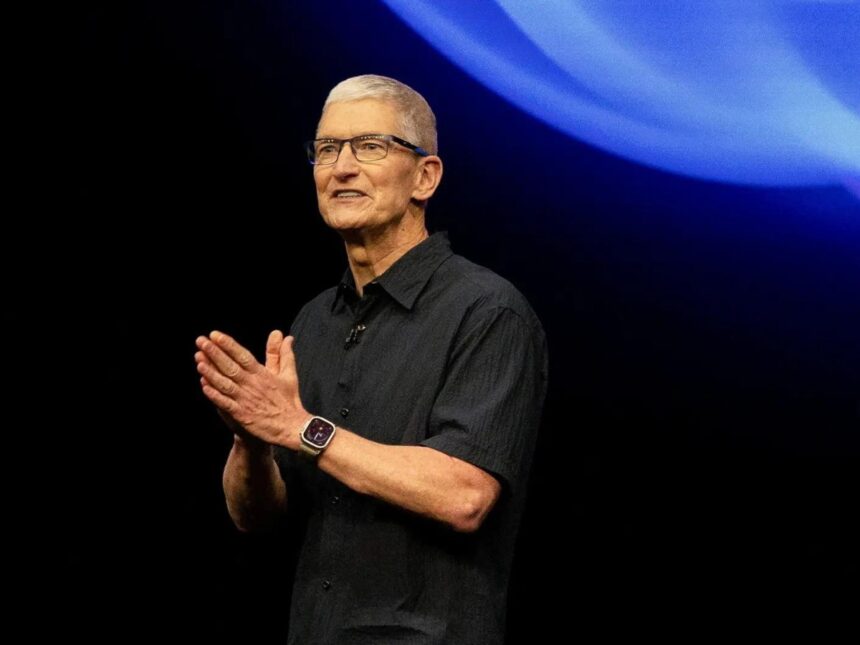
During the earnings call, Apple CEO Tim Cook discussed the performance in China, emphasizing operational decisions over competition. While acknowledging the competitive nature of the Chinese market, Tim Cook highlighted factors influencing Apple’s sales. A significant contributor to the decline, he noted, was Apple’s failure to predict the demand correctly in China, which led to channel inventory issues. Apple defines “channel” as companies like retailers and wireless carriers that distribute its products. Tim Cook explained that the inventory reduction, which occurred from the start to the end of the quarter, accounted for over half of the decline in reported results. The company had sold more products than initially forecasted by the end of the quarter, leaving its inventory leaner than expected.
Tim Cook also pointed to the absence of Apple’s artificial intelligence features, Apple Intelligence, as another factor impacting sales in China. While the iPhone 16 family performed better in markets where Apple Intelligence had been rolled out, it has not yet been introduced in China. Apple plans to release a simplified Chinese version of its AI in April, though Tim Cook emphasized that the launch in China would depend on the regulatory process. Apple is also seeking a local partner with the necessary licenses to operate AI in the country, similar to OpenAI’s approach in the U.S.
Tim Cook also referenced a new national subsidy program introduced by the Chinese government in January, which is aimed at boosting domestic consumption. Under this fiscal stimulus plan, some of Apple’s products, including smartphones, tablets, PCs, and smartwatches, will be eligible for subsidies. However, the program excludes Apple’s high-end Pro models, which cost over 6,000 yuan. The subsidy is capped at 500 yuan per eligible product, providing some relief for consumers and potentially impacting Apple’s sales performance moving forward.
While the company’s China sales continue to struggle, Tim Cook’s comments suggest that Apple remains focused on navigating the challenges and exploring opportunities for growth in the region.