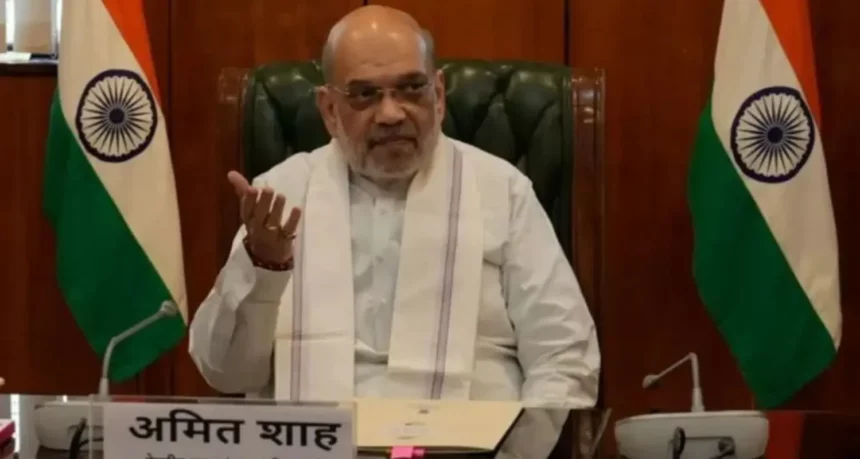
Union Home Minister Amit Shah is set to chair a high-level security meeting in New Delhi to comprehensively review the security situation in Jammu and Kashmir, marking the first such strategic assessment of the Union Territory in 2026 and signalling the government’s intent to consolidate recent gains against terrorism while intensifying operations to achieve lasting peace and stability.
Strategic security assessment and leadership-level coordination
The proposed security review comes at a time when the Union government is seeking to build upon operational momentum achieved over recent years in Jammu and Kashmir. Officials familiar with the preparations for the meeting have indicated that the review will be wide-ranging in scope, touching upon operational, intelligence, administrative, and coordination-related aspects of internal security. The presence of senior leadership from the Union Territory administration, central ministries, police leadership, and intelligence agencies underlines the importance being attached to this exercise.
Lieutenant Governor Manoj Sinha is expected to brief the Home Minister on the evolving ground situation, recent operational outcomes, and emerging challenges. The meeting will also bring together top officials from the Jammu and Kashmir Police, civil administration, intelligence agencies, and the Ministry of Home Affairs to ensure a holistic review that bridges policy formulation with field-level execution. Senior officials are likely to present detailed assessments of recent incidents, threat perceptions, and preventive strategies that have been put in place across districts and sensitive zones.
A key objective of the meeting is to evaluate the effectiveness of inter-agency coordination mechanisms. Over the past few years, enhanced information sharing between central and local agencies has been a cornerstone of counter-terror operations in the region. The review will examine how these mechanisms can be further strengthened to ensure quicker response times, better intelligence-led operations, and seamless coordination during joint missions. Officials have suggested that particular emphasis will be placed on translating strategic directives into actionable plans at the grassroots level, especially in areas that have historically been vulnerable to militant activity.
The meeting is also expected to address administrative preparedness, including logistics, manpower deployment, and technological support for security forces. Discussions may include the use of surveillance technology, data analytics, and modern communication systems to enhance situational awareness along sensitive corridors. By bringing together decision-makers from multiple levels of governance, the review aims to align priorities and ensure that all stakeholders are working towards clearly defined security objectives for 2026.
Counter-terror focus, border management, and the road ahead in 2026
Another major focus of the high-level meeting will be border management, particularly measures to ensure zero infiltration along the Line of Control and the International Border during the winter months. Officials have noted that while harsh weather conditions traditionally reduce infiltration attempts, militant groups and their handlers have continued to explore new routes and tactics. The review will therefore assess existing border security arrangements and identify gaps that need to be addressed through enhanced surveillance, improved infrastructure, and better coordination between border guarding forces and local police units.
Counter-terror operations within the hinterland are also expected to feature prominently in the discussions. Security agencies are likely to present assessments of the remaining militant presence, with a specific focus on foreign terrorists operating in the region. The meeting will deliberate on strategies to neutralize these elements while minimizing collateral impact and maintaining public confidence. Officials have emphasized that intelligence-driven operations, backed by precise planning and local inputs, will remain central to the government’s approach.
Equally significant is the focus on dismantling the local support ecosystem that enables militant activity. This includes overground worker networks, financial conduits, and logistical facilitators who provide shelter, information, and resources to terrorists. The review will examine ongoing efforts to identify and disrupt these networks through legal, administrative, and policing measures. By targeting the broader ecosystem rather than isolated operatives, the government aims to ensure that terrorist groups are deprived of the support structures they rely upon to sustain operations.
The meeting will also review the overall momentum of security operations and assess whether current strategies are sufficient to meet the stated goal of making 2026 a decisive year in the fight against terrorism in Jammu and Kashmir. Officials have indicated that the Home Minister is expected to stress accountability, clarity of objectives, and measurable outcomes. The emphasis is likely to be on sustained pressure rather than sporadic action, ensuring that gains made on the ground are consolidated and not reversed.
In addition to operational issues, the review is expected to touch upon the broader security environment, including public outreach, confidence-building measures, and coordination with civil administration to ensure that development activities are not disrupted by security concerns. Senior officials believe that maintaining a balance between robust security measures and normal civic life is essential for long-term stability. The presence of top civil and police leadership at the meeting is intended to facilitate this balance by aligning security priorities with governance and development goals.
The participation of senior officials such as the Chief Secretary, the Director General of Police, and heads of central armed police forces and intelligence agencies underscores the comprehensive nature of the review. By bringing together all key stakeholders at one table, the government aims to ensure that policy decisions are informed by ground realities and that operational plans are supported by adequate resources and political backing. The meeting is expected to set the tone for security management in Jammu and Kashmir for the rest of the year, with clear directives and timelines for implementation.