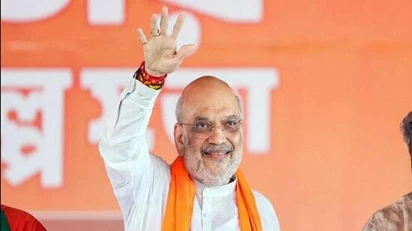
The statement comes amid heightened political tensions ahead of the West Bengal Assembly elections, where issues such as illegal infiltration, voter list revisions, and border security have become central to campaign narratives. Addressing election rallies, Amit Shah asserted that the Election Commission has already taken steps by removing suspected infiltrators from electoral rolls, but emphasized that further action is required to address the issue comprehensively. His remarks have triggered sharp reactions from opposition parties, making it a key political flashpoint in the ongoing election season.
Focus on Voter List Revision and Infiltration Issue
During campaign speeches, Amit Shah referred to the recent revision of voter lists conducted by the Election Commission of India. He stated that the process led to the removal of a significant number of names suspected to be linked to illegal infiltrators.
According to reports, lakhs of names were deleted from electoral rolls during the Special Intensive Revision (SIR), a process aimed at ensuring the accuracy of voter data. Election Commission of India carried out this exercise to identify ineligible entries and maintain the integrity of elections.
Amit Shah argued that while the Election Commission has taken initial steps by removing such names from voter lists, further action is necessary. He stated that if his party comes to power in the state, it will go beyond voter list corrections and take measures to identify and remove infiltrators from the country.
The issue of infiltration has been a recurring theme in political discourse in West Bengal, particularly in border districts. Allegations of illegal migration from neighboring countries have been raised by various political leaders over the years, often becoming a key electoral issue.
Political Reactions and Election Context
The remarks have intensified the political battle between the ruling All India Trinamool Congress and the opposition Bharatiya Janata Party. While the BJP has framed infiltration as a security and governance issue, the Trinamool Congress has countered these claims, accusing the opposition of politicizing voter data and targeting specific communities.
The debate has also been linked to concerns over voter disenfranchisement. Reports indicate that a large number of names were removed during the voter list revision process, raising questions about the accuracy and fairness of the exercise.
Opposition leaders have argued that such actions could affect genuine voters, while the BJP maintains that the process is necessary to ensure clean and fair elections. This difference in perspective has added to the charged political atmosphere in the state.
The issue of infiltration has also been highlighted in election campaigns by other leaders, with calls for stricter border control and fencing to prevent illegal entry. The matter has thus evolved into a broader debate involving national security, citizenship, and electoral integrity.
Broader Implications for Governance and Security
Amit Shah’s remarks underline the BJP’s broader stance on illegal immigration and national security. The party has consistently advocated for identifying and deporting illegal infiltrators, positioning it as a key governance priority.
If implemented, such measures could have significant implications for border management, law enforcement, and diplomatic relations. At the same time, they raise complex legal and humanitarian questions regarding identification, due process, and rights of individuals.
The voter list revision exercise itself has become a focal point of discussion, highlighting the challenges involved in maintaining accurate electoral rolls in a large and diverse democracy like India. Ensuring that only eligible citizens are included while safeguarding the rights of genuine voters remains a critical balance.
As campaigning continues in West Bengal, the issue of infiltration and voter list integrity is likely to remain at the forefront of political debates. The outcome of the elections could influence how these concerns are addressed in the future, both at the state and national levels.