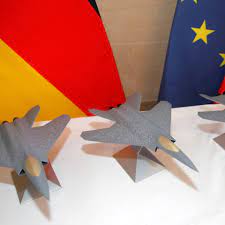
Europe’s ambition to establish a next-generation fighter jet under the Future Combat Air System programme stands at a critical crossroads as Germany, France and Spain intensify efforts to break a long-running deadlock. The FCAS project, envisioned as Europe’s most advanced and comprehensive defence initiative, has been stalled for years by industrial rivalry, political hesitation and competing national priorities. With the war in Ukraine reshaping security thinking across the continent and geopolitical instability demanding stronger collective defence capabilities, the pressure to revive the €100 billion programme has never been higher. As the defence ministers of the three nations prepare to meet in Berlin, the continent watches closely to see whether this moment will rescue a project widely seen as an essential pillar of Europe’s strategic autonomy.
Stalled Progress and Mounting Pressures Surround Europe’s Most Ambitious Defence Collaboration
The FCAS programme, also known as SCAF in France, was launched more than eight years ago with the promise of creating a cutting-edge combat aircraft supported by a network of data-driven and unmanned systems. It was designed not merely as a fighter jet but as an integrated combat ecosystem, leveraging artificial intelligence, advanced sensors and cloud-based data sharing capabilities. The initiative emerged from a growing recognition that Europe must reduce reliance on U.S. systems while strengthening its own defence manufacturing ecosystems.
However, despite early enthusiasm, the project has repeatedly stumbled over disagreements between France’s Dassault Aviation and Airbus, the multinational aerospace group representing German and Spanish interests. The most contentious disputes revolve around leadership roles, ownership of technical designs, and how responsibilities for manufacturing should be allocated. Dassault has pushed for clear primary authority over the jet’s design, citing its historical expertise. Airbus, backed by German lawmakers and unions, has demanded a more balanced distribution of responsibilities.
These industrial tensions have now escalated into political pressures affecting the project’s viability. German defence minister Boris Pistorius, French defence minister Catherine Vautrin, and Spain’s Margarita Robles are set to hold crucial talks in Berlin, where the FCAS deadlock is expected to dominate the agenda. Although German officials speak cautiously about ongoing negotiations, it is clear that the success—or failure—of this meeting could reshape the future of European defence cooperation.
Adding a layer of political urgency, German chancellor Friedrich Merz and French president Emmanuel Macron are scheduled for bilateral talks next week, where FCAS will again take centre stage. Both leaders have strong stakes in ensuring the project moves forward. For Berlin, FCAS symbolises a commitment to modernising Germany’s military in the post-Ukraine era. For Paris, it reflects France’s long-standing aspiration for strategic defence leadership within Europe.
The sense of urgency is heightened by external security threats. The war in Ukraine has forced European nations to rethink defence preparedness, leading to unprecedented military spending and accelerated procurement strategies. Against this backdrop, abandoning or further delaying FCAS would represent a symbolic setback at a moment when Europe seeks greater unity and technological advancement in defence.
Industrial Rivalries, Union Resistance and Diverging Visions Threaten the Project’s Unity
While governments are attempting diplomatic patchwork, industrial and labour tensions threaten to complicate negotiations further. Airbus CEO Guillaume Faury publicly expressed confidence that progress could still be achieved, though he acknowledged that agreement on cooperation models remained unresolved. His remarks reflect Airbus’s broader frustration with Dassault’s insistence on maintaining design leadership, which German stakeholders view as out of step with a collaborative framework.
The situation intensified dramatically when Germany’s influential IG Metall union issued a forceful warning: it would withdraw its cooperation from FCAS if Dassault remained in a leadership role. In a letter addressed to Pistorius and finance minister Lars Klingbeil, IG Metall declared that it no longer trusted Dassault, accusing it of attempting to dominate the programme rather than share responsibilities fairly. Given IG Metall’s significant political influence and its representation of thousands of skilled workers in Germany’s aerospace sector, its opposition poses a formidable obstacle.
France responded swiftly. The country’s metalworking employers’ organisation, whose president is Dassault CEO Eric Trappier, stated that any attempt to exclude France’s industrial interests was unacceptable. Trappier himself, as recently as July, had argued that FCAS required clearer leadership structures if the programme was to advance toward building a flying demonstrator—a key milestone signalling that technical development was on track.
Some German lawmakers have attempted to propose middle-ground solutions. One senior legislator suggested that shifting focus toward “combat cloud” technology and unmanned systems might defuse tensions by allowing each country to pursue its own fighter jet while collaborating on shared digital and autonomous capabilities. This approach reflects a broader trend in modern defence thinking, where data networks and remote-operated systems increasingly define battlefield superiority.
Yet such proposals also raise concerns about diluting the FCAS project’s original vision. Fragmenting the programme could undermine its goal of producing a single, unified European combat system capable of competing with future American and Chinese designs. It also risks repeating historical patterns where competing national projects weakened Europe’s defence cohesion—such as the divergence between the Eurofighter Typhoon and France’s Rafale programme in earlier decades.
Compounding these challenges is the broader political climate. European Union leaders are scheduled to meet in Brussels from December 17 to 19, a gathering where defence cooperation is expected to figure prominently. Chancellor Merz has already declared that he wants a decision on FCAS by the end of the year, signalling that Germany is losing patience with the stagnation. Macron, meanwhile, faces political pressure at home to preserve French industrial leadership while avoiding the appearance of undermining European unity.
The outcome of negotiations in Berlin will therefore be pivotal. If ministers can craft a compromise that satisfies both industrial partners and political stakeholders, FCAS may regain the momentum it has lacked for years. If not, Europe risks fracturing its most ambitious defence collaboration at a moment of heightened geopolitical uncertainty.