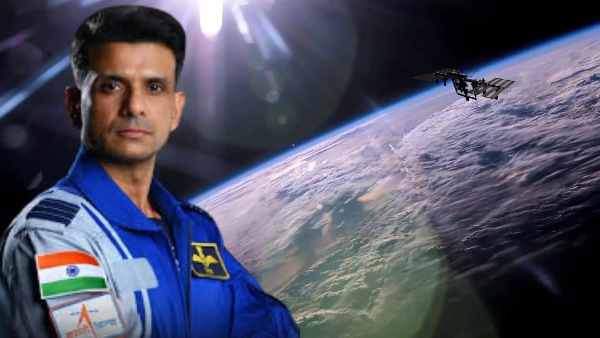
After a two-week debriefing in the US and a successful rehabilitation program following his journey to the International Space Station (ISS), Group Captain Shubhanshu Shukla is all set to return to India. His mission, which marked a significant milestone in India’s private spaceflight collaborations, not only carried national pride but also delivered crucial scientific research. Shukla was part of the Axiom Mission-4, which concluded with a safe splashdown in the Pacific Ocean on July 15, and carried out seven microgravity experiments onboard the ISS, whose results are now awaited by ISRO and researchers back home.
A Historic Space Voyage with Global Collaboration
Group Captain Shubhanshu Shukla became the second Indian to travel to space, following Rakesh Sharma’s historic journey decades ago. His mission, Axiom Mission-4, was a privately funded spaceflight organized by Axiom Space in partnership with NASA and SpaceX. Accompanying Shukla on the journey were three other astronauts representing the United States, Hungary, and Poland, making it an international collaboration of significant diplomatic and scientific value.
The Indian government, through ISRO, invested approximately ₹550 crore in the mission, marking one of its most ambitious collaborations with a private space entity to date. This investment supported not only India’s representation on the ISS but also enabled the execution of critical scientific experiments in microgravity—a realm essential for understanding long-duration human spaceflight.
In a recent virtual press briefing from Texas, Shukla shared his post-mission experiences, particularly the physiological challenges of returning to Earth’s gravity. “It takes time to get used to gravity, find your balance, and do simple things that you were doing all your life without even giving a second thought. However, with a well-curated rehabilitation programme, I felt normal within 3-4 days,” he said. He also stated that he felt prepared and eager for another space mission, having fully recovered.
Microgravity Experiments Completed, Results Awaited in India
Shukla’s mission was not just symbolic; it was also packed with scientific responsibility. A key component of the journey was conducting seven microgravity experiments designed by Indian researchers. These included studies on muscle regeneration using supplements, algal growth for potential food sources, microbial survivability, crop viability, cognitive performance in microgravity, and the behavior of cyanobacteria in space.
While Shukla refrained from disclosing the findings during the briefing, he did confirm that all experiments were completed successfully and the data samples had already been shipped to India. “It is difficult to give details now, but I’m excited to share that there were certain experiments where I could see the results while we were on the ISS. This was very encouraging for me,” he said.
These results are now under analysis by ISRO and associated research institutions. They are expected to contribute valuable insights into how biological systems behave in microgravity environments, directly impacting future space travel and possibly even applications back on Earth.
What made this mission scientifically unique was the design and execution of experiments specifically suited for India’s future space goals. The successful delivery of these experiments adds significant credibility to India’s research capabilities in the international space community.
A Stepping Stone for the Gaganyaan Mission
The timing of this mission also carries added weight as India prepares for its first human spaceflight mission, Gaganyaan, scheduled for launch in 2027. Shukla is one of the four astronaut-designates selected for the Gaganyaan program, and his recent experience in space is seen as a critical step in that direction.
According to Shukla, the year-long training and the execution of scientific tasks aboard the ISS would provide valuable context and preparedness for the upcoming mission. The Gaganyaan program, which has a budget of ₹20,000 crore, aims to send a three-member crew to low Earth orbit and bring them safely back—an undertaking that will put India in a select league of nations capable of independent human spaceflight.
Uncrewed test flights for Gaganyaan are already in the pipeline, with various phases of the mission being lined up for the coming year. The data from Shukla’s mission will also likely influence experiment design and crew protocols for Gaganyaan.
As India continues to expand its ambitions in space, missions like these not only highlight individual achievement but also strengthen India’s long-term strategic and scientific goals in the field of human space exploration.