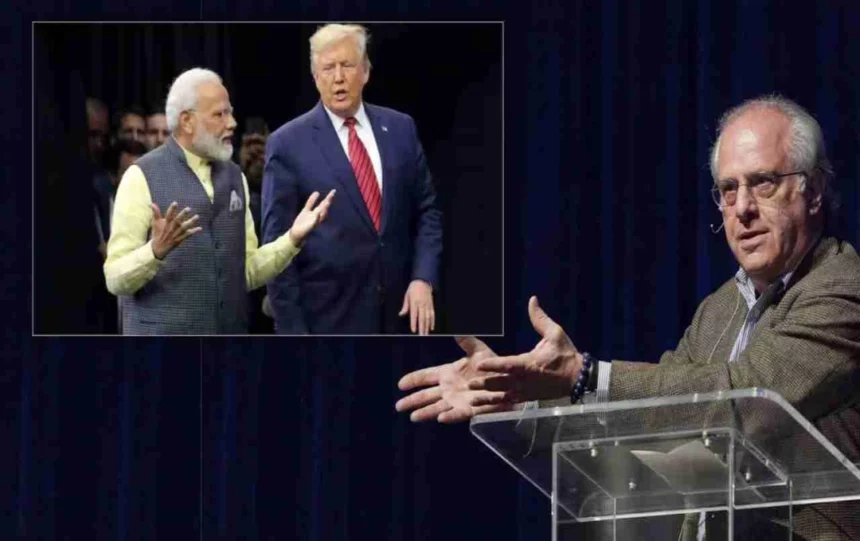
The United States’ recent decision to impose 50 percent tariffs on Indian imports has triggered a wave of international economic debate, highlighting the growing tension between Washington and New Delhi while also amplifying discussions about the role of BRICS nations in providing an alternative economic bloc. American economist Richard Wolff has criticized the move as counterproductive, warning that the Donald Trump administration’s aggressive trade measures may inadvertently empower emerging economies, including India, Russia, Brazil, China, and South Africa. By framing the tariffs as an attempt to assert the United States’ dominance, Wolff suggests that the move could weaken American economic influence while strengthening collaborative efforts among BRICS nations. The escalating trade tensions come at a time when global economic alignments are shifting, fueled by geopolitical conflicts, energy dependencies, and strategic alliances. Wolff’s remarks, coupled with criticisms from other economic and political observers, underline the complex dynamics of global trade, diplomacy, and the competing imperatives of national interests versus multilateral cooperation.
US Tariffs on India: A Misstep with Global Implications
The Donald Trump administration’s imposition of 50 percent tariffs on Indian goods has been widely perceived as one of the most punitive trade measures among America’s trading partners, placing India on a similar footing as Brazil. Officially, the tariffs are a response to India’s continued purchases of Russian oil, a contentious issue amidst the ongoing Russia-Ukraine conflict and growing Western concerns over energy supply lines. Economists and trade analysts, however, argue that the tariffs may have the opposite of their intended effect. By limiting the US market for Indian exports, the United States risks pushing India toward alternative markets, particularly among other BRICS nations, thereby strengthening the economic integration of these countries and reducing reliance on Western markets.
In an interview with Russia Today, Wolff emphasized that the aggressive tariff strategy could inadvertently accelerate the growth and integration of the BRICS bloc as a viable economic alternative. He described the US action as the behavior of a “world’s tough guy” attempting to assert authority while simultaneously undermining its own economic interests. According to Wolff, India’s growing population—recently surpassing China to become the largest in the world—coupled with its historical economic relationships, particularly with Russia, ensures that India is positioned to leverage new trade alliances and reduce dependence on the United States. By closing the American market, the Donald Trump administration may unintentionally compel India to redirect exports to BRICS nations, reinforcing trade ties among emerging economies and bolstering the global relevance of the bloc.
The economic implications of this move are profound. Tariffs of this magnitude can disrupt supply chains, affect American businesses reliant on Indian imports, and generate inflationary pressures on goods ranging from raw materials to manufactured products. While the US government justifies the tariffs on geopolitical and energy grounds, critics warn that the action undermines broader economic stability, weakens bilateral trade, and signals a willingness to prioritize short-term political objectives over long-term strategic economic considerations. Analysts also note that such measures may diminish trust and cooperation in global trade institutions, creating friction between the world’s largest economy and emerging powers with growing influence in global markets.
BRICS Empowerment and the Global Economic Shift
Richard Wolff’s critique underscores a broader narrative of shifting economic power in the twenty-first century. The BRICS nations—Brazil, Russia, India, China, and South Africa—have increasingly positioned themselves as a counterweight to Western-dominated economic systems. In recent years, these countries have developed mechanisms for economic collaboration, financial integration, and multilateral trade agreements designed to reduce reliance on traditional Western markets. By imposing punitive tariffs on India, Wolff argues, the United States may be inadvertently accelerating this process, creating a more robust and interconnected economic network among BRICS countries.
India’s response to the tariffs exemplifies the strategic recalibration taking place. New Delhi has deemed the US measures “unjustified and unreasonable,” emphasizing that it will take all necessary steps to safeguard national interests, protect economic security, and maintain the stability of domestic industries. Indian officials have highlighted the importance of diversified trade relations and the need to strengthen ties with both developed and emerging economies to minimize exposure to unilateral economic pressures. As India pivots toward BRICS and other global partnerships, the potential exists for a realignment of trade flows, investment priorities, and geopolitical alliances that could challenge the predominance of Western-led economic institutions.
The issue of energy trade, particularly in the context of Russian oil purchases, remains central to the debate. White House trade advisor Peter Navarro has criticized India’s energy strategy, referring to the Russia-Ukraine conflict as “PM Modi’s war” and accusing New Delhi of exacerbating economic pressures on the United States and Europe. Navarro argued that India’s procurement of discounted Russian crude necessitates additional financial contributions from the West to support Ukraine’s defense, which he claims adversely affects American workers, consumers, and businesses. He further described India as “arrogant” in prioritizing its energy needs and urged alignment with democratic nations to mitigate geopolitical risks. These statements, combined with the tariffs, illustrate the contentious and multi-layered nature of trade diplomacy, energy security, and geopolitical competition.
The interplay between tariffs, trade relations, and global alliances has significant implications for both the US economy and global markets. Experts highlight that tariffs of this magnitude are likely to incentivize Indian exporters to seek alternative destinations, redirecting supply chains and fostering deeper economic engagement within the BRICS framework. This may result in accelerated trade diversification, greater resilience against Western economic pressure, and the establishment of parallel economic networks that can operate independently of traditional Western influence. Such developments could ultimately reshape global trade architecture, reduce American leverage in strategic negotiations, and empower emerging economies to assert greater autonomy in international economic policy.
Wolff’s commentary also situates the discussion within a broader critique of protectionist policies. By adopting an aggressive, high-tariff stance, the United States risks alienating key partners and destabilizing long-standing trade relationships. Historical analysis suggests that similar protectionist measures often lead to retaliatory policies, reduced market access, and slower economic growth, both domestically and internationally. Critics argue that the focus should instead be on fostering mutually beneficial trade agreements, strengthening multilateral institutions, and leveraging diplomatic channels to address geopolitical concerns without undermining economic stability.
Furthermore, the implications extend beyond economics into geopolitical influence. India’s expanding role as a global player, combined with the growth of the BRICS alliance, has strategic significance in terms of energy security, defense collaboration, and regional stability. By alienating India through punitive trade measures, the United States risks reducing its ability to shape outcomes in South Asia and other strategically vital regions. Conversely, a cooperative approach could reinforce partnerships, expand investment opportunities, and support the integration of emerging markets into a more balanced and stable global economic order.
In conclusion, the imposition of 50 percent tariffs on Indian imports by the Donald Trump administration has generated significant debate, drawing attention from economists like Richard Wolff and political analysts globally. Wolff’s warning emphasizes that aggressive unilateral measures may backfire, inadvertently strengthening BRICS nations and prompting India to diversify its trade and economic alliances. The tariffs, combined with commentary from figures such as Peter Navarro, highlight the intersection of trade policy, geopolitical strategy, and global economic realignment. While intended as a show of American toughness, these measures could ultimately undermine US influence, reshape global economic networks, and accelerate the emergence of a multipolar economic world where BRICS nations play an increasingly central role.
The discourse surrounding this policy underscores the importance of carefully balancing national interests, global diplomacy, and strategic economic planning. As the United States navigates its relationship with India, the response from emerging economies, the evolution of trade blocs like BRICS, and the ongoing geopolitical dynamics will likely influence global economic trajectories, international trade patterns, and the broader balance of power in the coming decades.