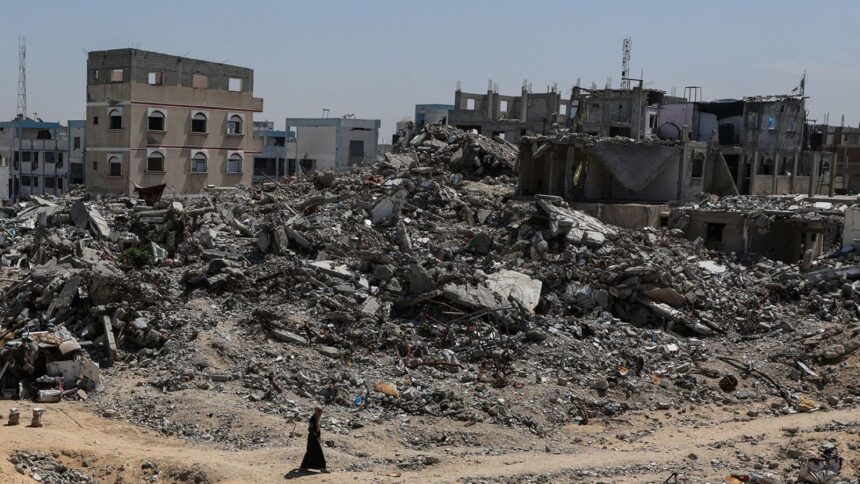
The humanitarian crisis in Gaza is worsening, with several aid workers either killed or gone missing in the past few days. At least eight staff members from the United Nations Relief and Works Agency (UNRWA) have been killed in the past week. Additionally, nine emergency medical technicians (EMTs) from the Palestine Red Crescent Society (PRCS) have been missing since Sunday after Israeli forces reportedly fired on ambulances and fire trucks in Rafah.
In another devastating incident, an Israeli airstrike near a community kitchen in Gaza resulted in the death of a World Central Kitchen (WCK) volunteer, with six others injured while distributing meals. This tragedy comes as Israel’s blockade on humanitarian aid enters its fourth week, raising significant international concerns over the deteriorating situation in the region.
The Israeli military has justified its attacks on the PRCS ambulances and fire trucks by alleging that they were being used as cover by Hamas and Palestinian Islamic Jihad militants. However, aid groups and international organizations have condemned these actions, accusing Israel of violating international law and using starvation as a weapon of war. UNRWA Commissioner-General Philippe Lazzarini has called for an immediate ceasefire and an end to the blockade, emphasizing that no humanitarian aid has entered Gaza for over three weeks, making it the longest period without essential supplies since the war began.
Israel resumed its military offensive on March 18, breaking a ceasefire that had been in place since January. Since then, the Palestinian Ministry of Health has reported that Israeli attacks have killed at least 855 people and injured 1,869. Prior to the collapse of the ceasefire, between 500 and 600 aid trucks entered Gaza daily, but the blockade has completely halted this flow, leaving the population in dire conditions. The World Food Programme (WFP) has warned that hundreds of thousands of Palestinians are at risk of severe hunger and malnutrition, as food stocks are estimated to last for only two more weeks.
The blockade has also forced the closure of nearly ten community kitchens in Gaza due to ongoing hostilities and fuel shortages. The UN Office for the Coordination of Humanitarian Affairs (OCHA) has warned that cooking gas is now available only in extremely limited quantities at exorbitant prices, making food preparation nearly impossible for many families. Parents are struggling to find food for their children, and the lack of medical supplies and clean water is exacerbating the crisis.
Since October 7, 2023, over 400 aid workers, including teachers, doctors, and nurses, have lost their lives in Israeli attacks on Gaza. Among them, 289 were UNRWA staff, 34 belonged to PRCS, and 76 were from other NGOs. The PRCS has expressed grave concern over the disappearance of its EMTs in Rafah, stating that their teams were only able to begin search operations on Thursday due to previous access restrictions imposed by Israeli forces. Meanwhile, Gaza’s Civil Defense has also reported the disappearance of six of its members who were dispatched to the Tel Sultan area following an Israeli military operation. One Civil Defense worker’s body was recovered on Thursday, further adding to the growing casualty count.
The Israeli military has maintained that its forces fired upon what they described as “suspicious vehicles” that lacked prior coordination, headlights, or emergency signals. According to the military, these vehicles were being used by Hamas and Islamic Jihad militants to shield their operations, a claim that aid organizations continue to challenge. The Palestine Red Crescent Society has called on the international community to take serious measures to protect medical teams and humanitarian workers, stating that they cannot bear to add more names to the tragic list of those killed in action.
In a separate but related incident, an Israeli airstrike near a community kitchen killed a volunteer from the World Central Kitchen and injured six others. This attack has drawn global criticism, with humanitarian organizations condemning the targeting of those providing food aid to a starving population. WCK, which has faced deadly attacks before, has vowed to continue its operations in Gaza, emphasizing the urgent need for humanitarian assistance and an immediate ceasefire.
With the ongoing escalation, the humanitarian situation in Gaza has reached catastrophic levels. As hunger, disease, and casualties continue to rise, international pressure on Israel to lift the blockade and allow aid into the enclave is intensifying. The coming weeks will be critical in determining the fate of millions of Palestinians struggling to survive in the face of war, starvation, and displacement.