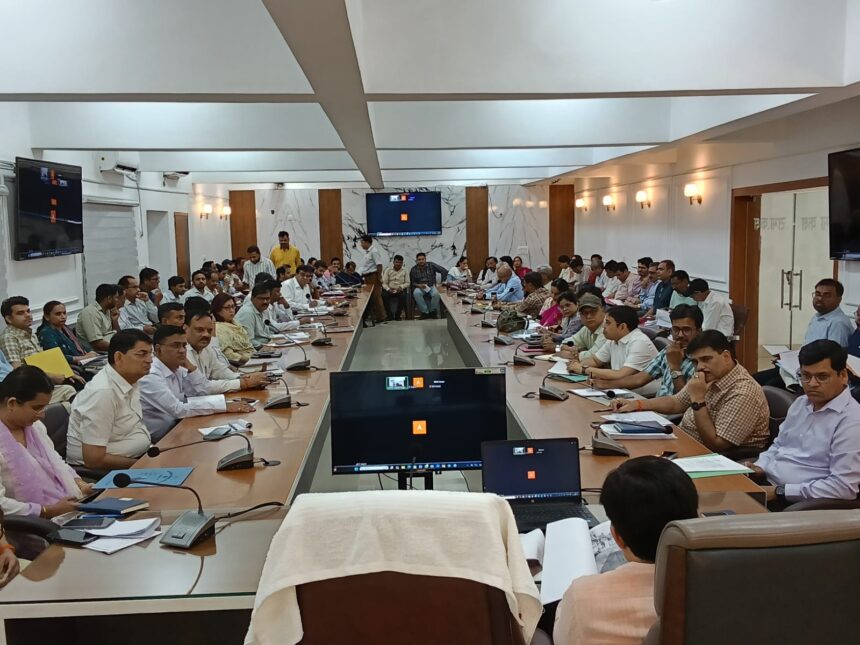
The ambitious New Noida urban development project has officially entered its land acquisition stage, marking a major step toward creating a large-scale planned urban hub in the National Capital Region (NCR). Authorities have begun preparations to acquire land across 37 villages in the first phase of development, covering an area of approximately 209.11 square kilometers.
Officials have confirmed that the entire process will be carried out through a mutual consent model rather than compulsory acquisition. This approach is aimed at reducing disputes, ensuring transparency, and encouraging cooperation between landowners and the administration. The government has stated that farmers will remain central stakeholders in the development process.
Under the proposed compensation structure, farmers will receive Rs 4,300 per square meter for their land. This rate is expected to serve as the base valuation for negotiations in the affected villages. Out of the 37 villages included in Phase 1, 24 are located in Bulandshahr district, while 13 fall under Gautam Buddh Nagar district.
To manage the land acquisition process efficiently, the administration is planning to appoint three tehsildars who will directly coordinate with farmers. These officials will be responsible for conducting discussions, resolving documentation issues, and addressing concerns raised by landowners. Their role will be crucial in ensuring smooth execution of the acquisition process at the village level.
The New Noida project is being developed as a modern, technology-driven urban center designed to support the rapid expansion of NCR. It is expected to reduce pressure on existing urban hubs such as Noida and Greater Noida by creating new zones for residential, industrial, and commercial development.
Planners have outlined a vision that includes smart infrastructure, industrial clusters, logistics hubs, and integrated transport systems. The project is not limited to housing development alone but is also focused on generating employment opportunities and attracting large-scale investments in multiple sectors.
One of the key advantages of the project is its strategic location near the Noida International Airport and the Yamuna Expressway. Experts believe this positioning could transform New Noida into one of the most important growth corridors in northern India over the next decade, significantly boosting economic activity in the region.
The administration has emphasized that land acquisition will be fully based on mutual agreement. This consent-based model is intended to minimize legal conflicts and speed up project implementation. Farmers will be given opportunities to negotiate compensation terms and seek clarity on rehabilitation policies and long-term benefits.
However, discussions in the affected villages indicate mixed reactions. While some landowners see the project as an opportunity for rising land values and improved infrastructure, others are seeking clearer information regarding rehabilitation, employment opportunities, and social impact management.
Several farmers have raised concerns about how displacement will be handled and what long-term benefits they will receive beyond monetary compensation. Officials have assured that feedback from local communities will be considered in shaping further phases of the project.
The announcement has already triggered widespread discussions across the 37 villages included in Phase 1. Residents are actively debating issues related to compensation rates, land valuation, infrastructure development, and future growth prospects. The project has created both expectations and concerns among landowners.
Many villagers believe that the development of New Noida will significantly improve connectivity, infrastructure, and property values in the surrounding region. At the same time, there are strong demands for fair rehabilitation policies and employment opportunities for affected families to ensure inclusive growth.
Urban experts consider the New Noida project one of the largest planned expansion initiatives in Uttar Pradesh. Once completed, it is expected to attract major investments in real estate, manufacturing, logistics, IT, and industrial infrastructure.
The project is also planned to be integrated with major infrastructure developments such as the Noida International Airport, freight corridors, expressways, and industrial parks. This integration is expected to create a large, connected economic zone that could reshape the development landscape of western Uttar Pradesh.
Experts further believe that New Noida could play a significant role in strengthening the economic and infrastructure ecosystem of NCR. With planned industrial clusters and smart city features, the region is expected to become a major hub for business, investment, and employment generation in the coming years.
For now, administrative efforts are focused on initiating the land acquisition process on the ground. With tehsildars being deployed and consultations with farmers expected to intensify, the project is gradually moving from the planning stage toward execution.