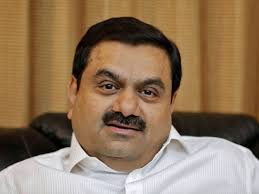
The Adani Group has significantly accelerated its expansion strategy since early 2023, completing 33 acquisitions worth around ₹86,000 crore, a move that underscores its resilience and long-term ambitions despite the turbulence triggered by the Hindenburg allegations.
These acquisitions, spread across ports, cement, power, transmission, and new-age infrastructure businesses, have been executed after the group faced one of the most challenging phases in its history. In January 2023, allegations by an American short seller triggered a sharp erosion in market value and intense scrutiny of the conglomerate’s governance and financial practices. Nearly two years later, the scale and breadth of the group’s deal-making highlight a renewed focus on consolidation, asset expansion, and investor confidence, with ports emerging as the single largest area of investment.
Strategic acquisitions signal confidence after crisis and regulatory scrutiny
The expansion drive has unfolded against the backdrop of the controversy sparked by Hindenburg Research, which in January 2023 accused the conglomerate of accounting irregularities and stock price manipulation. The allegations triggered a steep sell-off in Adani stocks, wiping out nearly ₹1 lakh crore in market capitalisation within days and placing the business empire of Gautam Adani under unprecedented public and regulatory scrutiny.
In response, the Adani Group publicly denied all allegations and embarked on a strategy centred on balance-sheet repair, debt reduction, and disciplined capital allocation. The group emphasised deleveraging, strengthened liquidity buffers, and selective investments rather than aggressive expansion. This approach, executives said, was designed to reassure lenders and shareholders while maintaining momentum in core infrastructure sectors critical to India’s growth story.
Regulatory and judicial developments played a crucial role in stabilising sentiment. India’s market regulator, Securities and Exchange Board of India, concluded its probe and in September 2025 dismissed the allegations, giving the group a clean chit. Earlier, the Supreme Court of India had constituted a six-member expert committee to examine the matter. After reviewing the findings, the court also found no grounds to establish wrongdoing by the group.
These outcomes marked a turning point. With regulatory uncertainty easing, the Adani Group intensified its acquisition strategy, focusing on assets that complemented its existing strengths. According to Forbes, Gautam Adani is currently the world’s 27th richest person, with an estimated net worth of around ₹6 lakh crore, a ranking that reflects the recovery in valuations across group companies.
Financially, the group has highlighted improvements in leverage metrics. Its net debt-to-EBITDA ratio stands at around three times, comfortably below its stated guidance range of 3.5x to 4.5x. This, along with steady cash flows from infrastructure assets, has enabled the group to pursue acquisitions without overstretching its balance sheet.
Ports dominate investments as cement and power add scale
Among the 33 acquisitions completed since January 2023, the ports sector has emerged as the largest beneficiary, with investments totalling ₹28,145 crore. This emphasis aligns with the group’s strategy of building a globally competitive ports and logistics network that supports trade, energy security, and industrial growth.
The single largest deal in this period was the acquisition of Australia’s North Queensland Export Terminal, completed in April for about ₹21,700 crore. The terminal is a key coal export facility and significantly strengthens Adani Ports’ international footprint. Other port-related acquisitions include Karaikal Port for ₹1,485 crore in April 2023, Gopalpur Port for ₹3,080 crore in March 2024, Astro Offshore for ₹1,550 crore in August 2024, and Tanzania’s Dar es Salaam Port for ₹330 crore in May 2024. Together, these deals reinforce the group’s ambition to be a global ports and logistics player.
The cement sector has been another major focus, with investments amounting to ₹24,710 crore across multiple transactions. Through its subsidiaries Ambuja Cements and ACC, the group has steadily expanded capacity and geographic reach. In August 2023, Ambuja acquired a 56.74 percent stake in Sanghi Industries for ₹5,000 crore. ACC followed with the acquisition of Asian Concretes and Cements for ₹775 crore in January 2024.
Further consolidation continued in April 2024 with the purchase of My Home Group’s Tuticorin grinding unit for ₹413.75 crore. This was followed by the acquisition of Penna Cement for ₹10,422 crore in June 2024, Orient Cement for ₹8,100 crore in October 2024, and a controlling stake in ITD Cementation for ₹5,757 crore in April 2025. These moves build on the group’s earlier landmark acquisition of Ambuja Cement and ACC Cement for $10.5 billion in June 2022, which laid the foundation for its cement strategy.
In the power sector, the group invested ₹12,251 crore through acquisitions such as Lanco Amarkantak for ₹4,101 crore, Vidarbha Industries for ₹4,000 crore, and Coastal Energen for ₹3,335 crore. Additional investments of ₹2,544 crore were made in electricity transmission and distribution, while ₹3,927 crore went into new businesses including data centres, roads, and real estate. Planned acquisitions, such as the proposed ₹13,500 crore deal involving the JP Group, remain under negotiation and are not included in the current tally.
Collectively, these acquisitions illustrate a clear pattern. Rather than retreating after the crisis, the Adani Group has doubled down on sectors where it sees long-term demand driven by urbanisation, industrialisation, and energy transition. Ports, cement, and power remain central to its vision of being a core infrastructure enabler for India and beyond.
Gautam Adani has repeatedly framed the post-crisis phase as one of resilience and reaffirmation. After the court’s verdict, he stated that the decision showed that truth had prevailed and reiterated the group’s commitment to contributing to India’s growth. The acquisition spree since then suggests that the group views the episode not as a setback that curtailed ambition, but as a test that reshaped its approach to growth, governance, and capital discipline.