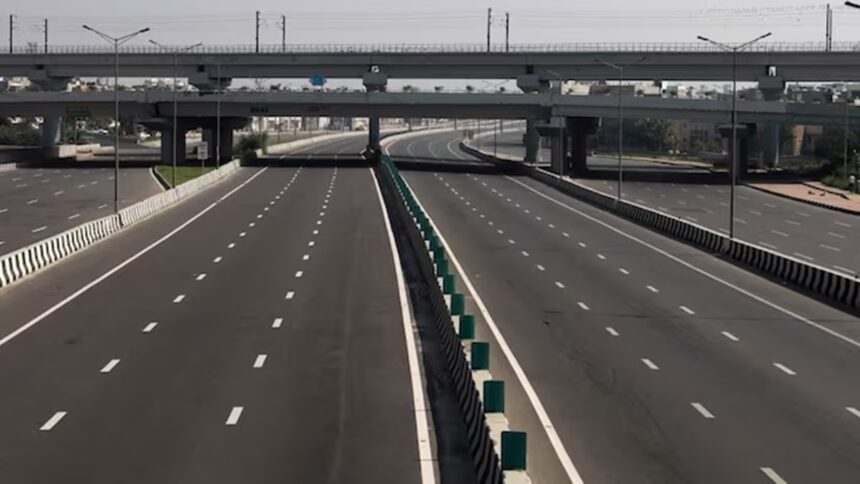
For the first time, ordinary investors in India will be able to invest directly in national highways, as the market regulator has approved the National Highways Authority of India’s highway infrastructure investment trust, marking a major shift in how public infrastructure is financed.
The approval allows the National Highways Authority of India to launch its own infrastructure investment trust, enabling retail and domestic investors to participate in revenue-generating highway assets. The move is being seen as a milestone in democratising infrastructure investment, offering individuals a chance to earn regular income from toll collections while benefiting from the credibility of a government-backed project. With interest rates on bank fixed deposits remaining moderate, the new investment avenue is expected to attract investors looking for relatively stable, long-term returns.
How the highway invit will allow citizens to invest in national highways
The highway infrastructure investment trust, promoted by the National Highways Authority of India, has received regulatory approval from the Securities and Exchange Board of India. Once launched, the trust will enable investors to put money into operational national highway projects in a structure similar to mutual funds, but focused entirely on infrastructure assets.
Under this model, investors will buy units of the InvIT, much like shares. The trust will use the pooled funds to acquire or operate completed highway stretches that generate revenue through toll collection. The toll income earned from vehicles using these highways will form the primary source of revenue for the trust. After meeting operational costs, maintenance expenses, and debt obligations, a large portion of the remaining income will be distributed to unit holders.
This structure offers investors a predictable cash-flow model, comparable to rental income from property, but without the complexities of owning or managing physical assets. Unlike traditional equity investments, returns from InvITs are not solely dependent on market movements but are linked to real, revenue-producing infrastructure. This makes them particularly attractive to investors seeking stability and regular payouts.
Until now, participation in highway and infrastructure projects was largely limited to large corporations, pension funds, and foreign institutional investors. The new InvIT framework aims to bring retail investors into this space, allowing them to benefit from the country’s expanding road network and rising traffic volumes. Officials have said the initiative is designed to strengthen public participation while reducing the financial burden on the government for future highway development.
*Management structure, banks involved, and what investors need to know*
To manage the trust and safeguard investor interests, NHAI has set up a dedicated investment management company named Rajmarg Infra Investment Managers Private Limited. This entity will be responsible for overseeing operations, compliance, and financial management of the InvIT. The involvement of experienced financial institutions is intended to ensure transparency, governance, and professional oversight.
Ten major Indian financial institutions are partners in this initiative, including State Bank of India, Punjab National Bank, HDFC Bank, ICICI Bank, Axis Bank, IDBI Bank, IndusInd Bank, Yes Bank, Bajaj Finserv Ventures, and the National Bank for Financing Infrastructure and Development. Their participation is expected to enhance investor confidence and ensure that funds are managed under robust financial and regulatory frameworks.
NHAI’s member for finance, N R V V M K Rajendra Kumar, will serve as the managing director and chief executive officer of the investment manager on an additional charge basis. His role will include overseeing asset acquisition, revenue management, and distribution policies, while ensuring compliance with regulatory norms.
For individual investors, participation will require a demat account, as the InvIT will be listed on stock exchanges. During its initial public offer, investors will be able to apply through brokerage platforms, similar to equity or mutual fund investments. After listing, units can be bought and sold on the secondary market, offering liquidity and flexibility.
Experts point out that while InvITs are considered relatively stable, they are not entirely risk-free. Factors such as traffic volume, changes in toll policy, regulatory decisions, and interest rate movements can influence returns. However, the backing of NHAI and the nature of operational highway assets are expected to reduce uncertainty compared to greenfield projects.
The approval of the highway InvIT reflects a broader policy push to monetise public assets efficiently while channelising household savings into productive infrastructure. As India continues to expand its highway network to support economic growth, logistics, and connectivity, this new investment option positions citizens not just as users of roads, but also as stakeholders in the nation’s infrastructure journey.