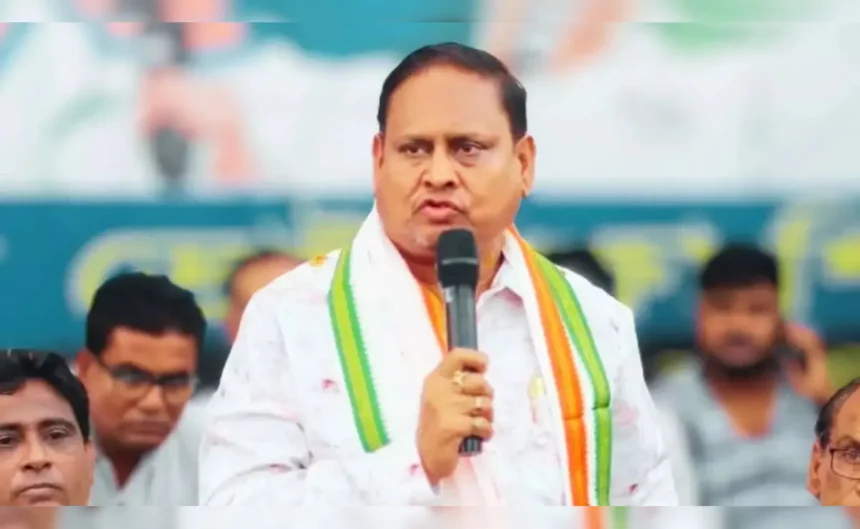
The political landscape of West Bengal has once again been jolted by controversy after a viral video allegedly featuring Humayun Kabir triggered intense debate over minority vote strategies and alleged backdoor political alignments. At a time when electoral tensions are already running high, the episode has added a new layer of complexity to an already volatile environment. With parties sharpening their narratives and accusations flying across ideological lines, the controversy is no longer just about an individual statement but about the deeper anxieties surrounding electoral arithmetic, identity politics, and strategic maneuvering ahead of crucial elections.
Viral Video Triggers Political Uproar And Raises Questions On Electoral Strategy
The controversy began with the circulation of a video in which Humayun Kabir was purportedly heard making remarks that suggested a controversial understanding of minority vote consolidation and possible indirect political alignments. The content of the video quickly gained traction across social media platforms, drawing sharp reactions from political parties, analysts, and the general public. In a state where identity-based voting patterns have historically played a significant role, such statements inevitably carry far-reaching implications.
Opposition parties, particularly the Bharatiya Janata Party, seized upon the video as evidence of what they described as a larger political strategy aimed at manipulating minority votes. The BJP has long accused its rivals of engaging in appeasement politics, and this incident provided fresh ammunition to reinforce that narrative. Leaders within the party were quick to link the controversy to broader concerns about transparency and fairness in electoral practices, arguing that such revelations expose the underlying tactics used to influence voter behavior.
At the same time, the controversy has also sparked internal debates within regional political formations, where leaders are grappling with the dual challenge of maintaining voter trust while countering opposition attacks. The timing of the incident is particularly significant, coming at a moment when political campaigns are intensifying and parties are attempting to consolidate their respective voter bases. In such a charged atmosphere, even a single statement can become a flashpoint, reshaping narratives and influencing public perception.
The reference to alleged links with higher political offices, including insinuations involving the Prime Minister’s Office, has further amplified the controversy. While such claims remain unverified, their mere mention has added a layer of intrigue and speculation, drawing national attention to what might otherwise have remained a regional issue. This escalation underscores the extent to which local political developments in West Bengal can quickly assume national significance, particularly when they intersect with broader political narratives.
For voters, the controversy raises important questions about the authenticity of political messaging and the extent to which electoral strategies are shaped behind closed doors. In an era where information spreads rapidly and public scrutiny is intense, political actors are increasingly vulnerable to the consequences of their statements, whether intentional or otherwise. The viral nature of the video has ensured that the issue remains in the public eye, with debates continuing to unfold across multiple platforms.
Minority Vote Politics And The Expanding Battle For Narrative Control In Bengal
At the heart of the controversy lies the enduring significance of minority vote politics in West Bengal, a factor that has historically influenced electoral outcomes in the state. Political parties across the spectrum have long sought to appeal to minority communities, recognizing their critical role in determining the balance of power. However, the methods and narratives employed in this pursuit have often been the subject of intense debate and criticism.
The current controversy has reignited discussions about the ethical and strategic dimensions of such political engagement. Critics argue that the focus on minority vote consolidation can sometimes lead to divisive rhetoric and policies, while supporters contend that it is a legitimate aspect of democratic competition in a diverse society. The challenge for political leaders lies in striking a balance between addressing the concerns of specific communities and maintaining a broader, inclusive vision.
The BJP, in particular, has positioned itself as a critic of what it terms “vote bank politics,” using the controversy to reinforce its message of governance based on development and equal treatment. By highlighting the alleged remarks in the viral video, the party aims to contrast its approach with that of its opponents, framing the debate in terms of principles versus political expediency. This strategy is likely to play a central role in the party’s campaign as it seeks to expand its footprint in West Bengal.
On the other hand, regional parties are expected to push back against these accusations, emphasizing their commitment to social justice and inclusive development. They are likely to argue that engagement with minority communities is not only necessary but essential in addressing historical inequalities and ensuring equitable representation. The controversy, therefore, becomes a battleground for competing narratives, each seeking to shape public opinion in its favor.
The role of media and digital platforms in amplifying such controversies cannot be overlooked. The rapid spread of the video and the subsequent debates highlight the transformative impact of technology on political communication. While this has democratized access to information, it has also increased the risk of misinformation and misinterpretation, making it more challenging for voters to discern the truth.
As the elections approach, the Humayun Kabir controversy is likely to remain a significant talking point, influencing campaign strategies and voter perceptions. Political parties will continue to leverage the issue to advance their respective agendas, while voters will be tasked with navigating the complex web of claims and counterclaims. In this sense, the controversy serves as a microcosm of the broader challenges facing contemporary democracy, where the interplay of identity, strategy, and communication shapes the contours of political competition.