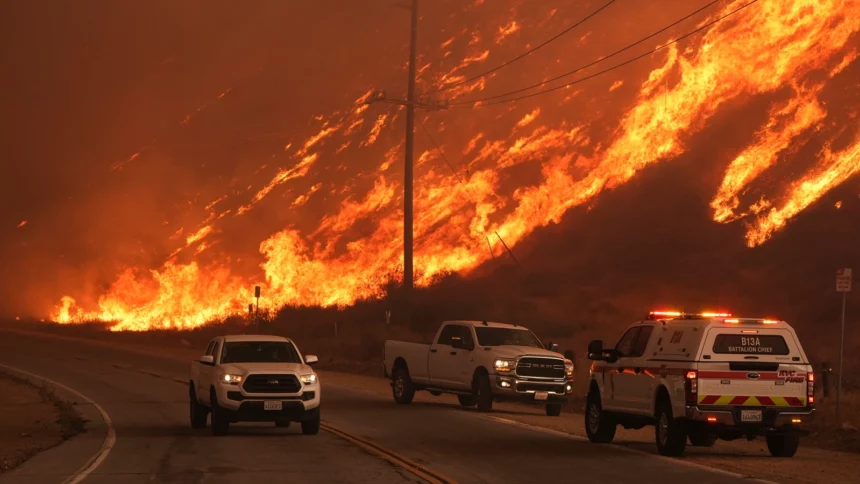
A new wildfire has erupted north of Los Angeles, rapidly spreading across vast areas and forcing a mass evacuation of residents in the region. The fire, which broke out on Wednesday near Castaic Lake, quickly intensified, consuming more than 8,000 acres (3,200 hectares) in a matter of hours, prompting urgent evacuation orders for 31,000 people. The situation comes at a time when the greater Los Angeles area is still reeling from the aftermath of two major wildfires that caused widespread destruction and claimed the lives of over two dozen individuals.
The blaze, now dubbed the Hughes Fire, is being fueled by strong and dry Santa Ana winds, which have exacerbated the fire’s spread and posed significant risks to surrounding areas. As the fire advanced, the winds pushed a dense cloud of smoke and dangerous embers ahead of the flames, raising concerns that the fire could expand even further. Local authorities have issued evacuation orders for communities located around Castaic Lake, approximately 35 miles (56 kilometers) north of Los Angeles, as well as near Santa Clarita. Emergency alerts were sent out to residents, urging them to leave immediately to ensure their safety.
A sense of fear and desperation gripped those living in the affected areas as they scrambled to evacuate. “I’m just praying that our house doesn’t burn down,” one resident said in an interview with broadcaster KTLA, as he packed his car with valuables. The impact of the fire has been significant, with the greater Los Angeles area already grappling with the devastation caused by recent deadly fires. These fires have destroyed thousands of homes and structures, further intensifying the anxiety felt by residents in the region.
Los Angeles County Sheriff’s Department official, Robert Jensen, strongly urged people to heed evacuation orders, emphasizing the importance of immediate action. “We’ve seen the devastation caused by people failing to follow those orders in the Palisades and Eaton fires,” he remarked, referring to previous wildfires in the region. He urged everyone in the impacted areas to leave without delay, as authorities worked to ensure public safety.
In addition to evacuating residents, the Pitchess Detention Center in Castaic was also placed under evacuation orders, and approximately 500 inmates were relocated to nearby facilities. As the fire continued to rage, around 4,600 other inmates in the area were instructed to shelter in place, but contingency plans were in place in case conditions worsened and they needed to be moved.
The wildfire has also affected transportation in the area. California Highway Patrol officials reported that the fire was disrupting traffic along the I-5 freeway, a major route that stretches along the West Coast. Authorities have closed a section of the freeway, further complicating efforts to evacuate people from the affected areas.
Firefighting efforts have been in full swing, with helicopters and planes deployed to drop water and fire retardant on the fire. Among the aerial firefighting resources are two Super Scoopers, large amphibious planes capable of carrying hundreds of gallons of water to combat the flames. Ground crews from the Los Angeles County Fire Department and Angeles National Forest have also been on the front lines, working tirelessly to contain the fire and prevent further spread.
Cal Fire’s Brent Pascua noted that the combination of dry conditions, low humidity, and strong winds had created an environment conducive to rapid fire growth. “We’re getting the winds, we’re getting the low humidities, and this brush hasn’t seen any moisture in so long,” Pascua said, highlighting the volatility of the situation.
Meteorologist Daniel Swain expressed concern about the evolving fire conditions, noting that while helicopters were actively working to fight the fire, the strong winds could soon make it difficult for them to operate. “There is a chance that this fire will make it into Ventura County,” he added, pointing out that the dense vegetation in the region could fuel the fire’s growth even further.
The wildfire is part of a broader pattern of increasing wildfires across California, fueled in part by human activity such as the unchecked burning of fossil fuels, which contributes to the worsening climate crisis. While the region is typically in the middle of its rainy season in January, Southern California has not seen significant rainfall for nearly eight months, leaving the landscape dry and prone to fire.
The unfolding crisis is a stark reminder of the vulnerability of California’s communities to wildfires, as well as the growing challenges of managing these fires in the face of a changing climate. As authorities continue to battle the blaze, the focus remains on protecting lives, preventing further destruction, and managing the long-term consequences of these devastating fires.