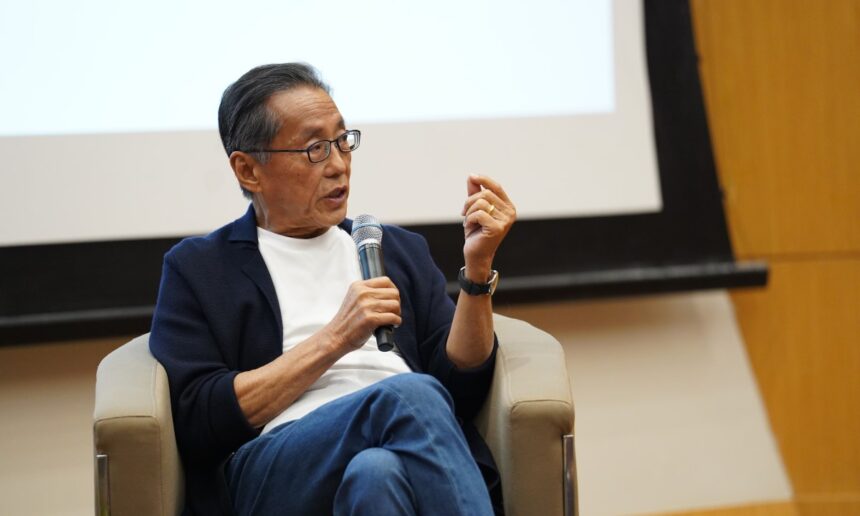
Ho Kwon Ping, the 72-year-old founder and executive chairman of Banyan Group, has come a long way from his early days as a political activist to becoming the head of a thriving hospitality empire. Today, Banyan Group is a globally recognized hospitality company with a portfolio of 12 brands and over 80 hotels and resorts spanning more than 20 countries. The company’s market capitalization stands at approximately $300 million, with revenue of about $328 million Singapore dollars (around $242 million) in 2023. However, Ho’s journey to success was not a straight path, but one marked by resilience, innovation, and a series of unexpected turns.
Born in Hong Kong and raised in Thailand, Ho’s childhood was defined by a desire for independence and a rebellious streak. His father, Ho Rih Hwa, was a successful businessman who co-founded the Thai Wah Public Company and led the Wah Chang Group, which operated across Asia. Despite growing up in a family of means, Ho’s desire for autonomy led him to rebel against expectations. He was an outspoken student activist during his time at Stanford University in the early 1970s, notably protesting against the Vietnam War and challenging renowned American inventor William Shockley’s controversial views on eugenics. This activism led to his suspension from the university and a later conviction under Singapore’s Internal Security Act for being accused of pro-Communist sentiments.
Despite these setbacks, Ho’s determination to carve his own path led him to work as a freelance journalist, writing for the now-defunct Far Eastern Economic Review. It was during this time that he was jailed for his political views, spending two months in solitary confinement. This period of incarceration was described as “scary, lonely, depressing, and reflective,” but it didn’t break him. After his release, Ho continued his journalistic career and eventually moved to Hong Kong with his wife, Claire Chiang. The couple lived in a small fishing village on Lamma Island, known as Yung Shue Wan, or “Banyan Tree Bay,” a name that would later inspire the brand that would make Ho a hotel mogul.
In 1981, when Ho’s father suffered a stroke, Ho stepped in to manage the family business. However, he soon realized that running a “hodgepodge” of businesses was not the right direction for him. Ho wanted to create something of his own and decided to focus on building a brand rather than managing various contract-manufacturing businesses. His epiphany came when he purchased a vast stretch of land in 1984 in Bang Tao Bay, Phuket, Thailand, a site that was once an abandoned tin mine. This would mark the beginning of his journey in hospitality.
Ho’s vision for the site was clear: to create an integrated resort that would offer a luxury experience unlike anything in Asia at the time. The Laguna Phuket resort opened in 1987, and the area soon became home to several luxury hotels and resorts. Ho’s ability to adapt and innovate helped set Banyan Group apart from competitors. In 1994, he launched the Banyan Tree Phuket, which would become the flagship of the Banyan Tree brand. The resort introduced the concept of “all-pool villas,” an idea that did not exist in the hospitality industry at the time. This move, along with the introduction of the “tropical spa,” revolutionized the luxury resort market and established Banyan Tree as a leading name in the industry.
Ho’s dedication to innovation and quality didn’t stop there. As the company expanded, so did its offerings. Banyan Tree Holdings went public on the Singapore Stock Exchange in 2006, and in 2024, Banyan Group was launched as an umbrella brand for its portfolio of multi-branded hospitality ventures. Today, the company boasts a diverse range of hotels, resorts, spas, galleries, and residences in over 20 countries, offering everything from luxury vacation spots to unique cultural experiences.
Reflecting on his journey, Ho shares that while his activism days are behind him, he believes that Banyan Tree is fulfilling the social change he once sought. He sees his work with Banyan Tree as a way to have a positive impact on society, and he remains deeply involved in shaping the company’s vision and future. “People have asked me whether I sold out or not, and I would say: ‘No, I’ve grown up. The kinds of things I was doing, you can’t keep doing forever.’” Ho’s story is one of transformation and resilience, a testament to his ability to turn setbacks into opportunities, and to build an empire from the ground up.
Ho’s success story is far from ordinary. It’s the story of a man who, despite early failures and significant challenges, carved out a new path for himself and ultimately revolutionized the luxury hospitality industry. Today, Banyan Group continues to thrive, with Ho at the helm, leading the company toward new heights, constantly pushing the boundaries of what’s possible in hospitality.