Six months after the ousting of former Bangladesh Prime Minister Sheikh Hasina, political unrest escalated further as an enraged mob set fire to the residence of her late father and Bangladesh’s independence leader, Sheikh Mujibur Rahman. The attack on Wednesday night also saw protesters targeting the homes of exiled leaders of the Awami League, Sheikh Hasina’s party, as political tensions continue to grip the country.
The mob gathered following an incendiary online speech by Sheikh Hasina, delivered from exile in India, in which she urged her supporters to stand against the interim government led by Nobel laureate Muhammad Yunus. The residence, located on Dhanmondi 32 Road in Dhaka, was previously attacked during the July-August protests against Sheikh Hasina’s government, which culminated in her removal from power after 15 years of rule.
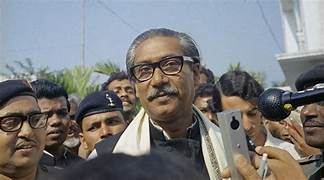
Sheikh Mujibur Rahman, widely known as Bangabandhu (Friend of Bengal), led Bangladesh’s independence struggle against Pakistan in 1971. As the country’s first president and later prime minister, his leadership shaped its early years. However, his controversial decision to implement a one-party state under the Bangladesh Krishak Sramik Awami League in 1975 eliminated political opposition and centralized state power. On August 15, 1975, Sheikh Mujibur Rahman and his family were assassinated in a military coup at his Dhanmondi residence, with only Sheikh Hasina and her sister, Sheikh Rehana, surviving as they were abroad.
Since Sheikh Hasina’s return to Bangladesh in 1981, the house had been converted into a museum, symbolizing the nation’s fight for independence. However, the residence has now become a focal point of public anger against what protesters describe as years of authoritarian rule, corruption, and political suppression under the Awami League. Calls for the destruction of the Dhanmondi 32 house had been mounting on social media since Sheikh Hasina’s removal from office.
On Wednesday evening, as security forces increased their presence at Dhanmondi 32, a group of protesters breached police barricades. During Sheikh Hasina’s live speech on social media, in which she accused the interim government of unlawfully seizing power, the demonstrators stormed the residence, setting it ablaze. Protesters used sticks, hammers, and even an excavator to demolish parts of the structure, cheering as it was torn down. Slogans denouncing Sheikh Hasina’s rule and alleged foreign influence were chanted, reflecting deep-seated resentment toward her leadership.
Across Bangladesh, similar incidents have been reported in at least 19 cities, including the destruction of Awami League offices and residences of exiled leaders in Cumilla, Khulna, Noakhali, and Kushtia. Mural depictions of Sheikh Mujibur Rahman were also vandalized in Sylhet and Rangpur. While no casualties have been reported, Awami League leaders claimed two of their members were assaulted, though these reports remain unverified.
The interim government issued a statement condemning the vandalism but attributed it to “public outrage” over Sheikh Hasina’s speech, which it claimed insulted the martyrs of the July uprising. The government also accused India of allowing its territory to be used for destabilizing Bangladesh, urging New Delhi to prevent Sheikh Hasina from inciting further unrest. Law enforcement has been tasked with restoring order, and officials are considering legal action against individuals involved in the destruction.
Bangladesh’s political landscape remains volatile, with Sheikh Hasina’s Awami League facing unprecedented hostility. Analysts argue that the attacks on Sheikh Mujibur Rahman’s residence signify a rejection of the party’s legacy by younger generations, particularly students who led last year’s protests. Rezaul Karim Rony, an analyst and editor of Joban magazine, stated that the destruction of the house reflects growing frustration with the Awami League’s political dominance. He emphasized that Bangladesh’s political climate has shifted dramatically, and the party’s influence may not recover, even with a change in leadership.
As Bangladesh grapples with political uncertainty, the fate of the Awami League remains in question. The violent demonstrations highlight the deep divisions in the country, raising concerns about future stability and governance.