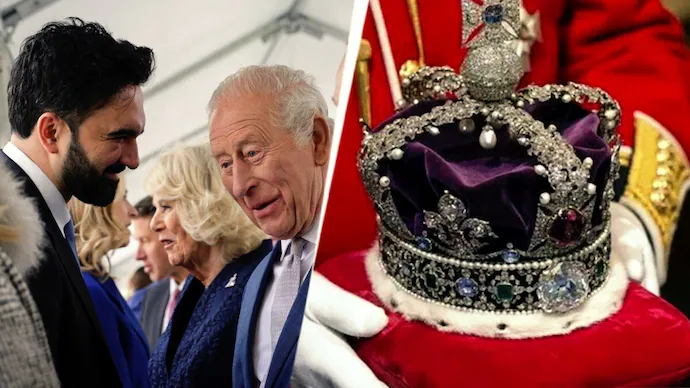
The remarks came as King Charles III and Queen Camilla concluded a major diplomatic trip to the United States, where their itinerary included state engagements and participation in a solemn 9/11 memorial event. However, Mamdani’s unexpected statement shifted global attention toward one of the most enduring controversies tied to colonial history and cultural restitution.
His comments have once again placed the Kohinoor diamond at the center of international discourse, linking modern diplomacy with unresolved historical grievances dating back to the British Empire’s expansion in South Asia.
Kohinoor Debate Returns To Global Spotlight
The Kohinoor diamond remains one of the most politically sensitive artifacts in the world. Currently part of Britain’s Crown Jewels, the 105.6-carat gemstone has long been viewed as a symbol of colonial conquest and contested heritage.
Originally mined in India, the diamond passed through several South Asian dynasties before coming under British possession following the annexation of Punjab in 1849. Since then, India has repeatedly sought its return, arguing that it was acquired under colonial coercion.
Mamdani’s remarks have injected fresh political relevance into the issue. By publicly suggesting that King Charles III consider returning the diamond, he aligned himself with broader global movements calling for the repatriation of cultural artifacts taken during colonial rule.
The timing of the statement, during a major royal visit, amplified its impact and drew immediate international attention.
Colonial Legacy And Diplomatic Sensitivity
The Kohinoor issue has long remained diplomatically delicate for the United Kingdom. Multiple countries, including India, Pakistan, Iran, and Afghanistan, have at various times laid claim to the diamond.
For Britain, the gem is deeply embedded in royal heritage and national symbolism. For many former colonies, however, it represents historical exploitation and unresolved injustice.
Under King Charles III’s reign, calls for addressing colonial legacies have grown louder. Debates around reparations, museum restitution, and historical accountability have intensified globally, placing increased pressure on Western institutions.
Mamdani’s statement reflects this broader shift, where political leaders are increasingly willing to challenge historical narratives and raise questions about ownership of cultural treasures.
Royal Visit Overshadowed By Historical Debate
The April 2026 visit by King Charles III and Queen Camilla was primarily aimed at strengthening US-UK relations, commemorating historical ties, and participating in ceremonial events.
However, Mamdani’s intervention introduced a different dimension to the visit, redirecting part of the public conversation toward colonial history.
Political observers note that such symbolic statements can significantly influence global discourse, particularly when they coincide with high-profile diplomatic engagements.
Although Mamdani clarified that the focus of the event remained honoring victims of the September 11 attacks, his remarks ensured that the Kohinoor debate gained renewed visibility.
Why The Kohinoor Remains Controversial
The Kohinoor’s enduring controversy stems from its complex historical journey:
- It originated in India and passed through multiple royal dynasties
- It came into British possession during colonial expansion
- It became part of the British Crown Jewels
- It symbolizes both royal prestige and colonial appropriation
- Its return could set a precedent for other restitution claims
Because of this layered history, the diamond is not just a valuable gemstone but a deeply political symbol tied to identity, sovereignty, and historical memory.
For India, its return would carry immense symbolic significance. For Britain, returning it could open the door to broader claims over colonial-era artifacts held in museums and royal collections.
Global Reactions And Political Impact
Mamdani’s comments quickly spread across international media and social platforms, sparking debate among policymakers, historians, and the public.
Supporters viewed the statement as a bold acknowledgment of colonial injustice, while critics argued that raising such an issue during a diplomatic event was politically provocative.
Regardless of perspective, the remarks have undeniably revived global discussion around colonial restitution and Britain’s handling of contested artifacts.
For India, the renewed attention may strengthen future diplomatic advocacy, even if immediate policy changes remain unlikely.
For Britain, the issue adds to growing pressure on institutions to engage more transparently with their colonial past.
A Debate That Continues To Resonate
While no immediate decision regarding the Kohinoor’s return is expected, Mamdani’s intervention highlights how historical issues remain deeply relevant in modern geopolitics.
His remarks transformed a routine diplomatic visit into a broader conversation about empire, justice, and accountability.
As global demands for restitution continue to rise, the Kohinoor remains one of the most visible symbols of unresolved colonial legacy.
Whether or not the diamond is ever returned, the debate surrounding it is likely to persist, reflecting the evolving relationship between history and contemporary international politics.