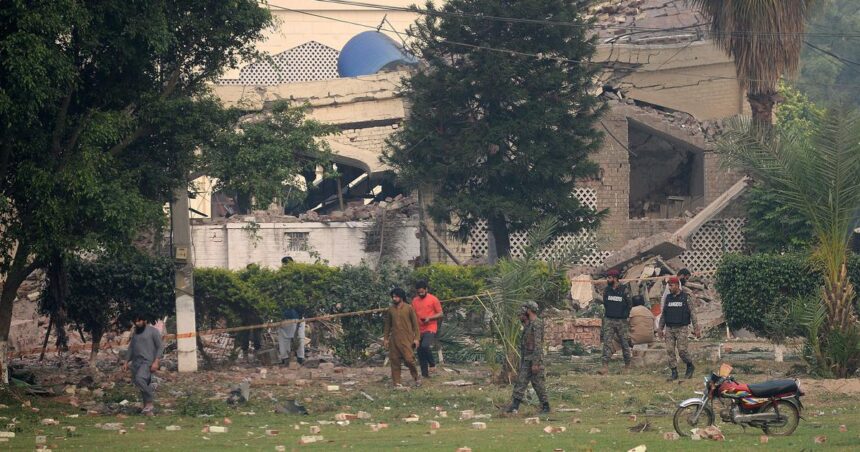
In response to the deadly Pahalgam terror attack, India launched a calculated retaliation named ‘Operation Sindoor’, striking nine terror camps across Pakistan and Pakistan-Occupied Kashmir (PoK). This action was aimed at dismantling terror infrastructure used by groups like Lashkar-e-Taiba (LeT) and Jaish-e-Mohammed (JeM), which were responsible for the attack that claimed 26 innocent lives on April 22. One of the significant targets of this operation was Muridke Markaz, a major hub for terrorism in Pakistan.
Muridke Markaz : A Hub of Terrorist Training and Radicalization
Muridke Markaz, located near Lahore in Pakistan’s Punjab province, has long been a notorious center for Lashkar-e-Taiba (LeT). Established in 2000, the Markaz serves as a breeding ground for radicalizing young students and training terrorists. The facility is equipped with preaching centers, madrasas, residential quarters, and arms training facilities. It has been known to train hundreds of individuals each year, many of whom go on to become active members of LeT, a group responsible for several terrorist attacks in India, including the 2008 Mumbai attacks.
Muridke Markaz has a strategic location, just 25-30 km from the Attari-Wagah Border, making it an important site for LeT to quickly deploy terror operatives. The centre is not only a site of indoctrination but also a launchpad for anti-India activities. The 26/11 Mumbai attack masterminds, including Ajmal Kasab, received critical training at this facility, with intelligence courses such as ‘Daura-e-Ribbaf’. High-profile terror conspirators like David Headley and Tahawwur Rana also visited Muridke Markaz under the instructions of their handlers.
Historical Significance of Muridke Markaz
Muridke Markaz’s role as a terrorist training facility traces back to its origins. Initially set up to support the Afghan jihad against Soviet forces in the 1980s, the Markaz evolved into a critical base for anti-India operations after the Soviet retreat. Despite being banned by Pakistan following the 9/11 attacks due to international pressure, Muridke Markaz was rebranded as the Jamaat-ud-Dawa (JuD), a seminary that continued to operate under the guise of religious education.
Over time, the Markaz ’s reach has grown, with financial backing from key terror figures. For instance, Osama Bin Laden reportedly funded a mosque and guesthouse within the complex. The location’s strategic importance, coupled with its connections to some of the most notorious terror groups in the region, made it a key target for India’s counter-terrorism operations.