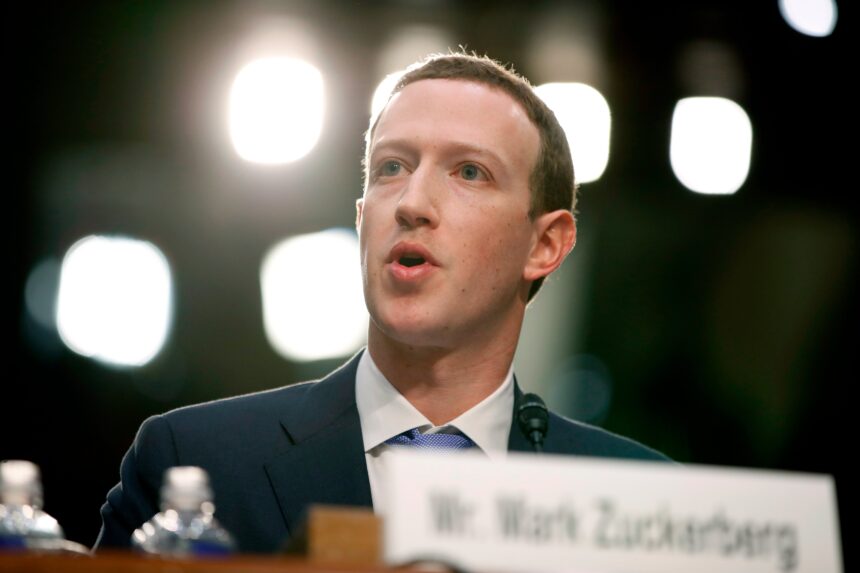
The White House has dismissed reports that Meta’s CEO Mark Zuckerberg was asked to leave an Oval Office briefing on the Air Force’s F‑47 stealth fighter jet. Officials clarified that Zuckerberg briefly entered at President Trump’s invitation, greeted him, and then stepped out to await his scheduled meeting—contradicting earlier reports suggesting a sudden ejection.
Not Asked to Leave, Just Said Hello
According to sources cited by NBC News, Zuckerberg allegedly “crashed” a high-security meeting between President Trump and military leaders discussing the new F‑47 fighter, prompting concerns over his security clearance
However, a senior White House official strongly refuted these claims, saying that the report “mischaracterised” events. The official emphasized, “He was not asked to leave. He popped in to say hello at the President’s request, and then left to wait for his meeting with POTUS to begin”
Bizarre but Controlled Oval Office Atmosphere
Reports highlight that the Trump administration’s Oval Office operates more like “Grand Central Terminal,” with aides and visitors frequently entering and exiting NBC News noted that even during classified briefings, aides came in with laptops and mobile phones rang, contributing to a casual environment
The White House official countered that nothing out of the ordinary occurred, and that Zuckerberg’s presence was brief and coordinated.
A Growing Intersection Between Tech and Politics
Mark Zuckerberg’s engagement with the Trump White House reflects his evolving role in American politics. Once aligned with liberal policies, he shifted toward conservative circles, earning the moniker “MAGA Mark” after supporting Trump’s re‑election campaign
His attendance at Trump’s 2025 inauguration alongside tech figures like Elon Musk and Jeff Bezos signaled this pivot
As tensions over national security, privacy, and social media regulation escalate, Zuckerberg’s access to the Oval Office underscores the delicate balance between corporate influence and clearance protocols.
This incident, whether minor or emblematic, has shone a spotlight on how Silicon Valley’s top executives are increasingly entangled in high-level policymaking—even when questions arise about their level of clearance.