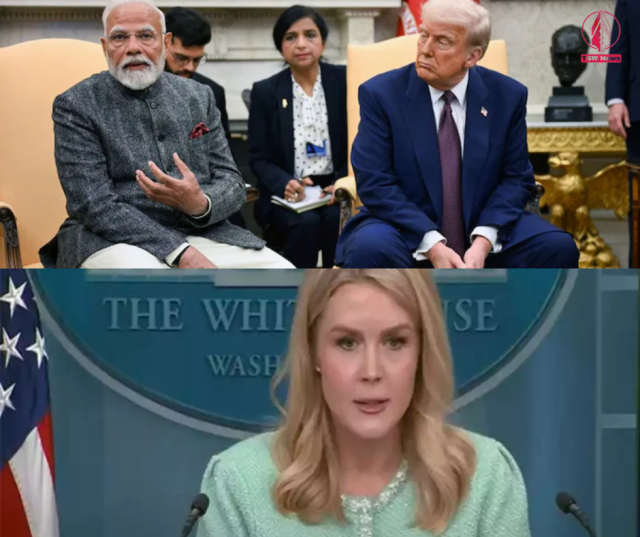
The White House has strongly criticized India’s trade practices, particularly its 100% tariff on American agricultural goods, which has significantly hindered US products from entering the Indian market. This criticism comes ahead of the United States’ plan to introduce reciprocal tariffs on countries that impose high duties on American exports. The new tariffs are set to take effect on April 2, 2025.
White House Press Secretary Karoline Leavitt pointed out that India’s tariff is a prime example of the challenges faced by US exporters globally, making it increasingly difficult for American products to be competitive in international markets, especially in sectors such as agriculture.
Leavitt explained that the imposition of a 100% tariff on American agricultural goods has created serious barriers for US businesses, making it nearly impossible for American products to compete in markets like India. This tariff has restricted the access of US agricultural products to key markets, adding to the ongoing frustrations of American businesses looking to expand internationally. The White House has expressed concern that such unfair treatment by countries like India is detrimental to American workers and businesses. The US government is preparing to implement reciprocal measures, including new tariffs, to address these trade imbalances, with an official announcement scheduled for April 2, 2025.
In addition to India, Leavitt highlighted that other countries have imposed similarly high tariffs on American goods. The European Union imposes a 50% tariff on American dairy products, Japan charges a staggering 700% tariff on American rice, and Canada has placed nearly 300% tariffs on American butter and cheese. These high tariffs create significant barriers for American exporters, particularly in industries that are vital to the economy. In response, the US is working toward a reciprocal trade system, where countries with high tariffs on US exports will face similar charges on their goods exported to the US.
President Donald Trump had previously described the tariffs imposed by other countries on American goods as “temporary” and “small.” However, he stressed that the reciprocal measures planned by the US would lead to a fairer trade environment, ensuring that American products receive equitable treatment in global markets. With the new tariffs set to take effect on April 2, 2025, the Trump administration is focused on leveling the playing field for US exporters and addressing trade imbalances that have long disadvantaged American businesses.
As the US moves toward implementing reciprocal tariffs, it signals a shift in its trade policy, with a focus on eliminating unfair trade practices and ensuring American businesses can compete fairly in the global marketplace. The White House remains committed to pushing for a trade system that benefits American workers and promotes a more equitable economic relationship with other countries, including India.