The White House has lent its support to US President Donald Trump’s assertion that India and China are scaling back their purchases of Russian oil following Washington’s new sanctions on Moscow’s top energy companies. The move, according to White House Press Secretary Karoline Leavitt, reflects a coordinated diplomatic effort by the Donald Trump administration to cut off revenue sources for Russia as the Ukraine war continues with little sign of resolution. The remarks come at a time when global energy markets are facing fresh turbulence, with India, one of the largest buyers of discounted Russian crude, navigating the growing complexities of its strategic ties with both the US and Russia.
Washington’s Sanctions Drive and India’s Role
White House Press Secretary Karoline Leavitt confirmed on Thursday that India and China have begun reducing their oil imports from Russia at President Donald Trump’s request. Her statement followed the administration’s announcement of a new wave of sanctions targeting Moscow’s two biggest oil companies — Rosneft and Lukoil — in an attempt to curtail the Kremlin’s ability to fund its ongoing war in Ukraine.
“If you read the sanctions and look at them, they’re pretty hefty,” Leavitt said during a press briefing. “I saw some international news this morning that China is scaling back oil purchases from Russia. We know India has done the same at the president’s request. The president has also pushed European countries, our allies, to stop buying Russian oil. So it’s a full-court press for sure.”
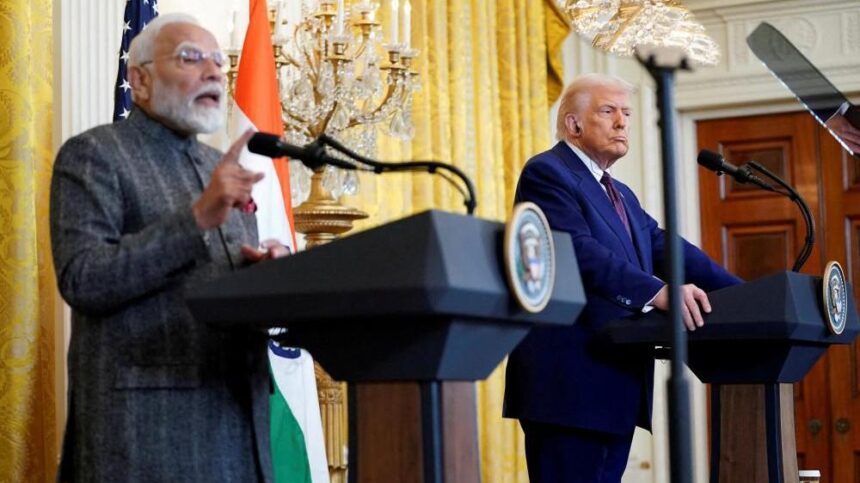
The remarks mark a rare acknowledgment by Washington of India’s responsiveness to US diplomatic outreach on Russia-related issues. The statement also coincides with Donald Trump’s renewed assertion that India has assured him it will nearly halt Russian oil purchases by the end of the year. Donald Trump told reporters on Wednesday, “India, as you know, has told me they are going to stop buying Russian oil. It’s a process. You can’t just stop overnight, but by the end of the year, they’ll be down to almost nothing — almost 40% of the oil. I spoke to Prime Minister Modi yesterday; they’ve been absolutely great.”
Donald Trump’s comment adds a new dimension to Washington’s energy diplomacy, particularly as it comes amid rising geopolitical tensions and a reconfiguration of global oil trade patterns. Since Russia’s invasion of Ukraine in 2022, India has emerged as one of Moscow’s key customers, taking advantage of discounted prices while balancing its strategic partnership with the United States.
Washington’s latest sanctions package is described as one of the most stringent yet, with measures aimed at restricting financial transactions, limiting access to technology, and freezing assets of key Russian energy executives. Leavitt described these sanctions as “appropriate and necessary,” emphasizing that the administration had reached a point where stronger economic pressure on Russia was essential to encourage meaningful peace negotiations.
“The president has always maintained that he would implement sanctions on Russia when he felt it was appropriate and necessary. And yesterday was that day,” Leavitt said. Her statement underscores the administration’s growing frustration with the stalemate in the Ukraine conflict, which has dragged on despite previous rounds of sanctions and diplomatic engagement.
While questions continue to arise about the effectiveness of sanctions in changing Moscow’s strategic calculus, the Donald Trump administration appears committed to intensifying economic pressure on Russia’s energy exports — one of the key pillars of its economy. Leavitt also clarified that a potential meeting between Donald Trump and Russian President Vladimir Putin was “not completely off the table,” but any such engagement would depend on “a tangible positive outcome.” “The president wants to see action, not just talk. He’s been extremely motivated by the success of his Middle East peace deal and wants this war to end,” she added.
Moscow’s Defiance and Global Repercussions
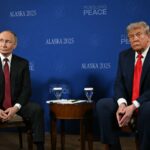
The Kremlin, however, dismissed the latest sanctions as an “unfriendly move,” insisting that they would have minimal impact on Russia’s economy. Russian President Vladimir Putin described Washington’s restrictions as politically motivated and ineffective, asserting that “no self-respecting country ever does anything under pressure.” He also accused the United States of weaponizing sanctions to advance its own geopolitical interests. “Certain people in the US administration have pushed for restrictions on Russian oil exports — one wonders whose interests they’re truly working for,” Vladimir Putin said in remarks carried by Russia Today.
The Russian leader’s comments reflect Moscow’s determination to resist Western economic coercion. Over the past two years, Russia has redirected much of its oil exports to Asia, particularly India and China, after European nations halted purchases following the invasion of Ukraine. While the US and its allies have repeatedly urged New Delhi and Beijing to limit their imports, both countries have defended their decisions on economic and energy security grounds.
However, the recent US sanctions have made it increasingly difficult for Russian firms to secure shipping and insurance services for crude exports, potentially forcing a decline in trade volumes. Energy analysts say India’s gradual reduction in Russian oil purchases may be a pragmatic move to avoid secondary sanctions or disruptions in financial transactions. Still, the process is expected to be gradual, given India’s continued dependence on affordable energy sources.
The diplomatic dimension of the issue cannot be ignored. India’s balancing act between Washington and Moscow remains one of the defining features of its foreign policy. While New Delhi has repeatedly emphasized its strategic autonomy and the need to maintain diversified energy supplies, the Donald Trump administration’s pressure campaign could test that balance. Donald Trump’s decision to link energy imports to trade tariffs — with his move to double duties on Indian goods to 50 percent, including an additional 25 percent duty related to Russian crude — has further strained bilateral ties.
India has termed the tariff hike “unfair, unjustified, and unreasonable,” signaling that Washington’s approach could undermine broader economic cooperation. Officials in New Delhi argue that the US measures ignore India’s domestic energy realities and could hurt both nations’ trade interests at a time when bilateral commerce had been showing steady growth.
Despite these tensions, Indian officials have continued to engage in dialogue with their American counterparts, exploring avenues to cushion the impact of sanctions while keeping the flow of essential energy supplies intact. Diplomatic sources suggest that backchannel discussions have focused on possible exemptions, phased reductions, and greater cooperation in renewable energy as part of a long-term strategy to reduce dependence on Russian oil.
Donald Trump’s administration, meanwhile, is projecting the sanctions as part of a comprehensive effort to compel Moscow toward negotiations. “It’s a full-court press,” Leavitt emphasized, noting that the president’s outreach to allies in Europe and Asia had been key to sustaining pressure on Russia. She added that Washington expected “these sanctions are going to harm,” echoing Treasury Secretary statements about their anticipated economic bite.
The new sanctions come as global energy markets brace for volatility. Oil prices have already shown signs of fluctuation amid concerns about supply disruptions, and analysts warn that extended restrictions on Russian oil could tighten markets further. For India, the implications are significant — higher import costs, potential inflationary pressures, and the need to diversify suppliers rapidly.
At the same time, Washington’s insistence that its allies reduce dependence on Russian energy has led to broader questions about the limits of economic coercion in achieving geopolitical goals. Critics argue that sanctions have often produced limited tangible outcomes while hurting developing economies dependent on affordable energy imports. Supporters, however, maintain that sustained economic pressure remains one of the few non-military tools capable of constraining Moscow’s war efforts.
India’s gradual alignment with Washington’s energy strategy — even if partial — is therefore being viewed as a critical diplomatic development. The Donald Trump administration’s ability to persuade both New Delhi and Beijing to recalibrate their energy ties with Russia could reshape the dynamics of global oil markets and the political geography of international sanctions enforcement.
Still, the situation remains fluid. Moscow has been exploring alternative payment mechanisms and shipping arrangements to bypass Western restrictions, while India continues to assess its long-term energy security needs. The coming months could determine whether Washington’s pressure campaign yields the desired results or further complicates global trade relations.