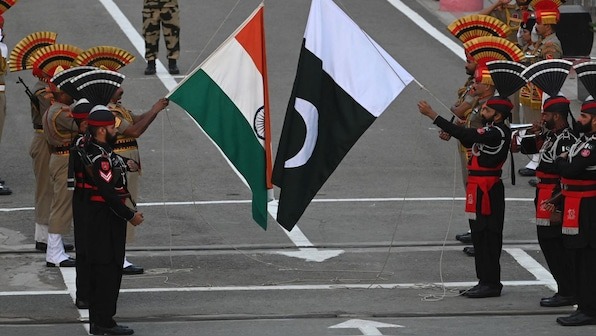
Tensions between India and Pakistan have escalated following the Pahalgam terror attack on April 22, 2024, with Pakistan test-firing long-range missiles directed toward India. Amid the rising political and military pressures, global rating agency Moody’s has warned that the sustained escalation in tensions with India could severely hinder Pakistan’s economic growth and disrupt its fiscal consolidation efforts, which are already under strain.
In contrast, Moody’s predicts that India’s economy will remain stable, benefiting from strong public investment and healthy private consumption despite some moderation in growth. This comparison highlights the vast economic disparity between the two nations, which has evolved significantly since their independence.
A Historical Perspective on Economic Growth
When India and Pakistan gained independence in August 1947, both countries inherited similar economic challenges. The British colonial legacy left both nations with underdeveloped infrastructures and economies heavily reliant on agriculture. However, both countries began their post-independence journey with optimism, fueled by growth in education, healthcare, and industrial development.
For the first few decades after independence, Pakistan’s economic performance outpaced that of India. Between 1961 and 1980, Pakistan’s annual growth rate averaged around six percent, while India’s growth rate stood at just four percent. This was largely due to substantial trade with its East Pakistan region (now Bangladesh) and military aid from the United States, as well as financial support from oil-rich Muslim countries.
However, the 1990s marked a turning point. India began implementing economic reforms, which gradually pushed the country ahead, eventually making it one of the largest economies in the world. India’s economy is now the fifth-largest globally, with predictions to overtake Germany by 2028. Meanwhile, Pakistan has struggled with a stagnant economy, mounting debt, and a heavy reliance on foreign aid, with the country seeking bailout packages from the International Monetary Fund (IMF) repeatedly.
As of 2024, India’s GDP stands at $4.2 trillion, far surpassing Pakistan’s GDP of just $374 billion. In 2022, India’s GDP was over 800% larger than Pakistan’s. Furthermore, India has made remarkable progress in GDP per capita as well. In 2014, India’s GDP per capita was $1,560, and by 2024, it had risen to $2,711. In comparison, Pakistan’s GDP per capita, which was $1,424 in 2014, only reached $1,581 by 2024, marking a modest 11% increase over the last decade.
Inflation also paints a stark contrast between the two nations. India has managed to keep its inflation rate stable at 4.9% in 2015, rising slightly to 4.7% by 2024. On the other hand, Pakistan has faced a massive surge in inflation, which spiked from 4.5% in 2015 to a staggering 23.4% in 2024. Basic food items such as rice, flour, vegetables, fruits, and chicken have seen significant price increases in Pakistan, further straining the population’s purchasing power.
In terms of foreign reserves, India holds over $688 billion, while Pakistan’s reserves barely exceed $15 billion. This disparity in foreign reserves reflects India’s strong position on the global financial stage compared to Pakistan’s reliance on foreign loans and aid.
India also dominates in trade. In 2023, India’s total exports were valued at $779.45 billion, while Pakistan’s exports amounted to just $35.41 billion. India’s trade volume is approximately 17 times greater than that of Pakistan, demonstrating its global economic integration and influence.
Economic Consequences of a Military Escalation
The fear of a military escalation between India and Pakistan looms large, particularly after the recent terrorist attacks and the missile tests by Pakistan. Analysts are questioning whether either country can afford to escalate the situation militarily, especially given the economic disparities between them.
Experts at Moody’s have pointed out that Pakistan’s economy would face severe repercussions if it chose to escalate the conflict with India. According to Moody’s, while such an escalation is unlikely to cause significant disruptions to India’s economic activity—due to its minimal economic relations with Pakistan—the increased defence spending required by India could potentially slow down its fiscal consolidation and weigh on its overall fiscal strength.
On the other hand, the impact of a military escalation would be far more catastrophic for Pakistan. Given Pakistan’s fragile economy, heavily dependent on foreign loans, a full-blown conflict would further devastate its economic situation. Analysts argue that Pakistan is more vulnerable in this scenario, as the country has fewer resources to withstand the financial strain of prolonged military conflict.
Pakistan’s Struggling Economy
Pakistan has been in a state of economic crisis for many years. In addition to its growing debt, Pakistan has struggled to maintain economic stability and growth. The country is often forced to turn to the IMF for assistance, with the 2024 IMF loan marking the 24th such bailout package. Pakistan’s reliance on external financial aid has only deepened its vulnerability to external shocks, including the threat of military escalation.
Meanwhile, India has made significant strides in building its economic resilience. The country’s large foreign reserves, robust trade relations, and diversified economy have positioned it as a global economic player. India’s increasing influence in global markets and its growing economic ties with other countries are expected to continue driving its growth, even in the face of regional tensions.
Will Escalating Tensions Hurt Pakistan More?
The ongoing tensions between India and Pakistan are highlighting the stark differences in their economic trajectories. While India is set to continue growing, bolstered by its strong domestic market and global economic influence, Pakistan’s economic challenges remain severe. Any escalation of military conflict with India would likely have devastating consequences for Pakistan’s economy, which is already struggling with high inflation, low foreign reserves, and a reliance on foreign aid. Meanwhile, India’s economy, though impacted by any military escalation, is better equipped to weather such challenges.