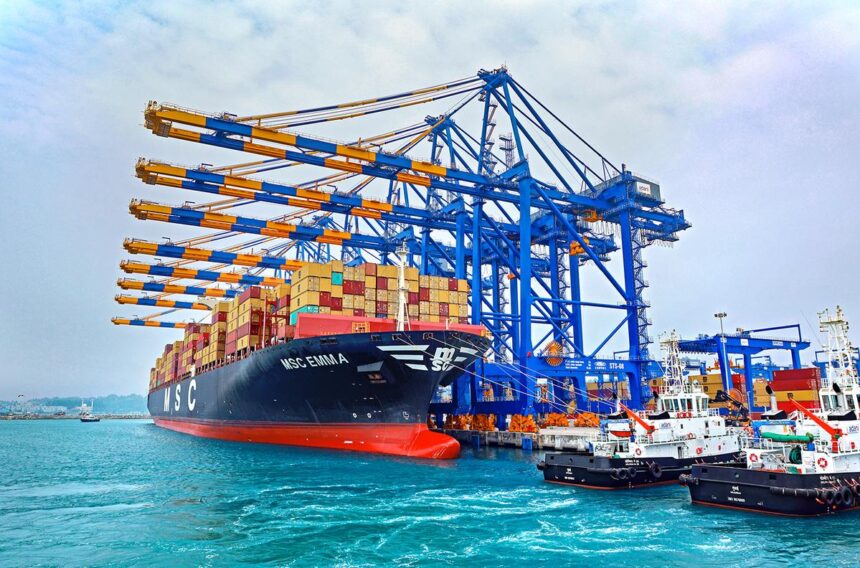
Prime Minister Narendra Modi on Friday inaugurated the Vizhinjam International Deepwater Port in Kerala, a transformative project aimed at reshaping India’s maritime trade and reducing dependence on foreign ports. Built at a cost of ₹8,867 crore, the semi-automated port, developed by the Adani Group, is set to become a game-changer in international transhipment, boosting the local economy and placing Kerala prominently on the global maritime map.
Located in the Thiruvananthapuram district, the Vizhinjam Seaport has been developed under a public-private partnership model between the Kerala government and Adani Ports and Special Economic Zone Ltd. It is India’s first dedicated transhipment hub and boasts naturally deep waters, making it well-suited for large cargo vessels. Its proximity—just 10 nautical miles—to key international shipping lanes gives it a strategic edge in attracting global maritime traffic.
India’s Maritime Makeover
At the launch ceremony, PM Narendra Modi described the port as a symbol of “new-age development,” highlighting the collaborative effort between the Centre and the Kerala state government. He emphasized how the port combines India’s natural beauty with industrial progress, calling it a crucial addition to the nation’s maritime infrastructure.
The Prime Minister Narendra Modi also underscored the financial impact of the project. Currently, about 75% of India’s transhipment containers are handled by foreign ports like Colombo in Sri Lanka. This has resulted in significant revenue loss for the country. Vizhinjam aims to reverse this trend, bringing a majority of that trade back to Indian shores and generating new economic opportunities for the people of Kerala.
Strategic and Technological Edge
Vizhinjam is not only the first Indian port dedicated entirely to transhipment but also the first semi-automated port in the country. The facility was granted its commercial commissioning certificate in December last year, following successful trial operations.
The port’s deep draft and strategic location make it capable of handling ultra-large container vessels, a key requirement for competing globally. Officials believe it will significantly boost India’s maritime efficiency, reduce logistics costs, and attract international shipping lines that previously bypassed Indian ports.
PM Narendra Modi was joined at the inauguration by Kerala Chief Minister Pinarayi Vijayan and Adani Group Chairman Gautam Adani, both of whom expressed optimism about the port’s long-term impact on India’s economic and trade future.