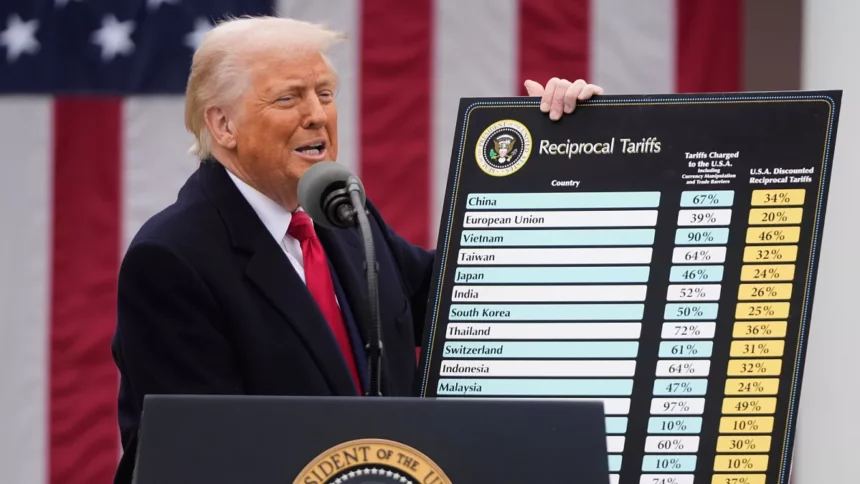
US President Donald Trump has set a 10% tariff as the “floor” for future trade negotiations with most of the United States’ trading partners. While he left room for possible exceptions, he emphasized that this 10% tariff would be the baseline for countries seeking favorable terms in trade agreements with the US. His remarks came during a trip to Florida, where he mentioned the possibility of exceptions for “obvious reasons,” but declined to provide further specifics. The move adds to the uncertainty surrounding global markets, which have been reeling from the fluctuations caused by Donald Trump’s trade policies.
US Tariffs and Market Impact
Donald Trump’s decision to introduce a 10% tariff as the baseline has significant implications for global trade. This announcement follows a week of volatile market movements, with businesses and investors grappling to understand the impact of Donald Trump’s sweeping tariff policies. Earlier in the week, Donald Trump had announced a broad package of tariffs targeting dozens of nations, only to delay the implementation after market crashes due to recession fears. However, despite these uncertainties, the S&P 500 ended the week on a high note, reflecting optimism that the Federal Reserve might step in to stabilize markets if needed. The market volatility, driven by tariff announcements and reversals, has left many questioning the long-term impact of these policies on the global economy.
China’s Retaliatory Measures and Global Economic Risks
Donald Trump’s tariffs, China has raised its tariffs on US imports to 125%, retaliating against the United States’ 145% duties on Chinese goods. Although China has vowed not to increase tariffs any further, it has promised to continue its tough stance, which has escalated the trade war between the world’s two largest economies. With tariffs now targeting up to $690 billion in goods, both nations have pushed their respective tariff levels to historic highs. Bloomberg Economics has warned that this trade conflict poses a significant risk to the broader economy, both in the US and globally, given the potential for widespread economic fallout.
Despite the ongoing market turmoil and concerns from economists, Donald Trump has dismissed fears of economic instability, insisting that the US is in “great shape.” He also emphasized the strength of the US dollar as the global reserve currency, brushing off speculation that other nations might abandon it. As the global economy faces further volatility, all eyes remain on the ongoing trade negotiations and whether they will lead to a resolution or further escalation.