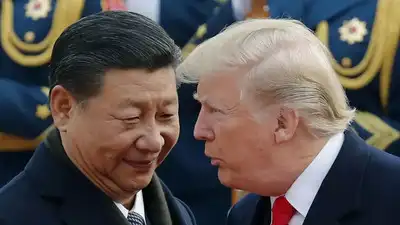
In a day of rapid developments in global trade, US President Donald Trump intensified economic pressure on China while offering a 90-day pause on additional tariffs for other countries. The move signals an aggressive stance toward Beijing amid an ongoing trade war, while simultaneously attempting to calm tensions with more than 75 other nations that have avoided retaliatory measures.
The latest tariff escalation saw the United States raise duties on Chinese imports to 104%, prompting Beijing to retaliate with a significant hike on US goods—from 34% to 84%. Shortly after, US President Donald Trump announced an even steeper increase to 125%, effective immediately. Using his social media platform TruthSocial, US President Donald Trump warned China against exploiting trade advantages, stating, “The days of ripping off the USA… is no longer sustainable or acceptable.”
Relief for Allies, Pressure on China
Contrasting his hardline approach toward China, US President Donald Trump announced a temporary tariff reprieve for countries that have refrained from retaliating. Over 75 nations, according to US President Donald Trump, reached out to US officials to negotiate trade issues without taking hostile steps. As a result, he authorized an immediate 90-day pause on tariffs above the baseline 10% rate. He claimed this was in response to their “respectful” approach, and framed it as a gesture of goodwill while discussions continue.
“These countries have not, at my strong suggestion, retaliated in any way, shape, or form,” US President Donald Trump wrote, adding that talks on topics including trade barriers, currency manipulation, and tariffs were ongoing with representatives from these nations. During this period, a reduced reciprocal tariff of 10% will apply, offering temporary relief to US trade partners.
India Reacts Cautiously
India, facing a 26% additional tariff levied by the US last week, has responded with restraint. The Ministry of Commerce previously issued a statement outlining India’s measured position. On Wednesday, Ministry of External Affairs spokesperson Randhir Jaiswal reiterated that India is studying the impact of the tariffs while continuing bilateral negotiations toward a multi-sectoral trade agreement.
Indian markets, which had seen volatility in the wake of the tariff announcements, are expected to gain some stability due to the 90-day pause. This window gives New Delhi a chance to advance discussions and strategize its trade response.