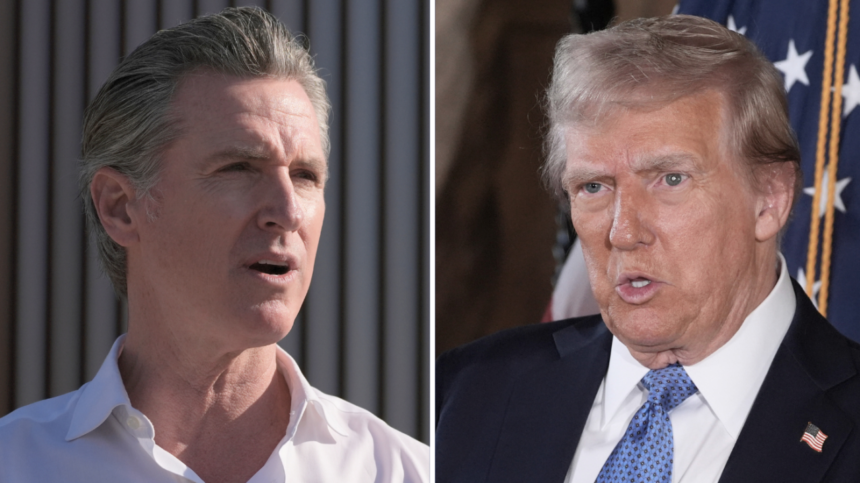
US President-elect Donald Trump has placed blame on California Governor Gavin Newsom for the devastating wildfires ravaging Los Angeles, accusing him of failing to sign a water restoration declaration that could have helped to mitigate the situation. Donald Trump claimed that Newsom’s refusal to allow water to flow into the state, despite excess rain and snow melt from the North, contributed to the fires’ severity. According to Donald Trump, the governor chose to prioritize protecting a small fish called a smelt instead of ensuring water for the people of California, a decision he argues has led to dire consequences.
In a post shared on Truth Social, Donald Trump criticized Newsom’s actions, stating that by not signing the water restoration declaration, millions of gallons of water, which could have been diverted to areas suffering from wildfires, were withheld. “Governor Gavin Newscum refused to sign the water restoration declaration put before him that would have allowed millions of gallons of water to flow daily into many parts of California, including the areas that are currently burning in a virtually apocalyptic way,” Donald Trump wrote. He emphasized that Newsom’s decision to protect the smelt, a species Donald Trump called “essentially worthless,” instead of prioritizing human lives, had resulted in tragic consequences.
Donald Trump further criticized Newsom for what he saw as a lack of adequate firefighting resources, claiming there was insufficient water in fire hydrants and no firefighting planes available. The President-elect accused the governor and his team of having made zero progress in containing the fires. In another post, Donald Trump expressed his frustration with the situation, stating, “As of this moment, Gavin Newscum and his Los Angeles crew have contained exactly ZERO percent of the fire.” He also commented on the lack of emergency funding, claiming that there was “NO MONEY IN FEMA” and no resources allocated for the emergency response. Donald Trump’s comments reflect his dissatisfaction with the handling of the fire crisis by local officials, particularly Newsom’s leadership.
The wildfires have wreaked havoc on the state, burning thousands of acres and forcing tens of thousands of residents to evacuate their homes. As of Tuesday, two people had been killed in the Eaton Fire, which ignited in California’s Altadena region, with zero percent containment. The Palisades Fire, burning in Los Angeles’ Pacific Palisades neighborhood, had spread across over 5,000 acres, destroying around 1,000 structures. The intense fires have left California’s emergency services struggling to keep up, with over 245,000 customers in Los Angeles County losing power as of Wednesday morning.
Los Angeles County Fire Chief Anthony Marrone confirmed that two fatalities occurred in the Eaton Fire, while many others sustained injuries. Marrone also reported significant structural damage, with about 100 buildings destroyed. In response to the escalating situation, California Governor Gavin Newsom declared a state of emergency, aiming to provide more support to the affected communities. Newsom visited Pacific Palisades, where he met with local and state officials to coordinate firefighting efforts.
In a statement regarding the fires, Newsom described the situation as a highly dangerous windstorm that was contributing to extreme fire risks. He stressed that the state was not yet out of danger and praised the swift actions of first responders in containing the flames. “Our deepest thanks go to our expert firefighters and first responders who jumped quickly into fighting this dangerous fire,” Newsom said. He urged Southern Californians to stay informed by paying attention to weather reports and following the guidance of emergency officials. Despite the devastation, Newsom vowed to continue his efforts to support those affected by the fires and ensure that the state’s response remains as effective as possible.
As the fires rage on, the political rhetoric surrounding the crisis is intensifying. Donald Trump’s accusations toward Newsom are framed within the larger context of criticism aimed at state and local officials for their handling of the fires. His statements serve to underscore the political division surrounding the wildfire response, particularly as the state grapples with the immediate impact of the fires and the long-term challenges posed by increasingly frequent and severe natural disasters in the region. The outcome of this crisis may ultimately hinge on the coordination between state and federal authorities, as well as the effectiveness of emergency response efforts in the face of mounting destruction.