The venezuela crisis underscores resource-driven geopolitics, but india’s sharply reduced oil ties limit any direct impact.
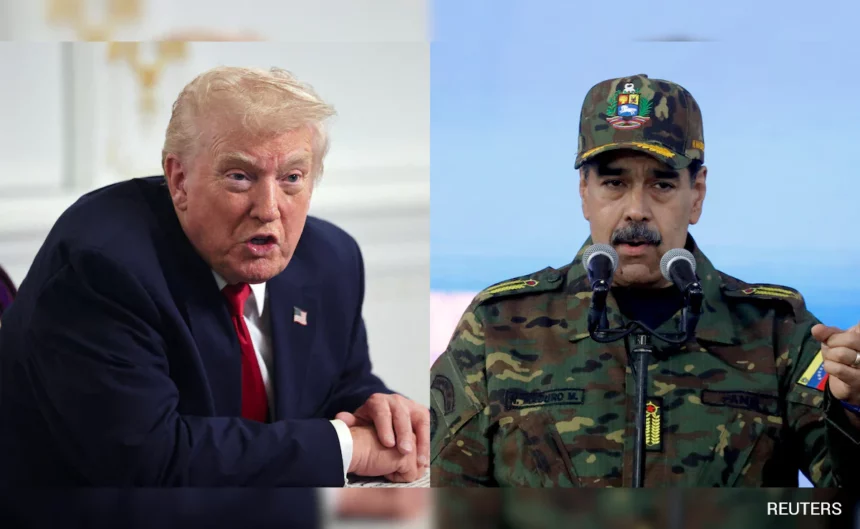
The reported military action by the united states in venezuela, including the dramatic capture of president Nicolás Maduro, has triggered intense global debate over the real motivations behind the intervention. While washington has officially framed the operation around allegations of narco-terrorism and drug trafficking, a growing body of expert opinion suggests that control over venezuela’s vast crude oil reserves lies at the heart of the action. For india, however, the unfolding crisis is largely a geopolitical signal rather than an economic shock, as its trade and energy engagement with venezuela has already declined sharply over recent years.
resource geopolitics and the logic behind us action in venezuela
Venezuela occupies a unique position in the global energy landscape. The country holds close to 18 percent of the world’s proven crude oil reserves, surpassing even traditional energy giants such as saudi arabia and russia. This immense upstream potential has long made venezuela a strategic focal point in global energy politics, particularly at a time when demand remains high and supply chains are increasingly politicised.
According to Ajay Srivastava, founder of the Global Trade Research Initiative, the current us action should be viewed primarily through the lens of resource security rather than law enforcement. He argues that venezuela’s oil wealth represents a strategic prize in an energy-hungry world, especially as the united states expands its commitments to supply petroleum products and liquefied natural gas to allies across europe and east asia.
In recent years, the united states has entered into multiple long-term energy arrangements with partners including the european union, japan, south korea, and the united kingdom. These commitments, analysts note, increasingly stretch the limits of america’s own crude availability and refining capacity. In this context, unrestricted access to venezuela’s oil reserves could help bridge the widening gap between ambitious export promises and domestic supply constraints.
Reports of us military strikes around caracas, cited by american media, have reinforced perceptions that the operation is designed to reshape control over venezuela’s energy infrastructure. For critics, the episode fits into a broader pattern of unilateral interventions aimed at securing strategic resources amid weakening international institutions. Srivastava warns that such actions signal a shift toward a global order where power politics increasingly outweigh multilateral norms.
Beyond venezuela itself, the implications of this trend extend across energy-producing regions. If major powers normalise military or coercive strategies to secure oil, gas, and critical minerals, volatility in global commodity markets could increase, complicating energy planning for importing nations. The current crisis thus serves as a case study in how resource geopolitics is reasserting itself as a central driver of international conflict.
india’s shrinking venezuela ties and insulation from the crisis
For india, the situation looks markedly different from the global alarm it has generated. Once a significant buyer of venezuelan crude during the 2000s and early 2010s, india’s energy relationship with caracas has steadily eroded since 2019. Stringent us sanctions imposed on venezuela forced indian refiners to drastically cut imports, while upstream investments by state-owned firms such as ONGC Videsh were scaled back, particularly in the orinoco belt.
As a result, venezuela has effectively dropped out of india’s core energy basket. Trade data from fy2025 illustrates the depth of this disengagement. India’s total imports from venezuela stood at just 364.5 million dollars, of which crude oil accounted for 255.3 million dollars. This represents an 81.3 percent decline from crude imports valued at 1.4 billion dollars in fy2024. Exports from india to venezuela were even smaller, at 95.3 million dollars, dominated by pharmaceutical shipments.
These figures underscore why analysts believe the current crisis poses little direct risk to india’s economy or energy security. With trade volumes already marginal and alternative suppliers firmly in place, india faces no immediate supply disruption from instability in venezuela. Srivastava notes that india’s exposure had already collapsed due to sanctions, meaning the latest developments do not materially alter its position.
India’s diversified energy strategy has played a key role in this insulation. Over the past few years, indian refiners have increased sourcing from the middle east, russia, africa, and the united states, reducing dependence on any single supplier. This diversification, combined with strategic petroleum reserves, has strengthened india’s resilience against geopolitical shocks in individual producing countries.
At the same time, the venezuelan episode carries broader lessons for indian policymakers. Srivastava argues that the crisis highlights the risks of over-reliance on geopolitically sensitive regions and the importance of maintaining strategic autonomy. As global competition for resources intensifies, india will need to secure access to critical raw materials through balanced partnerships rather than entangling alliances that could compromise sovereignty.
The silence or limited response of many major powers to the us action, with the notable exceptions of china and russia, has also been noted by analysts. This perceived erosion of multilateral restraint suggests a future in which energy and resource security may increasingly be pursued through unilateral means. For india, navigating such an environment will require careful diplomacy, continued diversification, and investment in domestic and overseas energy assets aligned with long-term national interests.
While the immediate impact of the venezuelan crisis on india remains minimal, its symbolic significance is considerable. It reflects a shifting global order in which access to resources is once again becoming a primary driver of power projection. For india, remaining insulated from such shocks while learning from their causes will be essential in safeguarding both economic stability and strategic independence in an increasingly contested world.