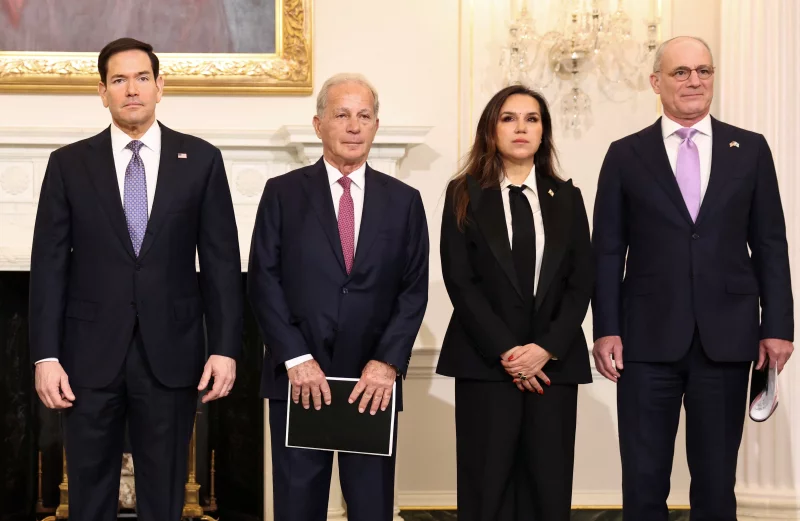
The United States has announced a fresh round of intensive diplomatic talks between Israel and Lebanon scheduled for May 14 and 15, as Washington steps up efforts to broker a broader peace and security framework between the two long-time rivals.
In an official statement, U.S. Department of State spokesperson Thomas Pigott confirmed that the negotiations will focus on achieving a comprehensive agreement addressing border tensions, regional security concerns, Lebanese sovereignty, humanitarian relief, and reconstruction efforts.
The upcoming discussions build on a previous round of negotiations held on April 23, which was personally led by U.S. President Donald Trump. American officials described the process as an attempt to move away from what they called the “failed approach” of the past two decades, during which militant groups expanded their influence in southern Lebanon and regional instability intensified.
The new round of talks is expected to become one of the most closely watched diplomatic efforts in the Middle East this year, particularly amid rising tensions involving Hezbollah, ongoing border insecurity, and broader geopolitical uncertainty across the region.
United States Pushes for Long-Term Peace Framework
According to the State Department, both delegations will participate in detailed negotiations aimed at creating a sustainable peace and security arrangement between the two countries.
The discussions are expected to focus on restoring full Lebanese state authority across its territory, defining border arrangements, improving security coordination, and establishing pathways for humanitarian assistance and post-conflict reconstruction.
Washington stated that both Israel and Lebanon have agreed to approach the talks while keeping their national interests in mind, with the United States acting as mediator to reconcile competing security and sovereignty concerns.
American officials emphasized that the negotiations are intended to create long-term stability rather than temporary ceasefire arrangements. The U.S. administration believes durable peace can only emerge if Lebanese state institutions regain full authority and militant influence is reduced.
Hezbollah Disarmament Emerges as Central Issue
One of the most sensitive aspects of the negotiations involves the future of Hezbollah, which the United States has designated as a Foreign Terrorist Organization.
The State Department directly linked the success of the peace process to the “complete disarmament” of Hezbollah and the restoration of Lebanese government control throughout the country.
Israel has consistently argued that Hezbollah’s military presence in southern Lebanon poses a major security threat to its northern border. Repeated cross-border tensions and rocket attacks over the years have made Hezbollah a central factor in Israeli national security calculations.
Lebanon, meanwhile, continues facing internal political and economic pressures while attempting to balance domestic sensitivities surrounding Hezbollah’s influence within the country.
Security analysts say Hezbollah’s role is likely to remain the most difficult issue in the negotiations, as any discussions involving disarmament could face resistance from multiple political factions inside Lebanon.
Despite these challenges, Washington appears determined to keep the diplomatic process moving forward, viewing the talks as a rare opportunity to reduce the risk of wider regional conflict.
Trump Administration Intensifies Middle East Diplomacy
The talks also reflect the Trump administration’s broader effort to expand diplomatic engagement across the Middle East during a period of heightened geopolitical instability.
The United States has recently increased involvement in regional negotiations connected to Iran, Gulf security, maritime trade routes, and ongoing military tensions involving armed groups aligned with Tehran.
Officials believe progress between Israel and Lebanon could help stabilize a strategically important region while reducing the likelihood of future military escalation near the Israel-Lebanon border.
President Trump’s personal involvement in earlier negotiations signaled the importance Washington attaches to the initiative. Analysts say the administration hopes successful mediation could strengthen America’s diplomatic standing while also reinforcing regional security alliances.
Border Security and Reconstruction Discussions Gain Importance
Another major focus of the negotiations will involve border delineation and reconstruction efforts in Lebanon.
The border region between Israel and Lebanon has witnessed repeated military confrontations over the years, with unresolved territorial disputes contributing to periodic violence and instability.
The United States hopes the current talks can help establish clearer frameworks for border security and conflict prevention.
Humanitarian relief and reconstruction support for Lebanon are also expected to play a major role in discussions. Lebanon continues to struggle with economic collapse, infrastructure challenges, and the effects of ongoing regional instability.
American officials stated that reconstruction pathways and humanitarian coordination would form part of broader peace-building efforts linked to the negotiations.
Diplomatic observers believe international stakeholders may become more actively involved if the talks show meaningful progress toward stability.
International Attention Focused on Washington-Led Negotiations
The latest diplomatic initiative is being closely monitored by governments across the Middle East, Europe, and Asia due to its potential impact on regional stability and global security dynamics.
A successful breakthrough could significantly reduce tensions along Israel’s northern border while improving conditions for broader regional cooperation. However, failure or renewed escalation could deepen instability and complicate existing geopolitical conflicts.
Experts caution that major peace agreements involving Israel and Lebanon have historically faced serious obstacles, particularly due to competing political interests and regional alliances.
Still, the continuation of direct talks under U.S. mediation is itself considered diplomatically significant.
As negotiations begin on May 14 and 15, global attention will remain focused on whether the talks can move beyond temporary crisis management and establish the foundation for a longer-term peace arrangement between the two neighboring countries.