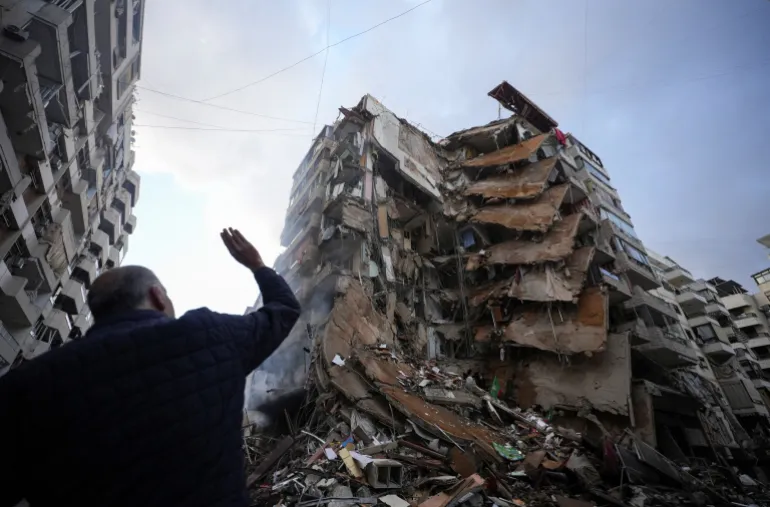
Pressure on Hezbollah to disarm is mounting, with the United States taking a leading role, supported by various Lebanese factions. Following a devastating Israeli war that severely weakened Hezbollah’s leadership and infrastructure, the group finds itself increasingly isolated. The situation has become more complex after the fall of its ally, Bashar al-Assad’s regime in Syria, further exacerbating the group’s challenges.
The U.S. has been vocal about its stance on Hezbollah, particularly through Morgan Ortagus, the Deputy U.S. Special Envoy to the Middle East, who emphasized the need for Hezbollah’s disarmament, calling it essential for Lebanon’s future stability. Ortagus described Hezbollah as a “cancer” that needs to be removed, urging the Lebanese government to pursue economic and banking reforms to curtail Hezbollah’s operations outside the regulated financial system. Meanwhile, attacks from Israel, which often uses Hezbollah as a justification, add to Lebanon’s strain, pushing the country toward cooperation for much-needed foreign aid.
Despite the mounting external pressure, Hezbollah remains entrenched, showing no signs of immediate disarmament. The group, which has long held significant influence in Lebanon’s Shia community, is unlikely to relinquish its arms without substantial concessions. While reports suggest Hezbollah may be willing to disarm if Israel withdraws from disputed southern territories, the group’s media office denied these claims, leaving the matter unclear. For now, Hezbollah is open to dialogue on a national defense strategy but has firmly rejected discussions on disarmament, citing the ongoing Israeli occupation as a key obstacle.
The group’s internal capabilities have been weakened by the recent conflict, with many of its weapons and leadership decimated. However, Hezbollah still maintains considerable influence, particularly in southern Lebanon, and its presence is a significant factor in the region’s political dynamics. Analysts argue that while Hezbollah is no longer as formidable as before, it still poses a potential internal threat due to its substantial arms stockpile.
Domestically, Lebanese President Joseph Aoun has called for a national dialogue to resolve the issue of Hezbollah’s weapons, though this approach has been met with mixed reactions. Some factions, particularly the Lebanese Forces, demand a more aggressive stance, advocating for a hard deadline on disarmament. However, the complex situation means that the true resolution may depend on external actors, particularly the U.S. and its ongoing negotiations with Iran, which has long supported Hezbollah.
The pressure on Hezbollah to disarm is reaching unprecedented levels, yet whether this will lead to a shift in the group’s strategy remains uncertain. The path forward hinges not only on Lebanese political will but also on broader geopolitical negotiations involving key international players.